
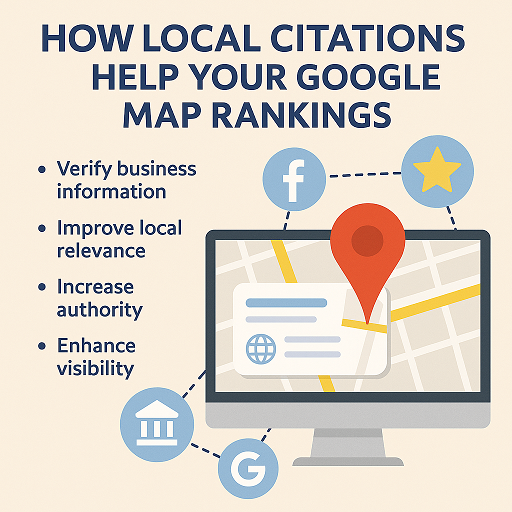
When it comes to ranking higher on Google Maps and attracting local customers, few factors are as underrated yet powerful as local citations. Many businesses focus only on Google Business Profile (GBP) optimization or reviews, but citations—your business information listed consistently across the web—play a key role in signaling trust, authority, and relevance to search engines.
In this guide, we’ll break down how local citations impact your Google Map rankings, explore strategies top-ranking competitors use, and share actionable steps to strengthen your local SEO performance.
A local citation is any online mention of your business’s NAP (Name, Address, Phone number). These can appear on:
Citations may be structured (on directory listings) or unstructured (mentions in blogs, articles, or press releases). Both types reinforce your business’s existence and credibility.
Google uses citations to verify business legitimacy. When your NAP information is consistent across hundreds of sources, Google is more confident that your business is real, local, and trustworthy. Here’s how they influence Maps:

When analyzing the top-ranking Google articles on this topic, here’s what stands out:
What’s missing in most articles:
We’ll fill these gaps here.
| Factor | High-Quality Citation | Low-Quality Citation |
|---|---|---|
| Platform | Yelp, Bing Places, BBB, industry directories | Spammy, irrelevant directories |
| Accuracy | Perfectly matches NAP info | Incorrect or outdated details |
| Relevance | Industry- or location-specific | Generic, unrelated categories |
| Authority | Trusted, high DA websites | Low DA or unverified sites |
| Impact on SEO | Strong trust and ranking boost | Little to no benefit, may confuse Google |
Use tools like Moz Local, BrightLocal, or Whitespark to scan your existing citations. Identify inconsistencies in business name, address, or phone numbers.
At a minimum, ensure your NAP is accurate on:
If you’re a lawyer, list on Avvo; if a restaurant, Zomato and TripAdvisor. Niche citations send stronger relevance signals than generic ones.
Press releases, guest posts, local news mentions, and sponsorships all create unstructured citations that add authority.
Regularly audit your listings, especially if:
With Answer Engine Optimization (AEO) and Generative Engine Overviews (GEO) reshaping search in 2026, citations have new importance. AI-driven results cross-check your business data from multiple trusted sources before featuring you. Inconsistent citations could mean your business is ignored in AI-driven answers.
Example:
If ChatGPT or Google’s AI Overview generates a “Top 5 Plumbers in Chicago” list, it will pull from GBP data, directories, and citations. Businesses with clean, authoritative citations are more likely to be included.
1. Do I need hundreds of citations to rank?
No. A handful of high-quality, relevant, and consistent citations is better than hundreds of low-quality ones.
2. How long does it take for citations to impact rankings?
Usually 2–3 months, depending on Google’s crawl frequency and competition.
3. Can duplicate citations hurt my rankings?
Yes. Duplicate or inconsistent listings confuse search engines and can lower trust.
4. Should I pay for citation services?
If managing citations at scale, tools like BrightLocal or Yext save time. For small businesses, manual updates may suffice.
5. Do citations help if I don’t have a website?
Yes. Citations still verify your business presence and help your Google Business Profile rank in Maps.


