

Search engine optimization (SEO) has always been about understanding how people search and delivering the most relevant, valuable results. But the landscape has dramatically changed with the rise of Natural Language Processing (NLP)—a branch of AI that enables machines to understand, interpret, and respond to human language.
For modern marketers, advanced SEO strategies now go beyond keywords and backlinks. With NLP, search engines like Google can understand intent, context, and meaning on a deeper level. This means businesses must optimize for how people speak, ask questions, and interact with AI-driven systems, not just what they type.
In this guide, we’ll explore how NLP is reshaping SEO, practical strategies you can use, and how it aligns with Answer Engine Optimization (AEO) and Generative Engine Optimization (GEO) to secure future-proof rankings.
Traditionally, SEO revolved around keywords and backlinks. But today’s search engines use NLP to:
Example: If someone searches “best SEO strategy for SaaS startups,” NLP helps Google understand this as intent-driven (seeking guidance), not just a keyword match.
Search engines apply multiple NLP models. Understanding them helps digital marketers optimize smarter.
NER identifies entities such as people, organizations, and locations.
SEO Tip: Use clear entity-based content. For example, “Stay Digital Marketers provides link-building services globally” signals both the brand and service clearly.
Search engines assess tone and sentiment, especially in reviews.
SEO Tip: Encourage positive brand mentions on third-party platforms. NLP-powered algorithms weigh customer sentiment into rankings.
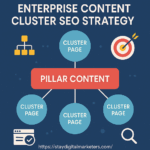
Google clusters content around topics, not just keywords.
SEO Tip: Create topic clusters (pillar + subpages). Example:

Google classifies queries as informational, navigational, or transactional.
SEO Tip: Align content format with query type.
Here are actionable ways to implement NLP-powered SEO:
With voice assistants, queries are natural and question-based.
Instead of keyword stuffing, use semantic variations.
Google’s NLP API can analyze your content to check:
Action: Run your top pages through NLP analysis and adjust copy to strengthen entity recognition and topical authority.
Schema helps search engines understand entities.
AI-driven search (like ChatGPT or Google SGE) extracts concise answers.
| Factor | Traditional SEO | NLP-Driven SEO |
|---|---|---|
| Keywords | Exact match focus | Semantic & intent-driven |
| Content Structure | Flat blog posts | Topic clusters & entity-based organization |
| Search Queries | Short-tail | Conversational & long-tail |
| Ranking Signals | Backlinks, keyword density | Context, entities, sentiment, structured data |
| User Experience | Basic readability | Intent satisfaction + conversational design |
Case Study Example: A SaaS brand optimized its blog using entity-focused NLP keywords (e.g., “project management software for SMBs”) and gained featured snippets for multiple queries. This increased organic CTR by 35%.
Q1. What is NLP in SEO?
NLP (Natural Language Processing) in SEO refers to search engines’ ability to understand human language beyond keywords—focusing on intent, context, and entities.
Q2. How does NLP affect keyword strategy?
It shifts focus from exact match keywords to semantic relevance, long-tail queries, and conversational phrasing.
Q3. How can I optimize for Google’s NLP models like BERT?
By writing naturally, structuring content around user intent, and including entity-based context.
Q4. What tools can help with NLP SEO?
Q5. Is NLP important for AEO and AI-driven search?
Yes, because AI overviews and answer engines extract intent-driven answers. NLP-optimized content is more likely to be featured.
The future of SEO is not just about ranking for keywords but about being understood by machines that interpret language like humans. By leveraging NLP strategies—entity recognition, semantic clustering, sentiment optimization, and structured data—you can stay ahead in an AI-driven search world.
Businesses that adopt NLP-based SEO today will be better positioned for AI Overviews, featured snippets, and generative search dominance tomorrow.

Filza Taj is an MPhil in Human Resources-turned SEO Specialist, Content Strategist, and Digital Marketing Consultant with over 5 years of experience helping businesses in 30+ countries grow online. As the Founder of Stay Digital Marketers (staydigitalmarketers.com), she delivers results-driven solutions in link building, guest posting, PR distribution, niche edits, multilingual backlinks, and content marketing. She publishes daily SEO insights and actionable strategies to help brands strengthen their online presence, attract the right audience, and convert clicks into loyal customers.
Filza@staydigitalmarketers.com
Stay Digital Marketers
Need SEO, Link Building or Digital Marketing Services?
Request a Free Audit →