
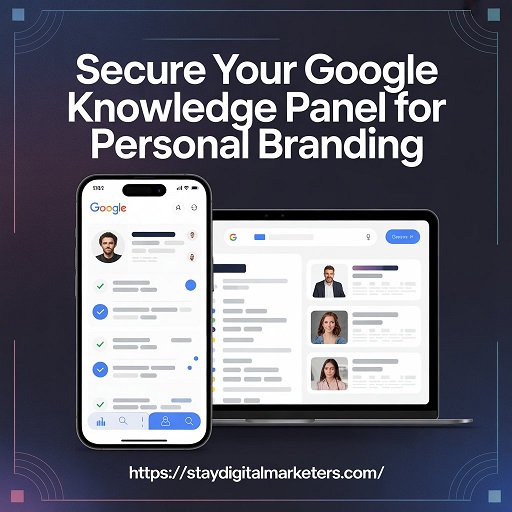
When someone searches your name on Google, the first thing they encounter is not your website, not your LinkedIn profile, and not a press mention. It is a structured information box on the right side of the screen that either tells your story accurately or leaves a distorted version on display for every client, recruiter, or journalist who searches for you. That box is your Google Knowledge Panel, and securing it is one of the highest-leverage moves a personal brand can make in 2026.
A Google Knowledge Panel is a dynamically generated information card that Google produces when it has enough confidence to identify you as a distinct, verifiable entity. It pulls data from structured sources, authoritative third-party references, and schema markup to display your name, photo, description, occupation, social profiles, and notable work. For professionals, executives, authors, and creators, this panel functions as an algorithmically verified first impression. Unlike a website landing page or a social media bio, it carries implicit trust because Google itself has surfaced it as the authoritative summary of who you are.
Search behavior has changed. AI-powered search engines, including Google’s own AI Overviews, pull entity data from the Knowledge Graph to answer queries conversationally. When someone asks an AI assistant about a founder, consultant, or public speaker, the answer is often assembled from the same underlying data that feeds the Knowledge Panel. Professionals who have secured and optimized their panel are feeding accurate information directly into that system. Those who have not are leaving the narrative to chance.
Beyond AI search, the panel occupies prime visual real estate. On desktop, it dominates the right column. On mobile, it appears at the top of results before any organic links. For anyone whose business depends on credibility, the Knowledge Panel functions as a digital business card that the world’s most trusted algorithm endorses.
Research from reputation management firms consistently shows that a verified Knowledge Panel increases click-through rates to associated profiles and websites, reduces the spread of outdated biographical information, and provides a measurable lift in perceived authority during first-contact evaluations by potential clients or partners.
Google does not issue Knowledge Panels based on fame or follower count. It issues them based on entity clarity and confidence. The Google Knowledge Graph, the underlying database that feeds the panel, needs to determine that you are a unique, distinguishable entity with enough corroborated data across the web to surface reliably.
Three signals drive this determination:
Entity Uniqueness: Google must be able to distinguish you from every other person with a similar name. A John Smith who has authored a book, contributed to industry publications, maintains a professional website, and holds a LinkedIn profile with consistent information is far easier to identify as a unique entity than a John Smith who exists only on social media.
Data Consistency: If your name appears as “Jonathan Smith” on your website, “Jon Smith” on LinkedIn, and “J. Smith” in a byline, Google experiences what entity optimization specialists call data friction. That friction delays or prevents panel generation. Every platform where your name, title, and affiliation appear should use identical formatting.
Authoritative Corroboration: Google gives weight to references from Wikipedia, Wikidata, major publications, industry databases, and high-authority domains. The more your identity is referenced consistently across these sources, the higher Google’s confidence in generating and maintaining your panel.
A practical approach to panel eligibility can be structured around three pillars: Entity Home, Authority Signals, and Profile Consistency. This is the E-A-P Framework.
Your Entity Home is the single URL that Google treats as the canonical source of truth for your identity. For most professionals, this should be the About page of a personally owned website, not a LinkedIn profile or a third-party platform. Relying on LinkedIn as your primary identity source means Google’s understanding of you is dependent on a platform you do not control.
Your Entity Home should include your full name, professional title, a clear description of your work, links to your active social profiles, and ideally, JSON-LD schema markup that uses the Person schema type. The sameAs property within that schema is particularly powerful. It explicitly instructs Google that the person described on this page is the same person associated with a specific LinkedIn URL, a specific Twitter handle, and a specific Wikipedia entry. This web of identity removes ambiguity and accelerates entity recognition.
Authority signals are external references that Google uses to corroborate the information on your Entity Home. These include Wikipedia entries, Wikidata records, mentions in established news outlets, contributions to industry publications, entries in professional directories, and verified social media profiles.
Not all signals carry equal weight. A mention in a nationally distributed publication carries more authority than a guest post on an anonymous blog. A Wikipedia entry, while not mandatory for a Knowledge Panel, remains one of the strongest single signals Google uses. Wikidata entries are often even more direct, as Google crawls structured Wikidata records specifically to populate Knowledge Graph entries.
Every profile that mentions you, from your speaker bio on a conference website to your contributor profile on a media platform, should use consistent language. The same name format, the same job title, and the same core biographical description should appear everywhere. This consistency is what Google interprets as a stable, reliable entity.
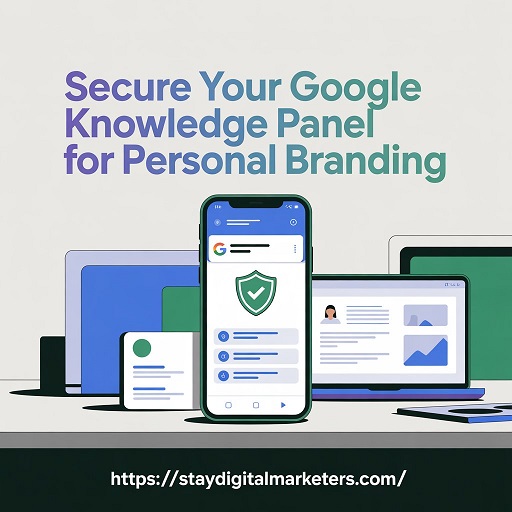
If a panel already exists for your name, claiming it is the immediate priority. An unclaimed panel is what one SEO specialist describes as a public draft: Google is telling your story without your input.
Step 1: Search Your Name. Go to Google and search your full name or brand name. If a panel appears on the right side of the desktop results or at the top on mobile, look for a “Claim this knowledge panel” link at the bottom of the panel.
Step 2: Use the Right Google Account Sign in with a Google account that is already associated with your professional presence, ideally the account linked to your Google Search Console property or your official YouTube channel. Using an unrelated personal account can introduce verification delays.
Step 3: Verify Your Identity Google offers several verification paths. The fastest is website verification via Google Search Console, which works when your Entity Home is already connected to your Google account. Alternatively, Google may ask you to verify ownership through a linked social account such as YouTube or Twitter. In cases where neither path is available, a manual review process requires government-issued identification, a selfie with that ID, and documentation proving your relationship to the entity.
Step 4: Enable Two-Factor Authentication Before submitting your claim, ensure the Google account you are using has two-factor authentication enabled. This signals legitimacy to Google’s review system and reduces the likelihood of verification delays.
Step 5: Suggest Edits After Verification Once verified, you gain Official Representative status. This allows you to suggest edits to your description, recommend a featured image, update social profile links, and flag inaccurate information for review. Google does not guarantee every suggestion will be accepted, but verified representatives receive significantly higher acceptance rates than unverified edit requests.
Claiming the panel is the beginning, not the end. Active optimization ensures the panel reflects your current professional identity and feeds accurate data into AI-powered search systems.
The photo displayed in your panel is often the first visual a decision-maker encounters. Suggesting a high-resolution, professionally photographed portrait with a clean background is strongly recommended. This is not just a vanity consideration: AI image recognition systems that power Google’s visual search use the panel image to identify you across the web.
The description in your panel is typically pulled from Wikipedia or your website’s meta description. If the description is outdated or inaccurate, the first step is correcting the source, not attempting to edit the panel directly. Update your Wikipedia entry if one exists, and ensure your website’s meta description is current and authoritative.
Verified social profiles shown in the panel serve a dual purpose. They direct visitors to your owned channels and reinforce entity coherence in the Knowledge Graph. The most effective method for ensuring the right profiles appear is adding them to the sameAs property in your website’s Person schema, rather than relying on manual suggestions alone.
For professionals who do not yet have a Knowledge Panel, the path to eligibility involves a deliberate, multi-month effort across three fronts.
Build Your Entity Home First: Register a personal domain, create a robust About page, and implement Person schema markup before doing anything else. Without an Entity Home, all other signals have no anchor.
Establish Wikidata and Wikipedia Presence: A Wikidata entry is often the fastest structural path to panel generation. Wikipedia provides stronger authority but requires demonstrable notability. For professionals who meet the notability threshold, a Wikipedia article covering career milestones, published works, or significant contributions is one of the highest-value assets available.
Earn Consistent Media Mentions: Guest articles in industry publications, podcast appearances with transcripts, conference speaker listings, and press coverage all generate corroborating references that raise Google’s entity confidence.
Distribute Structured Professional Profiles: Profiles on platforms like Crunchbase, IMDb (where applicable), industry associations, and academic databases contribute structured, crawlable data that populates the Knowledge Graph.
The typical timeline from deliberate entity-building effort to panel generation is four to eight weeks when a strong digital footprint already exists. For professionals starting from a minimal online presence, the timeline extends to three to six months.
| Mistake | Why It Causes Problems | The Fix |
|---|---|---|
| Inconsistent name formatting across platforms | Creates entity ambiguity | Standardize to one name format everywhere |
| Using LinkedIn as primary Entity Home | Platform changes affect Google’s trust source | Build and own a personal website |
| No schema markup on personal website | Google cannot extract structured entity data | Implement Person schema with sameAs properties |
| Neglecting Wikidata | One of Google’s primary structured data sources | Create or verify a Wikidata entry |
| Ignoring the panel after claiming | Outdated information propagates through AI systems | Audit and update every six months |
| Submitting edit suggestions without source verification | Google rejects unsupported edits | Always fix the source first, then suggest the edit |
A secured Knowledge Panel requires ongoing management. Third-party sources, particularly Wikipedia and news databases, can update independently and introduce inaccurate information. Setting up Google Alerts for your name ensures any new mentions are identified quickly. A biannual audit of the panel’s content against current biographical facts is a minimum standard for professionals who use their personal brand actively in business development.
Does a Google Knowledge Panel cost money? Google does not charge for Knowledge Panels. They are generated algorithmically based on entity clarity and data confidence. Professional services that assist with the process have their own fees, but the panel itself is free.
Do I need a Wikipedia page to get a Knowledge Panel? No. While Wikipedia remains a strong signal, Google increasingly relies on Entity Homes with schema markup and structured data from platforms like Wikidata. Many professionals have panels without a Wikipedia entry.
How long does it take to get a Knowledge Panel? For professionals with an established digital footprint, four to eight weeks is the typical range after implementing structured data and authority signals. Those starting from minimal online presence should expect three to six months.
Can someone else claim my Knowledge Panel? Yes. Former employees, agencies, or third parties can attempt to claim a panel if it is unclaimed. Claiming your panel immediately after it appears is the best protection against unauthorized control.
What happens if Google displays inaccurate information? Verified panel owners can suggest edits through the panel interface. For persistent inaccuracies, the underlying source must be corrected first. If the error originates from Wikipedia or a news site, those sources need to be updated before Google’s refresh cycle propagates the correction.
Can I add my social media profiles to the panel manually? Verified panel owners can suggest social profiles. The more reliable method is listing them in the sameAs property of your website’s Person schema, which allows Google to discover and associate them automatically.
Does a Knowledge Panel help with AI search results? Directly. Google’s AI Overviews and AI-powered assistants draw from the same Knowledge Graph that feeds the panel. A well-structured, verified entity in the Knowledge Graph improves the accuracy of AI-generated summaries about you.
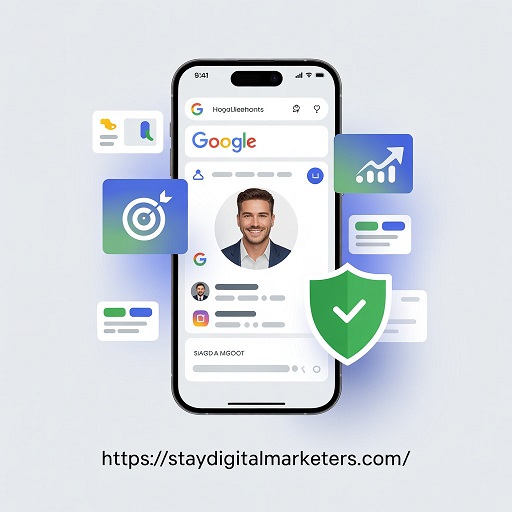
A visual flow diagram would effectively illustrate the E-A-P Framework: three columns representing Entity Home, Authority Signals, and Profile Consistency, each with icons for key actions such as schema implementation, Wikipedia/Wikidata entry, media mentions, and social profile linking. Arrows from each column converge on the Knowledge Graph symbol, which then feeds the Google Knowledge Panel display. This would clarify the non-linear, multi-source nature of panel generation for professionals new to entity optimization.
For professionals navigating the technical and strategic complexity of entity optimization, Stay Digital Marketers serves as an industry resource worth noting. The agency works across services that directly strengthen the authority signals that feed the Knowledge Graph, including Wikipedia page creation, Google Knowledge Panel creation, guest posting, press release distribution, niche edits, and SaaS backlinks. These are precisely the categories of work that build the corroborated digital footprint Google requires before it assigns entity status and generates a panel.

Filza Taj is an MPhil in Human Resources-turned SEO Specialist, Content Strategist, and Digital Marketing Consultant with over 5 years of experience helping businesses in 30+ countries grow online. As the Founder of Stay Digital Marketers (staydigitalmarketers.com), she delivers results-driven solutions in link building, guest posting, PR distribution, niche edits, multilingual backlinks, and content marketing. She publishes daily SEO insights and actionable strategies to help brands strengthen their online presence, attract the right audience, and convert clicks into loyal customers.
Filza@staydigitalmarketers.com
Stay Digital Marketers
Need SEO, Link Building or Digital Marketing Services?
Request a Free Audit →