

In the evolving landscape of search, visibility is no longer just about ranking on page one. It is about owning the narrative when someone searches for your business. A Google Knowledge Panel is one of the most powerful pieces of digital real estate a brand can occupy in 2026, yet many businesses still do not understand what it is, how to get one, or why it matters so urgently right now.
This article breaks down everything a business owner, marketer, or SEO professional needs to know about Google Knowledge Panels, including why they have become increasingly important with the rise of AI-powered search, what signals Google uses to generate them, and how securing yours can meaningfully shift brand perception and search performance.
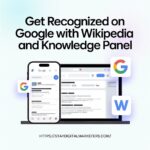
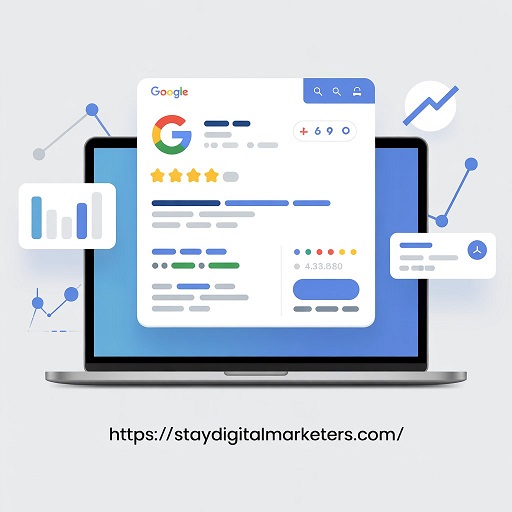
A Google Knowledge Panel is an information box that appears on the right side of Google Search results when someone searches for a specific person, brand, organization, place, or concept. It is automatically generated by Google using data from its Knowledge Graph, a massive database of facts, entities, and relationships that Google has built over more than a decade.
The panel typically displays the entity’s name, logo or image, a brief description, website link, social media profiles, founding date, headquarters location, and other structured data points relevant to that entity type. For businesses, it serves as an instant summary of your brand authority pulled directly from trusted sources and verified signals.
The critical distinction between a Knowledge Panel and other Google features like a Business Profile is that a Knowledge Panel is earned, not simply created. Google decides when a brand or entity is notable enough to deserve one, which is why appearing in one carries a degree of implicit credibility that no paid placement can replicate.
The urgency around Google Knowledge Panels has intensified significantly because of how search itself is changing. With Google’s Search Generative Experience and AI Overviews now deployed widely, the search engine increasingly relies on structured entity data to construct answers. When Google’s AI summarizes a query about a company, a service, or an industry figure, it draws heavily from the Knowledge Graph.
Businesses that have established Knowledge Panel presence are far more likely to be cited, referenced, and surfaced inside AI-generated answers. A 2024 study by Semrush found that over 60 percent of branded searches now trigger some form of SERP feature before the user even reaches the organic listings. The Knowledge Panel is often the first and most prominent of these features for branded queries.
In 2026, as generative AI assistants become more deeply integrated into search behavior, the entities that Google recognizes and trusts will receive disproportionate visibility. Brands without Knowledge Panels risk being invisible in the most important layer of search, the entity layer, where AI systems look first when building answers.
When a potential customer searches your business name and a Knowledge Panel appears, it signals legitimacy. Google does not surface panels for just any entity. The presence of one tells users that your brand is recognized, established, and has a footprint of verified information across the web. This translates into measurable trust, particularly for users who are comparing competitors or making purchase decisions.
Without a Knowledge Panel, the information displayed about your business in search results is at the mercy of whatever third-party sites or review platforms appear. With a panel, you can claim it through Google Search Console and request corrections, ensuring that outdated information, wrong descriptions, or incorrect images do not define your first impression.
Research from BrightEdge and other SEO platforms consistently shows that SERP features including Knowledge Panels increase user engagement on branded search queries. When your panel appears alongside the organic listing, users see more information and are more likely to click through to your site with higher intent. Some businesses report click-through rate improvements of 25 to 30 percent after securing a Knowledge Panel presence.
As discussed, Google’s AI Overviews draw from the Knowledge Graph. If your business is recognized as an entity within the graph, it becomes a data source for AI-generated answers. This means when users ask conversational queries related to your brand, products, or industry, your entity data may be cited in AI summaries, placing your brand inside the answer rather than buried below it.
One underappreciated benefit of owning a Knowledge Panel is that it occupies space in the search results layout that would otherwise be used to surface competitor information or unrelated content. A panel anchors your brand name to a defined information block, reducing the chance that negative press, competitor ads, or irrelevant results dominate the view when users search for you.
| Factor | With Knowledge Panel | Without Knowledge Panel | Impact Level |
| Brand Trust | High – verified entity | Low – unverified listing | Critical |
| Search Visibility | Prominent SERP presence | Buried in results | High |
| Click-Through Rate | Up to 30% higher CTR | Standard organic CTR | High |
| AI Answer Inclusion | Frequently cited by AI | Rarely cited by AI | Growing |
| Competitor Displacement | Sidebar holds your space | Competitors may appear | Critical |
| Local Discovery | Google Maps + panel synced | Inconsistent listings | Medium |
| Brand Credibility | Google-verified authority | No visible verification | High |
Google does not publish a formal checklist for Knowledge Panel eligibility, but years of analysis from SEO researchers have identified consistent patterns. The core requirement is entity notability, meaning your business must be notable enough to be recognized as a distinct entity worth describing. The following signals appear to play a major role.
Building toward a Knowledge Panel requires a deliberate approach to what SEO professionals now call Entity SEO. Rather than optimizing purely for keywords, entity SEO focuses on helping search engines understand who you are, what you do, and why you are notable. Here is a step-by-step process.
Many businesses either ignore their Knowledge Panel entirely or attempt shortcuts that backfire. The most common mistakes include submitting Schema markup without supporting off-site entity signals, creating a Wikipedia page that fails notability standards and gets deleted, and conflating Google Business Profile management with Knowledge Panel management. These are related but distinct features requiring different strategies.
Another frequent error is assuming that a Knowledge Panel, once it appears, is permanent. Google can update or remove panels as entity data changes. Maintaining consistent signals and monitoring the panel for accuracy is an ongoing responsibility, not a one-time task.
There is no guaranteed timeline. Some businesses with strong entity signals such as Wikipedia presence and widespread editorial coverage may see a panel appear within weeks of implementing structured data. Others may take several months to build sufficient notability. The process is best treated as a medium to long-term brand authority investment.
Not all businesses will qualify. Google requires a threshold of notability to generate a panel. Small local businesses without editorial coverage or a notable digital footprint are less likely to receive one, though they may still appear in local search features through Google Business Profile. Larger brands, frequently cited companies, or businesses with genuine public interest signals are stronger candidates.
A Google Business Profile is an account you create and manage directly. It controls your business listing on Google Maps and local search results. A Knowledge Panel is generated automatically by Google based on entity recognition. They can appear together, but they serve different purposes and are managed differently. A Business Profile supports a Knowledge Panel but cannot replace it.
Once you claim your Knowledge Panel through Google Search Console, you can use the feedback option to suggest corrections. For more significant changes, ensuring your authoritative sources such as your website, Wikipedia, and Wikidata reflect accurate information will prompt Google to update the panel over time.
Knowledge Panels are a Google-specific feature, but the underlying entity data that powers them, drawn from structured markup and the Knowledge Graph, is also referenced by other AI systems. A well-established entity presence across structured data, Wikipedia, and authoritative publications improves your brand’s chances of appearing in AI-generated answers across multiple platforms, not just Google.
Building a Knowledge Panel is closely tied to the quality of your off-site presence. The more your brand is mentioned, linked to, and described across trusted domains, the stronger your entity signal becomes. This is why link-building strategies that emphasize editorial placements rather than generic directories carry more weight for Knowledge Panel development.
Guest posting on authoritative industry sites, distributing well-written press releases to legitimate news channels, earning niche edits within existing content, and building a presence on platforms that contribute to Knowledge Graph data all serve dual purposes. They strengthen your backlink profile for traditional SEO while simultaneously reinforcing your entity recognition for Knowledge Panel eligibility.
A Google Knowledge Panel is not a luxury for large corporations. In 2026, it is a fundamental component of brand visibility, AI search readiness, and digital credibility. As Google continues to shift toward entity-first search architecture, businesses that take early action to build their entity signals will be better positioned in both traditional and AI-powered search environments.
The businesses that invest now in structured data, authoritative editorial coverage, and consistent entity signals will have a measurable advantage in search results, AI summaries, and user trust. The Knowledge Panel is the visible proof of that investment, and it is one that compounds over time.
For businesses looking to build the off-site authority signals that support Knowledge Panel eligibility and overall brand SEO, agencies like Stay Digital Marketers provide relevant services in this space. They work with brands on link acquisition strategies, including guest posting, press release distribution, SAAS backlinks, niche edits, and Wikipedia page creation, services that align directly with the kind of entity-building effort that supports Knowledge Graph recognition.

Filza Taj is an MPhil in Human Resources-turned SEO Specialist, Content Strategist, and Digital Marketing Consultant with over 5 years of experience helping businesses in 30+ countries grow online. As the Founder of Stay Digital Marketers (staydigitalmarketers.com), she delivers results-driven solutions in link building, guest posting, PR distribution, niche edits, multilingual backlinks, and content marketing. She publishes daily SEO insights and actionable strategies to help brands strengthen their online presence, attract the right audience, and convert clicks into loyal customers.
Filza@staydigitalmarketers.com
Stay Digital Marketers
Need SEO, Link Building or Digital Marketing Services?
Request a Free Audit →