

In 2026, chatbots are no longer just “support tools.” They’ve evolved into AI-driven conversational partners that redefine customer experience (CX) across industries. Powered by natural language processing (NLP), machine learning, and generative AI, today’s chatbots handle complex queries, anticipate customer needs, and provide personalized support at scale.
In this blog, we’ll explore how chatbots are transforming customer experience in 2026, supported by research, real-world applications, and practical insights.
Over the past decade, businesses have shifted from transactional interactions to experience-driven strategies. Customers now expect 24/7 assistance, personalization, and instant resolutions—demands that chatbots meet seamlessly.
Chatbots now use customer history, purchase behavior, and predictive analytics to tailor responses. For example, an e-commerce chatbot can recommend products based on browsing patterns, location, and even seasonality.
Example: A travel booking chatbot in 2026 not only answers questions about flights but also suggests travel insurance, local tours, and real-time weather updates.
Unlike the limited chatbots of the early 2020s, today’s systems offer real-time translation in 150+ languages, breaking cultural and linguistic barriers. This global accessibility boosts brand reach and inclusivity.
Smart escalation systems allow chatbots to detect frustration or complex needs and instantly connect users to human agents—without repeating details. This ensures efficiency and empathy coexist.
Modern chatbots don’t wait for users to initiate. They trigger conversations based on behavior:
By 2026, chatbots will be tightly integrated with:
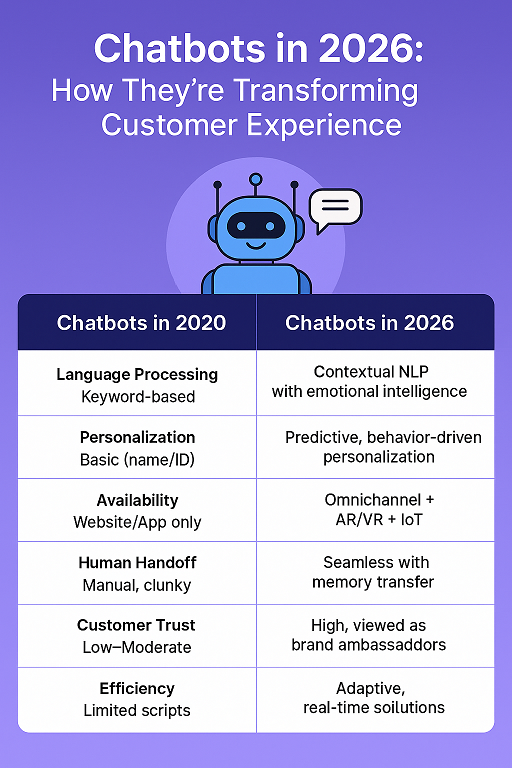
| Feature/Aspect | Chatbots in 2020 | Chatbots in 2026 |
|---|---|---|
| Language Processing | Keyword-based | Contextual NLP with emotional intelligence |
| Personalization | Basic (name/ID) | Predictive, behavior-driven personalization |
| Availability | Website/App only | Omnichannel + AR/VR + IoT |
| Human Handoff | Manual, clunky | Seamless with memory transfer |
| Customer Trust | Low–Moderate | High, viewed as brand ambassadors |
| Efficiency | Limited scripts | Adaptive, real-time solutions |
Even in 2026, challenges persist:
Brands that balance automation with empathy will win customer trust long-term.
Looking ahead, chatbots will evolve into fully autonomous brand representatives with emotional intelligence and deep decision-making abilities. Some experts predict “digital twins” of customer service reps, where bots mirror human personalities for a consistent brand voice.
Q1: Are chatbots replacing human agents?
Not entirely. They handle repetitive queries, while humans manage high-empathy, complex interactions.
Q2: How accurate are chatbots in 2026?
With advanced NLP and generative AI, accuracy rates exceed 90%, especially in customer intent recognition.
Q3: Which industries benefit most from chatbots?
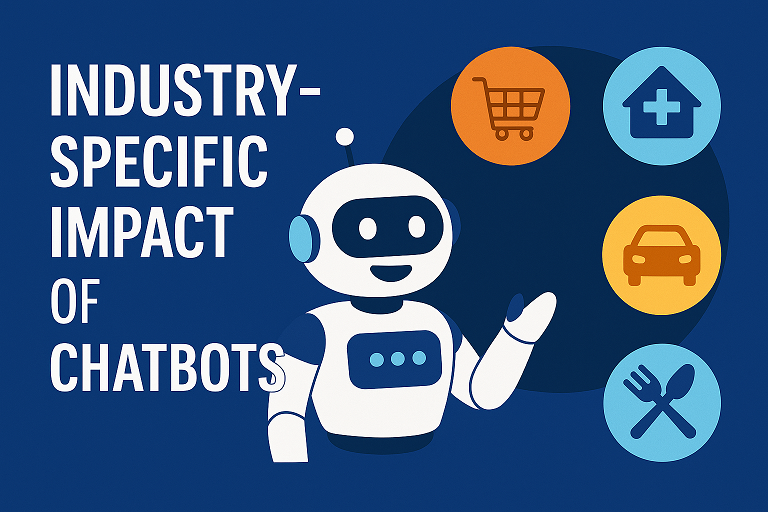
E-commerce, banking, healthcare, travel, and SaaS companies see the biggest impact.
Q4: How do chatbots affect SEO and digital marketing?
They capture conversational keywords, feed voice search optimization, and drive website engagement—improving organic rankings.
Q5: What’s the ROI of chatbot adoption in 2026?
Businesses report up to 300% ROI from reduced costs, increased sales, and higher customer retention.

Filza Taj is an MPhil in Human Resources-turned SEO Specialist, Content Strategist, and Digital Marketing Consultant with over 5 years of experience helping businesses in 30+ countries grow online. As the Founder of Stay Digital Marketers (staydigitalmarketers.com), she delivers results-driven solutions in link building, guest posting, PR distribution, niche edits, multilingual backlinks, and content marketing. She publishes daily SEO insights and actionable strategies to help brands strengthen their online presence, attract the right audience, and convert clicks into loyal customers.
Filza@staydigitalmarketers.com
Stay Digital Marketers
Need SEO, Link Building or Digital Marketing Services?
Request a Free Audit →