

In the world of digital marketing and PR, selecting the right distribution service for your press release can make or break your campaign’s effectiveness. One of the most debated topics is the nature of the backlinks you obtain — specifically, whether your distribution service delivers do-follow links (which pass link equity) or only no-follow links (which are often less directly beneficial for SEO). In this article, I’ll walk you through how to sift through the options, what to look for in a service, and how to maximise the value of your press release strategy in 2025 and beyond.
Before diving into practical selection criteria, it’s worth understanding the current state of press release distribution and link-building via PR.
What this tells us is: press releases are still relevant, especially for visibility, brand authority and SEO; but the link-equity benefit depends heavily on how the distribution service handles links and whether those links are picked up by third-party sites. So our goal is to choose a distribution service that gives you the best possible mix of link value plus media exposure.
I reviewed leading articles on how to choose press release services (for example, from Editorial. Link, Awisee, W3Era). Here’s a summary of what they get right — and where they leave gaps.
Therefore, we’ll fill those gaps: I’ll give you a clear evaluation framework, a checklist for do-follow link verification, region/GEO implications, and tie all of that into SEO + AEO (AI engines) optimisation.
Here are the key dimensions you should evaluate when choosing a press release distribution service — with particular emphasis on link value (do-follow), SEO, and modern search semantics.
| Dimension | What to Ask / Check | Why It Matters |
|---|---|---|
| Link Type & Attribute | Are the links included do-follow or only no-follow/sponsored? Ask for sample output, view the HTML of a published release. | Do-follow links pass link-equity (in theory) and contribute more directly to SEO; if only no-follow, value may shift more to brand visibility. |
| Link Placement & Anchor Text Control | Can you control the anchor text? How many links can you include? Are links contextual within the body, or just in the “boilerplate”? | Contextual links with meaningful anchor text generally carry more SEO weight and feel more natural to both search engines and humans. |
| Domain Authority of Outlets | Does the service support keyword-rich headlines, subheadings, and structured markup (if applicable)? Are images/videos included? Is the release optimised for discovery by AI or search engines? | A link from a strong, relevant domain carries more weight and boosts brand visibility. Also helps with “Trust” and “Authority” signals in E-E-A-T frameworks. |
| Distribution Reach & GEO Targeting | Which countries/regions does the service cover? Can you target local/regional outlets (e.g., Pakistan, South Asia, Middle East) if desired? | Do you get a full report of where the release was published, links obtained, anchor text, and traffic/referral data? Does the service provide link attribute info? |
| SEO / Multimedia Optimisation | Does the service support keyword-rich headlines, subheadings, and structured markup (if applicable)? Are images/videos included? Is the release optimised for discovery by AI or search engines? | With AI-driven search and snippet generation (AEO/GEO), modern releases become content assets for both media and search engines. |
| Longevity & Indexation | How long will the release stay live on the hosting outlets? Is it permanently archived/indexed? Can you retrieve the live URL(s) for tracking? | Links lose value if they drop off or are placed on low-quality pages that remove content after a short period. |
| Reporting & Analytics | Do you get a full report of where the release was published, links obtained, anchor text, traffic/referral data? Does the service provide link attribute info? | Transparency means you can verify exactly what you got and integrate with your KPIs (traffic, new leads, SEO impact). |
| Cost vs Value | What’s the price? How many outlets? How many links? What is the real ROI expected? | A cheap service with thousands of low-quality links may not provide the same benefit as a higher-cost one with high-authority placements. |
| Compliance & Lifespan | Are there any constraints on content or links (e.g., spammy domains, certain industries excluded)? What’s the typical timeline? | Ensuring you’re not flagged by search engines or placed on penalised domains is crucial for long-term SEO health. |
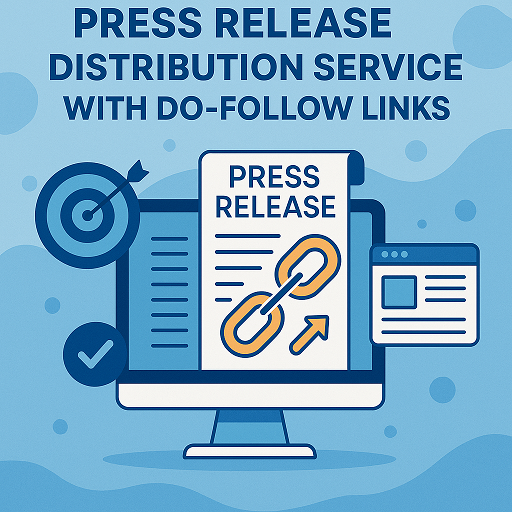
Since your focus is on “Press Release Distribution Service with Do-Follow Links”, let’s dig deeper into what you should verify and how to spot red flags.
rel=”nofollow”, rel=”sponsored”, or absence of rel attribute.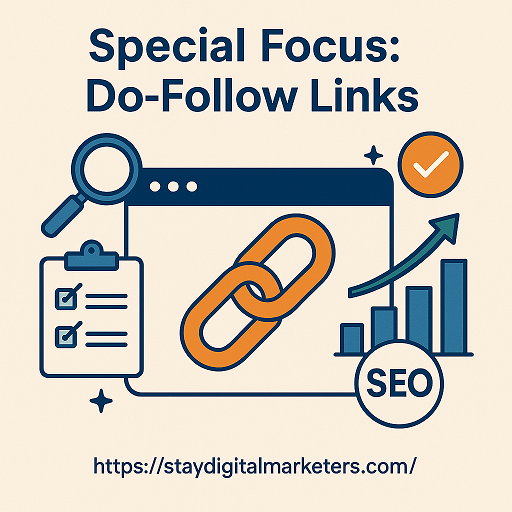
In 2025, choosing a press release distribution service isn’t just about link attributes; it’s about aligning with how search engines and AI are evolving. Here are three layers to optimise for:
AI-powered search engines (and features like snippet generation, entity-recognition, generative summaries) require that your press release be structured, fact-rich, and anchored to entities (brands, people, metrics).
If your business is based in or targeting Pakistan/Asia/Punjab or other specific markets, consider:
Let’s say you run a SaaS business in Lahore, Pakistan, and you’re planning to launch a new AI feature. You want to distribute a press release and get SEO value through do-follow links. Here’s how you apply the framework:
When evaluating press release distribution services, watch out for these warning signs:
With the right service and the right strategy, a single well-executed press release can deliver brand lift, meaningful backlinks, new leads, and enhanced search visibility. In the evolving landscape of AI-driven search and digital PR, the value is increasingly in quality + relevance rather than just quantity.
Q1: Do I absolutely need do-follow links from my press release distribution?
A1: It depends on your objective. If your goal is purely brand awareness, coverage, and referral traffic, no-follow links and mentions may suffice. But if you’re targeting SEO/link equity as part of your strategy, then yes — securing do-follow links (or at least links without “nofollow”/“sponsored” attributes) is more advantageous.
Q2: How many links should I include in a press release?
A2: While practices vary, many current guidelines suggest limiting to 1-2 relevant links in the body of your press release. Overloading with links can appear spammy and may reduce editorial and media pickup.
Q3: What’s the typical ROI of publishing a press release?
A3: Some studies indicate that press releases can deliver ROI in the range of 100-175% over 90 days for businesses that execute them well. Keep in mind, ROI here includes brand value, media placements, referral traffic, and SEO uplift — not just link count.
Q4: Will a press release guarantee a do-follow link?
A4: Not usually. Because many news outlets automatically apply nofollow or “sponsored” tags to links, especially when there is a paid component. You should view distribution as an opportunity to generate coverage and potential do-follow links, but you cannot assume every link will be do-follow. Verify and negotiate upfront.
Q5: How often should my business issue press releases?
A5: Quality matters more than quantity. One published guide notes that one in four businesses issues more than 10 releases a year. If you have genuinely newsworthy announcements (product launches, major hires, partnerships, data reports), those are strong candidates. Avoid releasing for the sake of it — the media and search engines can tell when content lacks substance.

Filza Taj is an MPhil in Human Resources-turned SEO Specialist, Content Strategist, and Digital Marketing Consultant with over 5 years of experience helping businesses in 30+ countries grow online. As the Founder of Stay Digital Marketers (staydigitalmarketers.com), she delivers results-driven solutions in link building, guest posting, PR distribution, niche edits, multilingual backlinks, and content marketing. She publishes daily SEO insights and actionable strategies to help brands strengthen their online presence, attract the right audience, and convert clicks into loyal customers.
Filza@staydigitalmarketers.com
Stay Digital Marketers
Need SEO, Link Building or Digital Marketing Services?
Request a Free Audit →