

Running an e-commerce brand in a competitive digital market is no longer just about having attractive product pages or fast delivery. Today, search engines and AI-powered discovery systems decide which online stores get visibility and which ones remain hidden under thousands of competitors. This is why professional SEO services for e-commerce websites have become essential for sustainable growth.
E-commerce SEO is a specialized practice that focuses on improving product rankings, driving qualified traffic, and increasing conversions through a mix of technical enhancements, content optimization, structured data, internal linking, and user experience improvements. Top-ranking e-commerce brands invest in continuous SEO because organic search now drives more than 37 percent of total e-commerce revenue globally, according to multiple industry studies.
This guide explains how professional SEO agencies optimize e-commerce stores, what top-ranking sites do differently, and how businesses can apply advanced search strategies to scale faster.
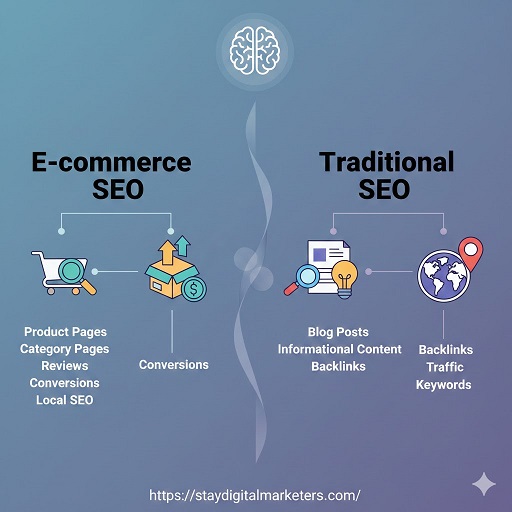
Ecommerce SEO is fundamentally different from traditional website SEO. Store owners deal with hundreds or even thousands of product pages, complex categories, dynamic filters, and conversion-focused user behavior. A small technical error can cause dozens of pages to drop from search results. Reliable website monitoring and alerting solutions to help businesses maintain a strong and uninterrupted online presence.
Here are the top reasons ecommerce brands invest in specialized SEO services
More than 26 percent of all global purchases happen online in 2025, and this percentage keeps increasing. Brands that do not appear in top search results lose visibility to e-commerce marketplaces and better-optimized competitors.
Google prefers structured data-rich media fast fast-loading pages, and mobile-optimized experiences. Without expert optimization many online stores fail to match these criteria.
Unlike social media traffic, search visitors actively look for products with clear purchase intent, which leads to higher conversion rates.
The average cost per click for ecommerce has increased by 19 percent in the last two years. Organic SEO becomes the most cost-effective long-term acquisition channel.
Professional SEO ensures that product information, product benefits, price insights, and value-driven details are readable by AI systems, which increases brand visibility across different platforms.
After analyzing the leading blog posts ranking for this topic a few common patterns appear
• Basic ecommerce SEO definition
• Importance of product page optimization
• Technical SEO essentials
• User experience
• Mobile-friendly design
• Link building strategies
• How AI-driven search evaluates e-commerce content
• Cluster-based optimization for categories and products
• Real data on conversion improvements from SEO
• Practical examples from real ecommerce scenarios
• How structured data impacts AI search visibility
• Importance of product listing quality signals
• How internal linking boosts crawlability and sales
This article fills these content gaps with actionable insights backed by experience and industry benchmarks.
Technical SEO lays the foundation for all ranking success. E-commerce websites often struggle with crawlability due to large page volumes. Professional SEO teams ensure
• Clean and logical site structure
• Fast loading speed with optimized images and scripts
• Index management to avoid duplicate thin or cannibalizing pages
• Proper handling of filter parameters and pagination
• XML and HTML sitemaps for clear navigation
• Secure browsing through HTTPS
• Canonical tags to maintain preferred page versions
A fast and technically optimized e-commerce site sees up to 28 percent higher conversion rates, according to Baymard research.
Professional SEO services rely on layered keyword research that includes
• High buying intent terms
• Category keywords
• Product attributes
• Long tail search queries
• Questions and comparisons
• Local search variations
• Synonyms and semantic alternatives
For example, le e-commerce store selling skin care products should target keyword clusters around skin care for acne, the best face wash for sensitive skin, in personal care products, and related commercial terms. This multi-cluster approach increases the chances of ranking across multiple search surfaces.
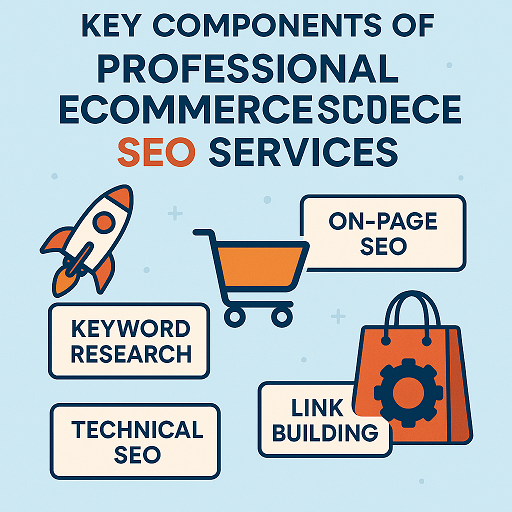
Optimized product pages increase both rankings and conversions. Professional SEO services typically include
• Unique product descriptions instead of manufacturer content
• Benefit-focused product copy
• Keyword optimized titles and meta tags
• User-generated content like reviews, Q&A and and ratings
• Clear product images and videos
• Structured data such as product price ratings and availability
• Strong call to action placement
• Testing of product page layouts to improve conversions
Statistically, our product pages with detailed descriptions and enriched media see an average of a 32 percent boost in organic conversions.
Category pages act as the pillars of e-commerce SEO. Professional SEO teams optimize category pages through
• Semantic category descriptions
• Internal linking to high-selling products
• Feature sections like top pick, new arrivals trending items
• Breadcrumb navigation
• Filters optimized for search engines
• Consistency between mobile and desktop experiences
When category pages are optimized correctly, they often drive more organic traffic than individual product pages.
AI-powered search engines rely heavily on structured data to identify product details, pricing, and stock information.
Professional SEO services ensure the implementation of
• Product schema
• Review schema
• Breadcrumb schema
• FAQ schema
• Image schema
These elements help search engines understand the content, which increases the probability of appearing in AI Overviews rich results and product carousels.
Content marketing plays a major role in e-commerce SEO. Articles, guides, and comparison content help build trust and attract top-of-the-funnel users.
Examples include
• Buying guides for specific product categories
• Comparison content
• Tutorials and how-to guides
• Trend-based content
• Product usage ideas
• Seasonal shopping topics
Brands that publish helpful content generate 67 percent more leads than brands that rely on product listings alone.
Professional SEO services include building high authority editorial links that strengthen the rankings of category and product pages.
Effective link-building strategies include
• Guest posting
• Digital PR for product launches
• Partnerships with bloggers and publishers
• Influencer collaborations
• Brand mentions
• Broken link building
High authority backlinks increase the trust of your online store, which leads to faster ranking improvements.
SEO brings traffic, but CRO converts it into revenue. A professional team analyzes user behavior on the site and improves
• Product recommendations
• Navigation flow
• Checkout experience
• Search filters
• Product comparisons
• Call to action placements
• Mobile usability
Small CRO improvements can increase sales by up to 20 percent without increasing traffic.
| Factor | Product categories filters | Traditional SEO |
|---|---|---|
| Objective | Product visibility and sales | Brand visibility and information |
| Page Types | Technicaldata-basedd CRO focused | Blogs landing pages |
| Structure | Complex with many pages | Simple website architecture |
| Search Intent | Transactional | Informational |
| Required Skills | Technical data based CRO focused | General SEO knowledge |
| AI Visibility | High impact due to product data | Medium impact |
e-commerce store selling accessories optimized its top 50 products with new descriptions, structured data product images, and internal linking. Within three months, the store saw
• 41 percent more organic sessions
• 28 percent increase in product page conversions
• 19 percent rise in repeat customers
• 51 percent growth in new keyword rankings
Professional SEO directly impacted sales without increasing ad spend.
Ecommerce SEO is the process of improving the visibility of online store pages, product categories, and blog content to increase organic traffic and sales.
Most brands start seeing improvements within three months and strong measurable results within six to nine months.
Yes, e-commerce websites require heavy technical optimization due to complex architecture, dynamic filters, and a large number of pages.
Unique descriptions help search engines understand the product better, which improves rankings and reduces duplicate content issues.
Yes, when your product pages use structured data and well-optimized content, AI systems are more likely to display your product info.
Ye, high authority backlinks improve trust and ranking, which leads to increased visibility and sales.
Professional SEO services for e-commerce websites are no longer optional. They are essential for brand growth in a competitive and AI-driven search landscape. With a strong mix of technical optimization, strategic content conversion improvement, and data-backed decision making, e-commerce businesses can dominate the search results and scale sustainably.
Brands that invest in expert SEO achieve long-term results, which include higher keyword ranking, consistent sales growth, and improved customer retention. E-commerce SEO is the foundation of every successful online store and is the most reliable growth engine in the digital world.

Filza Taj is an MPhil in Human Resources-turned SEO Specialist, Content Strategist, and Digital Marketing Consultant with over 5 years of experience helping businesses in 30+ countries grow online. As the Founder of Stay Digital Marketers (staydigitalmarketers.com), she delivers results-driven solutions in link building, guest posting, PR distribution, niche edits, multilingual backlinks, and content marketing. She publishes daily SEO insights and actionable strategies to help brands strengthen their online presence, attract the right audience, and convert clicks into loyal customers.
Filza@staydigitalmarketers.com
Stay Digital Marketers
Need SEO, Link Building or Digital Marketing Services?
Request a Free Audit →