
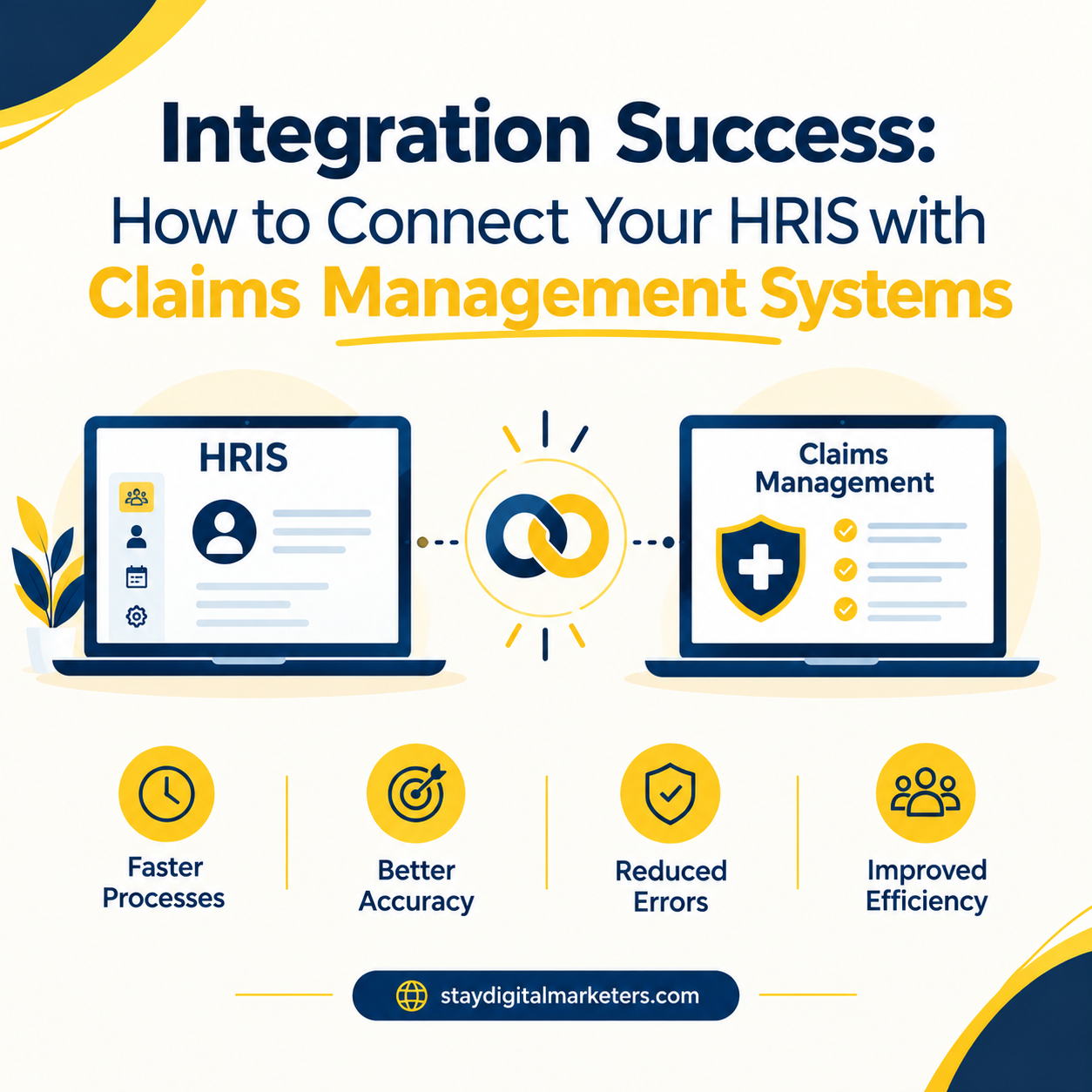
Most organisations run HR and workers compensation as separate systems, and most have a person whose job quietly includes keeping them in agreement.
That person notices when a worker’s cost centre changes in the HRIS and not in the claims system. They re-key employee details when a claim is lodged. They chase payroll for earnings history so a weekly payment can be calculated. They notice, eventually, that a worker on an open claim was terminated three weeks ago and nobody told injury management.
Integration removes that role. Doing it well removes it permanently; doing it badly converts a manual problem into an automated one that is harder to see.
The value is not primarily about saving keystrokes. It is about three specific failure modes.
Stale employee data. Claims decisions made against an employment record that changed months ago. Wrong cost centre, wrong manager, wrong site, wrong classification — each of which affects entitlements, reporting or who gets notified.
Earnings calculation delay. Weekly compensation depends on pre-injury average earnings. Where that requires a manual request to payroll, the first payment is delayed by however long that request takes, at precisely the moment an injured worker is most anxious about money.
Invisible employment events. Termination, transfer, extended leave and role change all affect an open claim. When claims only find out informally, they find out late.
The most common integration mistake is trying to synchronise everything bidirectionally. That creates conflict resolution problems, and conflict resolution problems create data nobody trusts.
Decide, field by field, which system owns the truth.
The HRIS owns the employee. It should push: identifier, name and contact details, employment status and dates, position and classification, site or location, cost centre, reporting line, and employment type. All one-directional. The claims system consumes these and never writes back.
Payroll owns earnings. It should push pre-injury average earnings components, ordinary hours, allowance and overtime history, and payroll codes. This is the integration with the highest immediate payoff, because it is the one standing between an accepted claim and a correct first payment.
The claims system owns the compensation calculation. It should push approved weekly payment amounts and periods, and the payment type coding payroll needs to process and later reconcile. This flow is where errors are most expensive, so it warrants an approval gate rather than straight-through processing.
Keep this minimal and non-clinical. Absence status and expected return date are usually appropriate. Diagnosis, treatment detail and medical certificates are not — they are health information, and most people with HRIS access have no legitimate need to see them.
The default should be that medical information stays in the claims system. Integration is not a reason to widen access to it.
API integration. Real-time or near real-time, event-driven, with proper error handling. The right answer where both systems support it. Changes propagate as they happen and failures are visible immediately.
Scheduled file transfer. A nightly or twice-daily secure transfer of a defined dataset. Less elegant, entirely adequate for most employee master data, and considerably easier to troubleshoot. Do not dismiss this — a reliable nightly file beats an unreliable API comfortably.
Manual export and import. Acceptable as a transitional state or for genuinely low-volume data. Not acceptable as a permanent answer for employee master data, because it reintroduces exactly the problem you set out to solve.
The choice is driven by what your systems actually support rather than what is theoretically best. A well-run scheduled transfer is a legitimate outcome, not a compromise to apologise for.
Integration moves personal information between systems with different user populations and different access models. Three things are worth settling before the first record moves.
Minimise the payload. Send only fields with a defined purpose. Every additional field is additional exposure with no offsetting benefit.
Map the resulting access. Work out who can see what in the receiving system once data arrives. It is common to discover that a routine integration has exposed injury information to a group of managers who never had it before.
Log the transfers. Regulators and auditors will ask what moved, when, and who could see it. Design that in rather than reconstructing it later.
Integrate in stages rather than at once, in this order:
Most organisations get substantial benefit from the first two and never need the fourth.
Integration is increasingly the precondition for everything else rather than an efficiency measure in its own right. Automated validation, predictive flagging of claims likely to escalate, and workflow automation all depend on current, complete, well-structured data flowing between systems. A useful survey of what is actually available today versus what remains prospective is this overview of automation in claims management.
None of it works on manually reconciled data. The integration is the foundation those capabilities sit on.
The practical first step is not technical. Ask your injury management team what they currently re-key, and what they most often find out too late.
That conversation produces a specification faster than any requirements workshop, because the people doing the manual reconciliation already know exactly where the systems disagree. Vendors including Elumina and others in the Australian market build integration into implementation, but the scoping still depends on someone inside the organisation knowing which handoffs actually hurt.
Start with the re-keying. It is where the cost is, and it is where the errors come from.
For organisations looking to strengthen their digital presence in the HR technology and claims management space, Stay Digital Marketers helps businesses build online authority through relevant SEO link building and content marketing. By connecting businesses with niche relevant publications and audiences, we help improve search visibility and support long term organic growth.

Filza Taj is an MPhil in Human Resources-turned SEO Specialist, Content Strategist, and Digital Marketing Consultant with over 5 years of experience helping businesses in 30+ countries grow online. As the Founder of Stay Digital Marketers (staydigitalmarketers.com), she delivers results-driven solutions in link building, guest posting, PR distribution, niche edits, multilingual backlinks, and content marketing. She publishes daily SEO insights and actionable strategies to help brands strengthen their online presence, attract the right audience, and convert clicks into loyal customers.
Filza@staydigitalmarketers.com
Stay Digital Marketers
Need SEO, Link Building or Digital Marketing Services?
Request a Free Audit →