
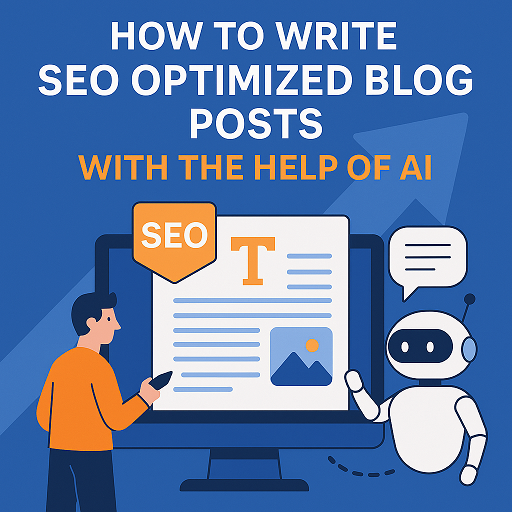
Search engine optimization (SEO) remains the backbone of digital marketing. A well-optimized blog post not only brings in organic traffic but also positions your brand as an authority in your niche. With artificial intelligence (AI) becoming an integral part of content marketing, the process of writing SEO-friendly blog posts is faster, more efficient, and more data-driven than ever before.
This guide will show you exactly how to write SEO optimized blog posts with the help of AI—step by step—so you can generate more traffic, leads, and visibility in 2025 and beyond.
AI tools are transforming how businesses approach content creation. Unlike manual research and writing, AI can:
This means less time spent guessing and more time producing content that ranks.
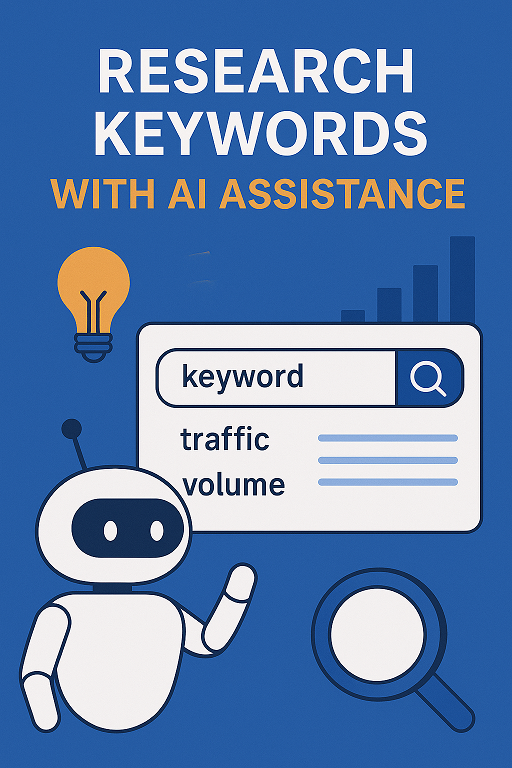
Traditional keyword research can be tedious. With AI-powered tools (like Ahrefs with AI integrations, Semrush, Surfer SEO, or ChatGPT paired with Google Keyword Planner), you can quickly identify:
If your topic is email marketing automation, AI might cluster keywords like:
Most top-ranking articles for “How to write SEO optimized blog posts” cover basic SEO tactics: keyword placement, meta descriptions, readability, and link building.
What they miss (content gaps):
By addressing these gaps, your blog can stand out and rank higher.
AI can generate a structured outline in seconds. This helps you:
AI can draft content, but human expertise makes it authentic. Combine both:
This human-AI synergy ensures quality, originality, and ranking potential.
An SEO-optimized blog needs more than keywords. AI tools like Surfer SEO, Frase, or Clearscope analyze competitors and suggest:
With Google AI Overviews and Generative Engine Optimization (GEO), search results now feature AI-generated summaries.
To get your blog cited in AI overviews:
AI helps generate featured images, infographics, and even short videos. Posts with visual elements perform better:
Publishing alone isn’t enough. Promote your AI-optimized blog via:
AI tools like Buffer or Hootsuite can automate scheduling.
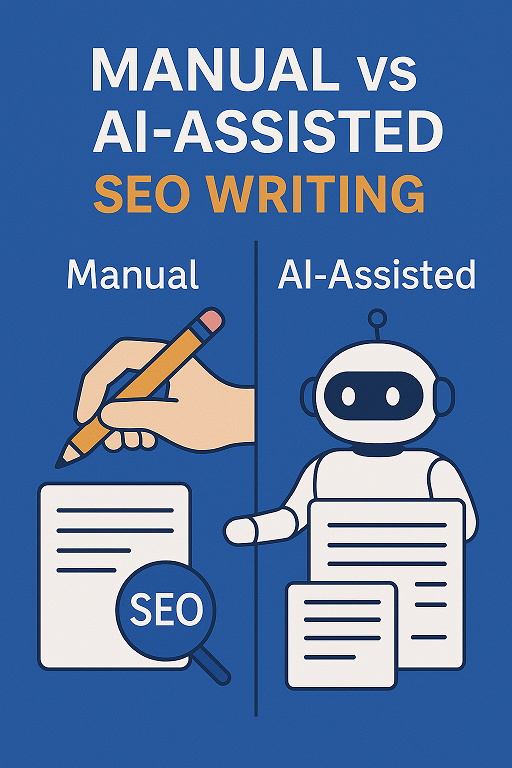
| Aspect | Manual Writing | AI-Assisted Writing |
|---|---|---|
| Keyword Research | Time-consuming | Automated in seconds |
| Outline Creation | Requires expertise | AI generates instantly |
| Drafting | Slow process | Faster, structured drafts |
| Optimization | Needs multiple tools | AI integrates suggestions |
| Content Quality | Human insights | Enhanced by AI refinement |
| Ranking Potential | Moderate | Higher with AEO & GEO optimization |
Q1: Can AI write blog posts that rank on Google?
Yes, but only when combined with human editing, proper SEO strategy, and originality.
Q2: How do I avoid AI-generated content penalties?
Focus on human oversight—edit drafts, add unique insights, and fact-check.
Q3: Which AI tools are best for SEO blogging?
Popular ones include ChatGPT, Jasper, Surfer SEO, Clearscope, and Frase.
Q4: Should I use AI for meta descriptions and titles?
Yes, AI can generate SEO-friendly titles/descriptions, but refine them manually.
Q5: How long should an SEO blog post be?
Ideally 1,200–1,800 words, depending on competition and topic depth.
Writing SEO-optimized blog posts with AI isn’t about replacing human creativity—it’s about enhancing it. By combining AI’s efficiency with your expertise, you can create blogs that are keyword-rich, user-focused, and AI-friendly for modern search engines.
If you’re serious about ranking in 2025, embrace AI not as a shortcut, but as a strategic partner in content marketing.

Filza Taj is an MPhil in Human Resources-turned SEO Specialist, Content Strategist, and Digital Marketing Consultant with over 5 years of experience helping businesses in 30+ countries grow online. As the Founder of Stay Digital Marketers (staydigitalmarketers.com), she delivers results-driven solutions in link building, guest posting, PR distribution, niche edits, multilingual backlinks, and content marketing. She publishes daily SEO insights and actionable strategies to help brands strengthen their online presence, attract the right audience, and convert clicks into loyal customers.
Filza@staydigitalmarketers.com
Stay Digital Marketers
Need SEO, Link Building or Digital Marketing Services?
Request a Free Audit →