

Local SEO tools are software platforms that help businesses optimize their presence in geographically targeted search results, including Google Maps, the Local Pack, and AI-powered answer engines. In 2026, the definition of “ranking locally” has expanded far beyond the traditional three-pack. Customers now discover businesses through Google AI Overviews, voice search, ChatGPT, and Perplexity. The tools that actually move the needle today must address all of these surfaces simultaneously.
This guide covers the ten best local SEO tools for 2026, evaluated across citation management, rank tracking, Google Business Profile optimization, review generation, and AI search visibility. Whether you manage a single storefront or a multi-location franchise, the right stack from this list will give you a measurable edge in local Google rankings.
Local SEO is the practice of optimizing a business’s online presence so it ranks prominently when nearby customers search for relevant products or services. It covers Google Business Profile management, NAP (Name, Address, Phone) consistency across directories, citation building, review signals, and localized on-page content.
The tools matter because local ranking signals have grown significantly more complex. According to industry research, Google Business Profile signals account for roughly 32% of local ranking factors, followed by on-page signals at 19% and review signals at 16%. Managing these signals manually across dozens of directories and review platforms is impossible without dedicated software.
The shift toward AI-generated search results adds another layer. Google’s AI Overviews now appear for a growing share of local queries, and tools that cannot track or optimize for this layer are already leaving visibility on the table.
Before diving into individual tools, practitioners benefit from a structured way to evaluate their options. The LCRAT Framework covers five dimensions worth scoring on a 1-to-5 scale for each tool:
Using this framework across the tools below will help agencies and in-house teams build the right stack for their specific use cases.
Best for: The non-negotiable foundation of any local SEO strategy.
Google Business Profile (GBP) remains the single highest-leverage activity in local SEO. No third-party tool replaces it because it is the direct channel through which Google receives your business data. A complete, accurate, and actively maintained GBP profile directly influences Local Pack rankings, Maps visibility, and how Google populates AI Overviews with local business information.
Key tasks to manage through GBP include keeping business categories accurate, posting updates weekly, enabling messaging, uploading fresh photos, and responding to every review within 24 hours. Businesses with active GBP profiles consistently outperform inactive ones in proximity-based searches.
Pricing: Free
Best for: Agencies managing citations and rank tracking for multiple client locations.
BrightLocal is one of the most comprehensive dedicated local SEO platforms on the market. It combines citation building, citation auditing, rank tracking, reputation management, and white-label reporting under one subscription.
Its citation tracker checks over 80 major directories for NAP consistency, identifies duplicate listings, and flags discrepancies that suppress rankings. The rank tracking module covers Local Pack positions, Maps positions, and organic rankings, with the ability to set tracking at the city or postcode level. For agencies running local SEO campaigns, the white-label report builder produces client-ready PDF dashboards that tie ranking improvements to citation health.
BrightLocal’s manual citation building service is worth noting separately. Unlike automated syndication, manual submission produces cleaner, more consistent listings that survive directory updates.
Pricing: Plans start at $29 per month per location.
Best for: Businesses that want citation management and review monitoring inside the broader Semrush ecosystem.
Semrush Local extends the core Semrush platform with a dedicated local toolkit. It automates listing distribution to major mapping databases, monitors incoming reviews across platforms, and flags GBP issues through a structured audit interface. Users who already rely on Semrush for keyword research and site auditing benefit from having local data in the same workspace as their broader SEO workflow.
The Listing Management tool syncs business information across Google, Apple Maps, Bing, Facebook, and dozens of niche directories from a single dashboard. Changes made in Semrush Local propagate across connected directories automatically, which significantly reduces the time required to maintain NAP consistency during rebrands or address changes.
Pricing: Local add-on starts at $20 per location per month on top of an existing Semrush subscription.
Best for: Agencies and brands requiring hyper-precise local rank tracking across hundreds of locations.
Nightwatch was architected from the ground up for location-specific rank tracking, and it shows. The platform supports tracking keyword rankings from over 100,000 locations worldwide, which makes it the right choice for franchises, regional service businesses, and agencies running multi-city campaigns.
Its geo-grid technology tracks rankings from GPS coordinate clusters, displaying results as color-coded visual heatmaps. This means you can see exactly which neighborhoods your client dominates and which ZIP codes need attention, rather than averaging rankings across an entire city. Nightwatch also added AI search visibility tracking alongside its traditional rank data, covering a growing share of the AI search surfaces where local queries now resolve.
Pricing: Plans start at $39 per month.

Best for: Visual geo-grid rank tracking and competitive position mapping.
Local Falcon pioneered the grid-based rank tracking visualization that many competitors have since adopted. Its core product scans Google Maps rankings from a customizable grid of points surrounding a business location, producing a heatmap that shows exactly where a business ranks within a specific radius.
This level of spatial granularity is essential for service-area businesses and brick-and-mortar locations in competitive markets. A restaurant might rank in the top three positions within a quarter-mile radius but fall out of the Local Pack entirely at half a mile. Local Falcon makes those visibility gaps visible and actionable.
Pricing: Credit-based model with plans starting around $24 per month.

Best for: Small businesses and mid-market brands looking for straightforward citation management.
Moz Local focuses on automated listing distribution and ongoing monitoring. It submits business information to major data aggregators and directories, then monitors those listings continuously for changes or duplicates introduced by third parties.
The platform’s duplicate detection is a particular strength. Duplicate listings on Google Maps and Yelp actively suppress rankings by splitting review counts and creating conflicting NAP signals. Moz Local identifies and flags these issues faster than most competing tools, allowing practitioners to request suppression or removal before they cause lasting ranking damage.
The reputation management module pulls together reviews from Google and Facebook in one place, with alerts for new reviews and response prompts built into the dashboard.
Pricing: Plans start at $14 per location per month.
Best for: Citation building, citation auditing, and local link prospecting.
Whitespark built its reputation on citation research before expanding into a broader local SEO platform. Its Citation Finder tool is still one of the most powerful ways to identify citation opportunities specific to a business’s industry and geography. Rather than submitting to a generic directory list, practitioners use Whitespark to find the exact directories where competitors are listed and build citations there first.
The Reputation Builder feature automates review request campaigns via email and SMS, making it practical for service businesses to build review velocity without manual outreach. Whitespark also offers a managed citation building service for businesses that prefer done-for-you execution.
Pricing: Local rank tracker plans start at $20 per month; citation services are priced per location.

Best for: Agencies needing multi-location reporting with white-label client dashboards.
SE Ranking offers a well-rounded local SEO feature set at a price point below Semrush, making it a strong choice for growing agencies. Its local rank tracker supports tracking at the city, neighborhood, and ZIP code level, with historical data going back far enough to show ranking trend lines across algorithm update windows.
The platform’s white-label reporting is particularly flexible, allowing agencies to create custom-branded dashboards that clients access directly via a branded URL. Local keyword tracking, GBP audit data, and review summaries can all be included in these reports with minimal configuration.
Pricing: Plans start at $65 per month.
Best for: Enterprise brands and franchises managing listings at scale across hundreds of locations.
Yext operates a publisher network of over 200 directories and platforms, allowing enterprise clients to update location data simultaneously across all connected endpoints from a single platform. For brands managing hundreds or thousands of locations, this kind of scale is difficult to replicate with tools designed for smaller operations.
Beyond listings, Yext offers local pages, reviews management, analytics, and a structured data management layer that feeds accurate information into Google’s Knowledge Graph. For multi-location brands where franchise consistency is critical, Yext’s centralized control model justifies its premium pricing.
Pricing: Enterprise pricing, typically starting around $199 per location per year at scale.

Best for: Understanding how Google actually indexes and ranks your local pages.
Google Search Console remains non-negotiable for any serious local SEO practitioner. While it is not a dedicated local SEO tool in the same category as the others on this list, it provides first-party data that no third-party platform can fully replicate. Local landing pages, service pages, and location-specific content all generate search performance data in GSC that reveals which queries drive impressions and clicks at the city or neighborhood level.
Pairing GSC data with the rank tracking output from Nightwatch or SE Ranking gives practitioners the clearest possible picture of local search performance: one showing what Google is doing with your pages, the other showing where you appear in real SERPs across specific locations.
Pricing: Free
| Tool | Best For | Starting Price | Citation Mgmt | Rank Tracking | AI Visibility |
|---|---|---|---|---|---|
| Google Business Profile | Foundation | Free | No | No | Partial |
| BrightLocal | Agencies, multi-location | $29/mo | Yes | Yes | No |
| Semrush Local | Full SEO stack users | $20/mo add-on | Yes | Yes | Partial |
| Nightwatch | Precise local tracking | $39/mo | No | Yes | Yes |
| Local Falcon | Grid-based tracking | $24/mo | No | Yes | No |
| Moz Local | Small/mid-size businesses | $14/mo | Yes | No | No |
| Whitespark | Citation research | $20/mo | Yes | Yes | No |
| SE Ranking | Agency white-label | $65/mo | Partial | Yes | No |
| Yext | Enterprise scale | ~$199/yr/loc | Yes | No | No |
| Google Search Console | First-party data | Free | No | Partial | No |

No single tool covers every local SEO need in 2026. The most effective approach combines three to four specialized platforms rather than relying on a single all-in-one solution that does everything adequately but nothing exceptionally well.
A practical three-tool stack for most local businesses looks like this:
Agencies serving multiple clients should add SE Ranking for its white-label reporting layer, while enterprise brands managing dozens or hundreds of locations should evaluate Yext for the scale of its publisher network.
Ignoring citation inconsistencies. Many businesses set up citations once and never monitor them. Third parties regularly overwrite or duplicate listings in major directories, creating conflicting NAP signals that suppress rankings over time.
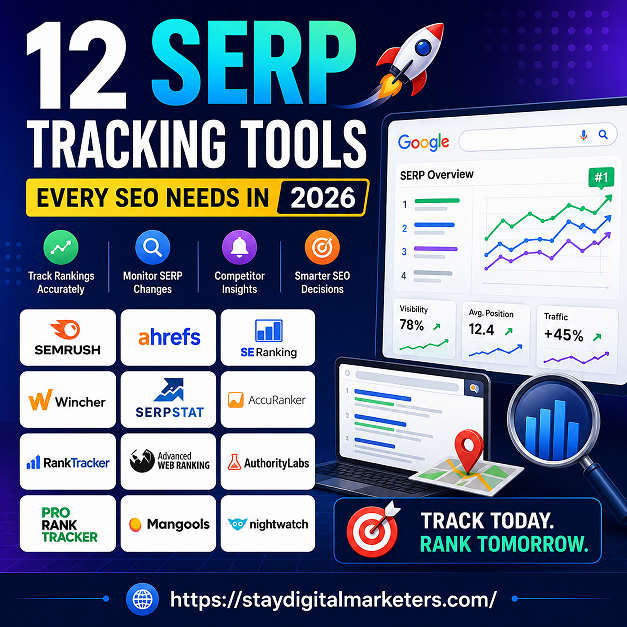
Tracking city-level rankings instead of neighborhood-level. A business ranking sixth in a major city may rank first within half a mile of its location. Using geo-grid tools like Local Falcon or Nightwatch reveals the true picture.
Not connecting rank tracking data to Google Search Console. Rank tracking tools show estimated positions; GSC shows actual Google-reported impressions and clicks. Using both together eliminates guesswork.
Overlooking AI search visibility. In 2026, a significant share of local queries resolve in AI Overviews or conversational AI interfaces. Tools that do not track this surface are missing a growing portion of how customers find local businesses.
For any business that depends on local search traffic, paid local SEO tools produce a clear return. A single percentage-point improvement in Local Pack click-through rate can generate hundreds of additional monthly calls and direction requests for a business in a competitive market. The cost of a $29-to-$99 monthly tool subscription is typically recovered within days once ranking improvements begin converting to customers.
The higher the competition in a local market, the stronger the case for investing in tools that provide geo-grid precision, automated citation management, and proactive review monitoring.
What is the best local SEO tool for small businesses in 2026? Moz Local is the most practical entry point for small businesses, combining citation management and review monitoring at the lowest per-location price. Pairing it with the free Google Business Profile Manager and Google Search Console covers most local SEO fundamentals without significant cost.
Which local SEO tool has the best rank tracking for Google Maps? Nightwatch and Local Falcon both offer geo-grid rank tracking that shows Maps positions at the neighborhood or GPS-coordinate level. Nightwatch edges ahead for multi-location and agency use cases due to its depth of location coverage.
Can a local business rank on Google without using paid SEO tools? Yes, but with significant limitations. Google Business Profile Manager and Google Search Console are both free and form the foundation of any local SEO effort. Paid tools accelerate citation management, competitive analysis, and rank monitoring in ways that are difficult or impossible to replicate manually at any meaningful scale.
How many local SEO tools does a business actually need? Most businesses get strong results from a stack of two to three tools: one for citation management and GBP monitoring, one for rank tracking, and Google Search Console for first-party data. Adding a review generation tool from Whitespark or BrightLocal rounds out a complete local SEO workflow.
What local SEO signals matter most for Google rankings in 2026? GBP signals remain the dominant local ranking factor at approximately 32% of the total signal weight, followed by on-page signals, review signals, and link signals. Active, accurate, and fully completed GBP profiles consistently outperform sparse or neglected profiles in head-to-head local rankings.
Is Yext worth the cost for small and medium businesses? Yext is designed for enterprise scale and its pricing reflects that. For businesses managing fewer than ten locations, BrightLocal or Semrush Local will provide comparable citation management at a fraction of the cost. Yext becomes worth evaluating once a brand is managing twenty or more locations where manual monitoring is no longer practical.
How does AI search affect local SEO strategy in 2026? Google’s AI Overviews now synthesize local business information for a growing range of queries, pulling data from GBP, structured data on websites, and trusted directory listings. Businesses with clean, consistent, and comprehensive local data are more likely to be cited or featured in AI-generated local answers. Tools like Nightwatch and Search Atlas have started tracking AI search visibility as a distinct metric alongside traditional rank positions.
Rankings are only part of the local SEO picture. Agencies and in-house teams that consistently outperform competitors combine tool-driven optimization with strategic authority building. This includes earning local press mentions, getting listed on industry-specific directories, and building a backlink profile that reflects genuine community relevance.
Stay Digital Marketers is an industry resource that works with brands on the authority-building side of search visibility, covering services such as guest posting, press release distribution, SaaS backlinks, niche edits, Wikipedia page creation, and Google Knowledge Panel creation. For teams running local SEO at scale, having a partner focused on the link and entity authority layer complements the citation and ranking work covered by the tools in this guide.

Filza Taj is an MPhil in Human Resources-turned SEO Specialist, Content Strategist, and Digital Marketing Consultant with over 5 years of experience helping businesses in 30+ countries grow online. As the Founder of Stay Digital Marketers (staydigitalmarketers.com), she delivers results-driven solutions in link building, guest posting, PR distribution, niche edits, multilingual backlinks, and content marketing. She publishes daily SEO insights and actionable strategies to help brands strengthen their online presence, attract the right audience, and convert clicks into loyal customers.
Filza@staydigitalmarketers.com
Stay Digital Marketers
Need SEO, Link Building or Digital Marketing Services?
Request a Free Audit →