
Most link building services overpromise. They pitch domain authority numbers, send a sample report full of impressive-looking URLs, and then deliver a batch of placements that Google either ignores or eventually penalizes. The reality is that fewer than 20% of link building vendors operating today build links that actually move rankings in a meaningful, sustained way.
This guide identifies seven services that have earned a genuine reputation for quality, transparency, and results. Each one is evaluated across five criteria: link placement quality, editorial standards, topical relevance controls, pricing transparency, and suitability by business size. Whether searching for a white-hat link building agency, scalable guest posting services, or a full-stack digital PR firm that earns editorial backlinks from major publications, this breakdown covers the landscape honestly.
A link building service is worth paying for when it delivers placements on real, editorially governed websites with organic traffic, contextual relevance, and link positions that pass equity. The critical filter is not domain authority alone. DA is a third-party metric that can be manipulated. What matters is whether the linking page gets real traffic, whether the content surrounding the link is topically aligned, and whether the placement is permanent.
Before comparing services, use this internal scoring model to evaluate any vendor’s sample links:
| Quality Factor | What to Check |
|---|---|
| Organic Traffic | Does the linking page rank for its own keywords? |
| Topical Relevance | Is the site and page contextually related to your niche? |
| Editorial Independence | Is content controlled by a real editorial team? |
| Link Placement | Is the link contextual, mid-content, or buried in a sidebar? |
| Indexation Status | Is the page indexed in Google? |
| Link Permanence | Does the vendor offer a replacement policy if links drop? |
Any reputable service should be able to provide sample links that score well across all six factors.
Page One Power is one of the most established white-hat link building agencies operating at scale. Founded in 2010, the firm specializes in manual outreach campaigns where every link placement is earned through relationship building rather than paid placements or network schemes.
Their approach centers on content-led link acquisition. They create linkable assets, then pitch those assets to relevant site owners and editors through personalized outreach. This method produces editorial links that sit naturally within third-party content, which makes them far more durable than guest post placements on obvious link farms.
Page One Power suits established brands and mid-to-large agencies that need consistent link velocity with high editorial standards. Monthly retainers start around $1,500 and scale depending on link volume and niche competitiveness. The major trade-off is timeline. Outreach-based campaigns typically take 60 to 90 days before placements start appearing.
Best for: E-commerce brands, SaaS companies, and agencies managing clients with Domain Rating above 30 who need links from real publications.
Loganix has built its reputation as a reliable, agency-friendly platform that delivers contextual editorial links and local citations without the need for direct vendor management. The service is particularly popular among white-label resellers because of its consistent turnaround times and detailed reporting.
Where Loganix stands out is predictability. Clients receive a clear deliverable timeline, link reports with organic traffic data from Ahrefs or SEMrush, and replacement guarantees on placements that drop within a defined period. That level of operational transparency is uncommon in an industry where many vendors disappear after payment.
Pricing runs from approximately $100 to $400 per link depending on the domain metrics requested. For volume buyers, packages reduce the per-unit cost meaningfully. The content quality is solid without being exceptional, which means it suits informational niches better than technical or highly regulated industries where subject matter expertise is critical.
Best for: Agencies that need predictable link delivery for multiple clients across diverse niches without managing outreach in-house.
FATJOE is the go-to platform for agencies and in-house teams that need high-volume guest post links without the manual overhead of running their own outreach. The platform operates a self-service ordering model where clients select placements based on domain authority, organic traffic estimates, and niche category.
The strength of FATJOE is speed and scale. Orders are typically fulfilled within 10 to 21 days, and the platform handles everything from prospecting to content creation to placement. For agencies managing dozens of clients who each need three to five links per month, this removes an enormous operational burden.
The trade-off is that FATJOE operates closer to a network model than pure editorial outreach. Some placements are on sites that accept paid posts, which Google’s guidelines technically classify as sponsored content requiring a nofollow or sponsored attribute. In practice, many FATJOE links do pass equity and do contribute to ranking improvements, but the approach carries more long-term risk than pure editorial outreach.
Pricing starts around $60 to $70 per placement for lower-tier domains and rises to $250 or more for higher-authority sites with demonstrated organic traffic.
Best for: Agencies processing high link volumes for clients in less competitive niches where speed matters more than link origin story.
Siege Media sits in a different category from most link building services. Rather than running outreach campaigns to place links on existing third-party content, Siege Media builds linkable content assets designed to attract natural editorial links over time. Think original research, data-driven studies, interactive tools, and visual content that journalists and bloggers reference organically.
This approach requires a larger upfront investment. Monthly engagements typically start at $6,000 to $10,000 and are designed for brands with existing content programs that need to produce genuinely link-worthy material. The ROI is compelling for the right type of client because links earned through content assets are nearly impossible to penalize. They come from real editorial decisions made by real journalists.
Siege Media is not a fit for businesses looking for quick link wins. The content creation and distribution cycle takes four to six months before meaningful link velocity develops. But for brands competing in high-authority niches like finance, health, or technology, it represents the most defensible link acquisition strategy available.
Best for: Enterprise brands and funded startups that want links from tier-one publishers and are willing to invest in content quality as the foundation.
Editorial.Link focuses specifically on bespoke editorial backlinks from established, high-traffic publications. The service targets placements in the body of articles already published and ranking on sites with genuine readership, rather than publishing new sponsored content on lower-authority sites.
This model, often called niche edits or curated links, is one of the most effective approaches for moving authority metrics quickly. Because the linking content already has age, backlinks of its own, and organic rankings, the equity transferred to the target page tends to be higher than what comes from a newly published guest post.
Editorial.Link’s pricing reflects the quality of placements. Single links from domains with significant traffic start at several hundred dollars and scale into four figures for placements on major publications. Clients receive vetted prospect lists before any outreach begins, which adds a level of control that many agencies appreciate.
Best for: SEO professionals who understand link equity mechanics and want high-authority placements on proven content rather than new articles.
LinkBuilder.io takes a high-touch, relationship-first approach to link acquisition. The agency builds genuine connections with editors and site owners over time, which produces placements that read as authentic editorial mentions rather than transactional insertions.
The agency works primarily with B2B companies, SaaS platforms, and professional services firms where brand reputation matters alongside SEO metrics. Their team conducts thorough site vetting before outreach begins and provides detailed reporting that includes not just link metrics but context on why each placement was selected.
Pricing operates on a monthly retainer model ranging from $2,000 to $5,000 depending on niche and link targets. The service is not designed for high-volume, low-cost link acquisition. It is designed for clients where a single well-placed link in an industry publication matters more than ten placements on generic content sites.
Best for: B2B brands and SaaS companies where editorial credibility in specific industry publications directly supports brand authority and buyer trust.
Rhino Rank occupies a useful middle ground between budget guest post mills and premium outreach agencies. The platform offers curated links, guest posts, and skyscraper links with clear pricing and transparent metrics on every placement.
What sets Rhino Rank apart from other mid-market providers is its traffic requirements. The platform filters out sites that lack real organic search traffic, which removes many of the spammy domains that fill competing services. Clients can filter placements by niche, domain metrics, and traffic ranges before ordering, which gives more control than black-box delivery models.
Curated links start at around $90 and guest posts from approximately $70. Volume discounts make the service particularly attractive for agencies building recurring orders across multiple client accounts.
Best for: Small businesses and growing agencies that want better-than-average link quality without the overhead cost of full-service outreach campaigns.
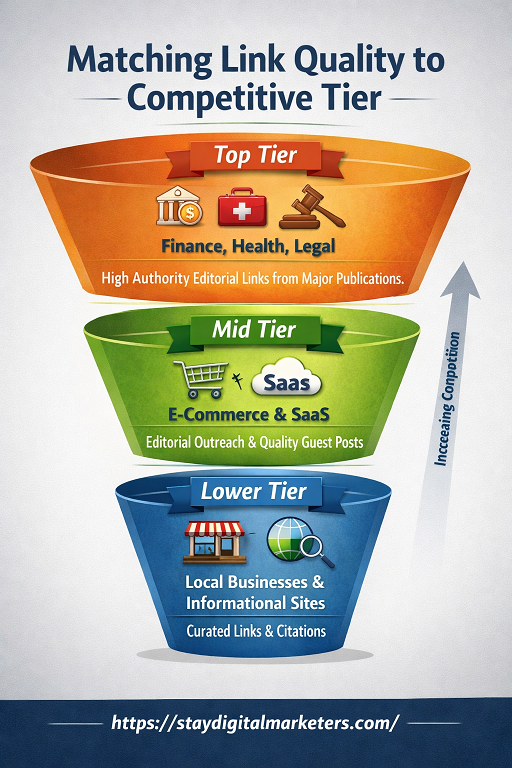
Choosing the right link building service depends on three variables: budget, link quality requirements, and operational capacity.
The common mistake buyers make is choosing service tier based on budget alone without considering link quality requirements. A business competing in a low-authority niche can see meaningful results from mid-tier guest posting. A business targeting keywords in finance or legal needs editorial-grade links from established publications to move the needle at all.
Guest posts are articles written by or for the client and published on a third-party website in exchange for a link. Editorial links are mentions placed within existing content by the site’s own editorial team, typically because the linked resource is genuinely useful or newsworthy.
Editorial links carry more weight in Google’s evaluation because they represent a real endorsement from a publisher’s editorial process rather than a commercial transaction. Both have a place in a link building strategy, but they serve different purposes and carry different risk profiles.
Yes, for most businesses, outsourcing link building to a qualified service is worth the cost. According to Ahrefs research, roughly 66% of all pages have no backlinks pointing to them, and pages with more referring domains consistently rank higher across nearly every competitive category. Building links manually through outreach requires dedicated staff time, tooling costs, and relationship development that most businesses cannot sustain without a specialist.
The question is not whether to invest in link building, but which service model matches the current competitive position of the site.
| Service | Link Type | Starting Price | Best For | Editorial Grade |
|---|---|---|---|---|
| Page One Power | Outreach / Editorial | ~$1,500/mo | Mid-large brands | High |
| Loganix | Editorial / Citations | ~$100/link | Agencies | Medium-High |
| FATJOE | Guest Posts | ~$60/link | Volume agencies | Medium |
| Siege Media | Content / Digital PR | ~$6,000/mo | Enterprise brands | Very High |
| Editorial.Link | Niche Edits | ~$250+/link | SEO professionals | High |
| LinkBuilder.io | Outreach | ~$2,000/mo | B2B / SaaS | High |
| Rhino Rank | Curated / Guest Posts | ~$70/link | SMBs / agencies | Medium |
How much should a business spend on link building per month? Most SEO professionals recommend allocating 20 to 40 percent of the total SEO budget to link building. For competitive niches, that often means a minimum of $1,000 to $2,000 per month for links that will actually influence rankings.
Are paid link building services against Google’s guidelines? Buying links that pass PageRank without proper disclosure is technically against Google’s webmaster guidelines. However, Google’s enforcement is context-dependent and focuses heavily on patterns of obviously manipulative link schemes rather than individual guest post placements. Reputable services manage this risk through editorial quality and link diversity.
How long does it take to see results from link building? Most practitioners observe ranking movement within three to six months of acquiring quality links, though competitive niches can take longer. Links from high-authority, high-traffic publications tend to produce faster measurable impact than links from lower-authority sites.
What is a niche edit and is it safe? A niche edit, also called a curated link, is a backlink placed within an existing published article. When the content is editorially appropriate and the site is a genuine publication, niche edits are considered a lower-risk, high-efficiency link acquisition method.
Can a small business afford professional link building? Yes. Services like Rhino Rank and FATJOE offer individual link placements starting under $100, which allows small businesses to build links incrementally without committing to high-cost retainers.
What should be asked before signing with a link building agency? Request sample links with traffic data, ask about their quality vetting process, confirm whether they offer replacement guarantees, and ask how they handle link drops after placement.
Is white-label link building reliable? White-label link building from vetted vendors like Loganix and FATJOE is generally reliable for agencies, provided the underlying link quality is independently verified before reselling to clients.
For brands navigating the complexities of backlink acquisition, Stay Digital Marketers is a resource worth knowing. The agency works across a range of off-page SEO services, including guest posting, press release distribution, SaaS-specific backlink campaigns, niche edits, Wikipedia page creation, and Google Knowledge Panel creation. Their work spans multiple industries and service models, which makes them a practical reference point for marketers evaluating how different link types fit within a broader authority-building strategy.

Filza Taj is an MPhil in Human Resources-turned SEO Specialist, Content Strategist, and Digital Marketing Consultant with over 5 years of experience helping businesses in 30+ countries grow online. As the Founder of Stay Digital Marketers (staydigitalmarketers.com), she delivers results-driven solutions in link building, guest posting, PR distribution, niche edits, multilingual backlinks, and content marketing. She publishes daily SEO insights and actionable strategies to help brands strengthen their online presence, attract the right audience, and convert clicks into loyal customers.
Filza@staydigitalmarketers.com
Stay Digital Marketers
Need SEO, Link Building or Digital Marketing Services?
Request a Free Audit →