
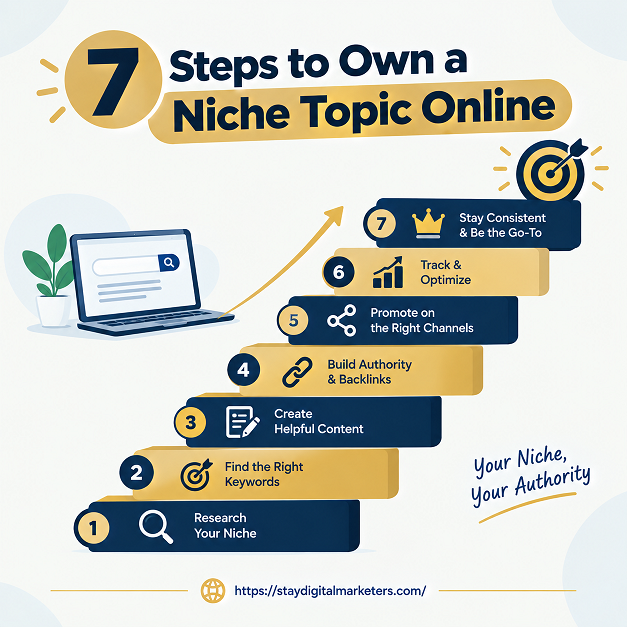
Owning a niche topic online means becoming the default reference for a narrow subject, so searchers, community members, and AI answers keep pointing to your site. No one holds a permanent claim, because rankings change. Ownership is earned through complete coverage, first-hand expertise, and outside references, then defended.
The idea connects several entities: niche, topical authority, search intent, Google Search Console, People Also Ask, online communities, and E-E-A-T. Google’s helpful content guidance asks whether a site has a “primary purpose or focus” and whether it is “widely-recognized as an authority on its topic.” Those two questions are the closest thing to an official test.
Key Takeaways
I reviewed all four pages in the brief. Each treats a niche as a business choice or a community project, and each is published by a company with something to sell.
The shared gap is search. None explains how to check demand when keyword tools show nothing, how to prove you are the best source, or how to tell that ownership is working. This guide fills that gap with a seven-step loop and a demand check that does not rely on volume estimates.
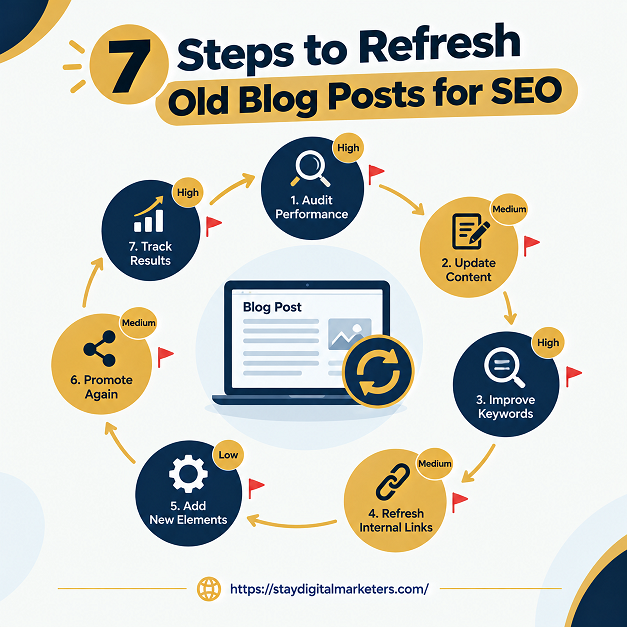
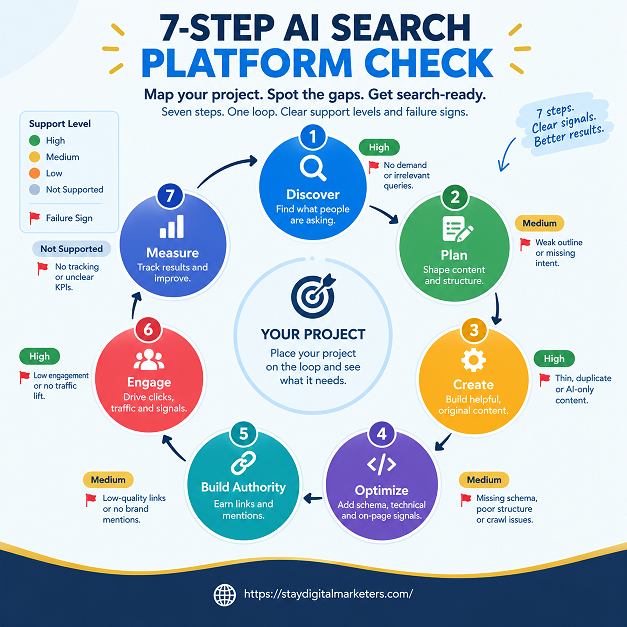
The Niche Ownership Loop is a seven-step process that ends by feeding results back into the first step. Each step answers one question, and the last step decides whether to widen or tighten the niche.
Write one sentence naming the audience, the problem, and what falls outside your scope. A niche is more specific than a field, as the Entrepreneur excerpt notes with its maternity clothes example. If you cannot say what you will not cover, the niche is still too wide.
Keyword tools often show zero for narrow topics. Ahrefs says keywords with fewer than 10 monthly searches make up about 93% of its US keyword database, though the page gives no collection date or total. A zero is therefore weak evidence of no interest. Observed across client work, niche projects are often dropped early because a tool showed low volume, even when forums and customer questions showed steady demand.
Check three other sources: repeated questions in forums and People Also Ask, impressions in Search Console for related queries, and questions your own customers ask. Then publish one page and watch it.
Read the pages that rank for your core questions. Note who published them, whether they have first-hand experience, and what they skip. Many results come from vendors selling something, and their bias is a gap you can fill by disclosing your method and your interests.
Google asks whether content “clearly demonstrate[s] first-hand expertise and a depth of knowledge.” Decide what you can show that a summary cannot: your own tests, screenshots, data, or decisions. In practice, the niches that hold are the ones where the publisher can say how they know.
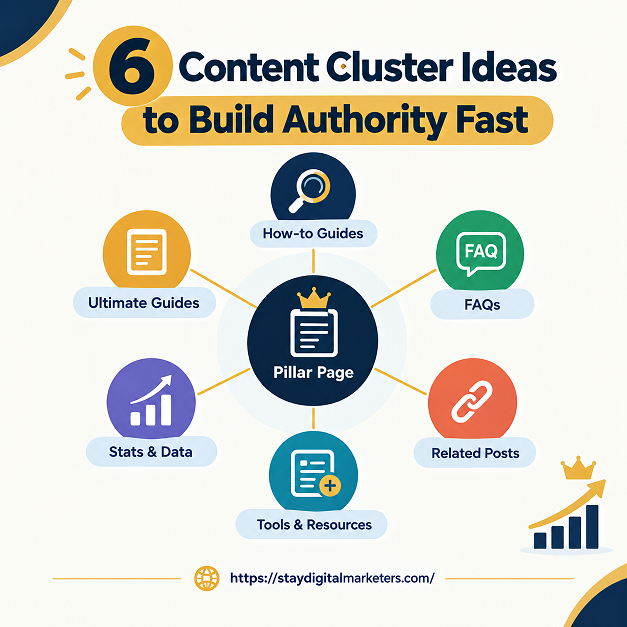
List every question a reader asks from first doubt to final decision. Group them into one overview page and supporting pages with one intent each, then link them to each other. In practice, the early wins come from specific questions that bigger sites skip.
Ownership also depends on others pointing to you. Share original findings in the communities where your audience already talks, and earn mentions and links from sites in your field. Judge each by relevance and editorial standards, not by a DA or DR number. QuestionPro advises choosing a platform where your audience already is, which holds for outreach too.
Take a baseline in Search Console before you publish, then track impressions, clicks, and ranking pages for the topic as a group. Update pages when facts change. If impressions rise, widen the niche. If they stall, tighten it, and return to step 1. Teams that skip the baseline cannot say whether the work helped.
The table shows what each step supports and the sign that it is failing.
| Step | Main action | Support level | Failure sign |
| 1. Boundary | Write a scope sentence | Practitioner method | Scope keeps growing |
| 2. Demand | Use non-volume checks | Ahrefs data on low volume | Only tool data used |
| 3. Field study | Read ranking pages | Practitioner method | Copying competitors |
| 4. Proof | Show first-hand work | Stated in Google guidance | Summaries only |
| 5. Question set | Map and publish | Practitioner method | Pages overlap |
| 6. References | Earn outside mentions | Practitioner method | Links with no relevance |
| 7. Measure | Baseline and refresh | Practitioner method | No baseline taken |
No. In Ahrefs’ content hub article, Zapier’s remote work hub was linked from over 1,000 websites yet drew about 1,100 estimated monthly organic visits. Drift’s chatbot hub had over 500 links and about 6,400 estimated visits. Both are Ahrefs estimates from a 2020 article with no measurement date.
The topic mattered as much as the effort. Demand, intent, and fit drive the result, which is why step 2 comes before any content work.
In a Semrush study of 200,000 US keywords that triggered an AI Overview, 80% of desktop and 76% of mobile keywords were informational. The data was collected in September 2024 and published in July 2025. A niche that answers its questions completely matches the kind of query where AI answers appear.
That supports full coverage with direct answers under question headings. It does not show that AI tools prefer specialists, so do not treat it as a promise.
It means your site becomes the default reference for a narrow subject, so searchers, communities, and AI answers keep pointing to you. Nobody holds a permanent claim on a topic, because rankings change. Ownership is earned through complete coverage, first-hand expertise, and outside references, then maintained.
Narrow enough that you can cover every common question, but wide enough to show demand. Ahrefs reports that about 93% of its US keyword database gets fewer than 10 monthly searches, so small topics can still matter. Check Search Console, People Also Ask, and community threads before you decide.
Use sources that do not depend on volume estimates. Look for repeated questions in forums and People Also Ask, impressions in Google Search Console, and questions from customers. Because most keywords show under 10 monthly searches, a zero does not prove no interest. Test with one page before building more.
No source reviewed gives a reliable timeline. The Teachable, Entrepreneur, and CapForge guides offer advice without outcome data, so treat any promised timeframe with caution. Record a baseline in Search Console, publish a complete question set, and review impressions for the topic each month to judge progress.
Yes, if it stays focused and offers first-hand detail that larger sites lack. Google’s guidance asks whether a site has a primary purpose or focus and demonstrates first-hand expertise, not how big it is. Pick a topic where you hold real experience and cover its questions completely.
Possibly. A Semrush study found 80% of desktop and 76% of mobile AI Overview keywords were informational, so clear coverage of a niche’s questions fits where AI answers appear. No source confirms that AI tools favor niche specialists, so use direct answers under question headings.
Coverage and proof establish a niche on your own site, while references from other sites show that people rely on it. Stay Digital Marketers assists brands with backlink-related services, including guest posting, press release distribution, SaaS backlinks, niche edits, multilingual backlinks, Wikipedia page creation, Google Knowledge Panel creation, and complete SEO services.
Sources were read on October 16, 2026. No source reviewed publishes outcome data for how long niche ownership takes, so the steps below are labeled by what supports them.

Filza Taj is an MPhil in Human Resources-turned SEO Specialist, Content Strategist, and Digital Marketing Consultant with over 5 years of experience helping businesses in 30+ countries grow online. As the Founder of Stay Digital Marketers (staydigitalmarketers.com), she delivers results-driven solutions in link building, guest posting, PR distribution, niche edits, multilingual backlinks, and content marketing. She publishes daily SEO insights and actionable strategies to help brands strengthen their online presence, attract the right audience, and convert clicks into loyal customers.
Filza@staydigitalmarketers.com
Stay Digital Marketers
Need SEO, Link Building or Digital Marketing Services?
Request a Free Audit →