
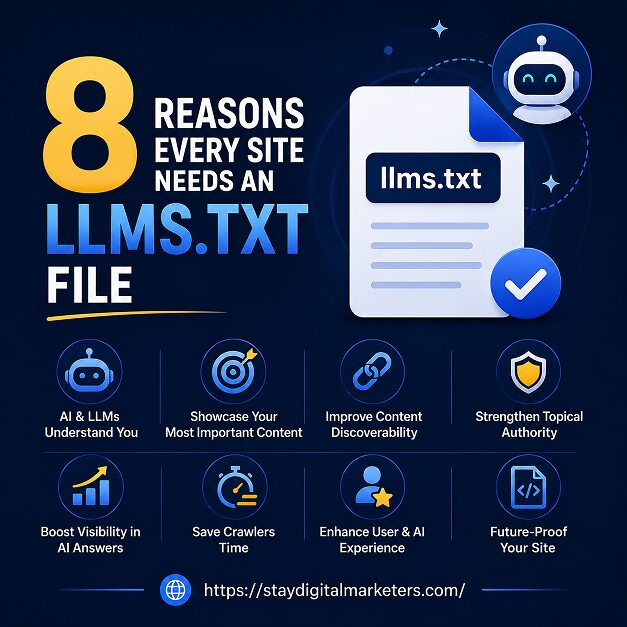
An llms.txt file is a plain Markdown document placed at a site’s root, reachable at a URL such as example.com/llms.txt, that gives AI systems a curated map of a site’s most important content. Instead of forcing a language model or autonomous agent to crawl and parse full HTML pages, the file lists key sections and pages with short, factual one-line descriptions.
The idea was proposed in September 2024 as a lightweight companion to robots.txt and sitemap.xml, aimed specifically at large language models and the agents built on top of them. It introduces entities such as documentation hubs, product pages, pricing pages, and API references, and establishes how those pieces relate to one another so both AI systems and human readers understand the site’s structure at a glance.
Adoption has grown quickly. Independent tracking from Originality.ai, which monitors more than three million websites, recorded roughly 4,088 llms.txt files in June 2025 and found that number had grown to 36,120 by May 2026, an increase of nearly nine times in twelve months. A separate crawl of the world’s top 1,000 domains found 8.7 percent already publish the file as of June 2026. Growth is real even though the case for each individual site still needs to be made on its own merits, which is exactly what the eight reasons below are for.
Key Takeaways
The most direct benefit is structural clarity. A well-built llms.txt file organizes a site’s highest-value pages into a short, scannable index instead of leaving an agent to infer hierarchy from navigation menus, JavaScript-rendered links, or inconsistent internal linking. For sites with large content libraries, documentation sets, or product catalogs, that curated entry point removes a layer of guesswork an AI system would otherwise have to do on its own.
Where an agent or retrieval system does consult llms.txt, it can skip low-value pages such as login screens, cookie notices, or thin archive pages, and go straight to the content that actually answers a query. This matters most for systems with limited processing budgets per site visit, since a tighter, better-prioritized list of links means less time spent filtering noise before reaching something useful.
Across client engagements, one pattern shows up consistently: sites that already keep a clean, well-labeled content inventory for their own internal use tend to produce far more useful llms.txt files on the first attempt than sites building the list from scratch. The exercise of writing the file often surfaces content gaps and outdated pages that were never noticed during routine site audits.
The clearest, most measurable use case right now is developer tooling rather than search visibility. IDE-based coding agents, including tools like Cursor, Continue, and Cline, increasingly check for an llms.txt file when a developer points them at a documentation site, using it to locate API references and code examples faster. Documentation platforms such as Mintlify and GitBook have built native llms.txt generation into their publishing pipelines for exactly this reason, and MCP-based documentation servers frequently consume the file directly.
Because the file allows a short description alongside each linked page, it gives a brand a chance to state, in its own words, what a product does, who it serves, and how its terminology should be understood. That does not guarantee an AI system will repeat those exact descriptions, but it removes ambiguity that might otherwise be filled in by a stale review, a competitor’s comparison page, or an outdated third-party summary.
llms.txt and robots.txt solve different problems and are meant to coexist. robots.txt grants or denies crawler access at the URL level; it says nothing about which pages matter most or how the brand should be described. llms.txt adds editorial curation on top of existing access control, functioning less like a gatekeeper and more like a table of contents for whichever systems choose to read it.
Adoption has moved from a niche experiment among technically sophisticated teams toward a routine part of the technical SEO checklist for developer-facing SaaS, publishing platforms, and documentation sites. The pattern by site size is not what many expect: sites with 1,001 to 5,000 monthly visits adopt the file at a higher rate than sites with more than 100,000 visits, suggesting mid-tier, technically engaged teams are moving faster than large enterprise domains still working through internal approval processes.
Beyond any direct AI-visibility benefit, the file functions as a visible marker of technical maturity. A current, accurate llms.txt tells anyone inspecting a site, human or automated, that the content inventory is maintained, that page priorities have been thought through, and that the team is paying attention to how machines interact with the site. That signal has value independent of whether any particular AI platform currently parses the file.
The clearest justification for adopting llms.txt today is forward-looking rather than about today’s citation rates. As autonomous agents that book appointments, compare products, or retrieve documentation on a user’s behalf become more common, having a clean, agent-readable map of a site’s structure in place before that shift accelerates is a low-cost way to avoid retrofitting the work later under pressure.
The honest answer depends on what a site expects to get out of it. Multiple independent studies through 2026, including a machine-learning analysis using XGBoost that tested whether llms.txt presence predicted AI citation frequency, found the file added no measurable signal. Removing the llms.txt variable from that model actually improved its prediction accuracy, meaning citation frequency is driven by factors like passage quality, freshness, and entity authority rather than by the presence of the file itself.
That finding does not make the file worthless. It reframes what it is for. llms.txt is agent-readiness infrastructure and structured documentation, not a search-ranking lever. Sites with developer audiences, documentation hubs, or an interest in being agent-ready gain a real, if modest, advantage from having one. Sites expecting a direct bump in AI Overview citations from the file alone are likely to be disappointed.
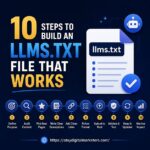
Building a useful llms.txt file is less about technical difficulty and more about editorial discipline. The C.U.R.A.T.E. framework below breaks the process into six repeatable steps.
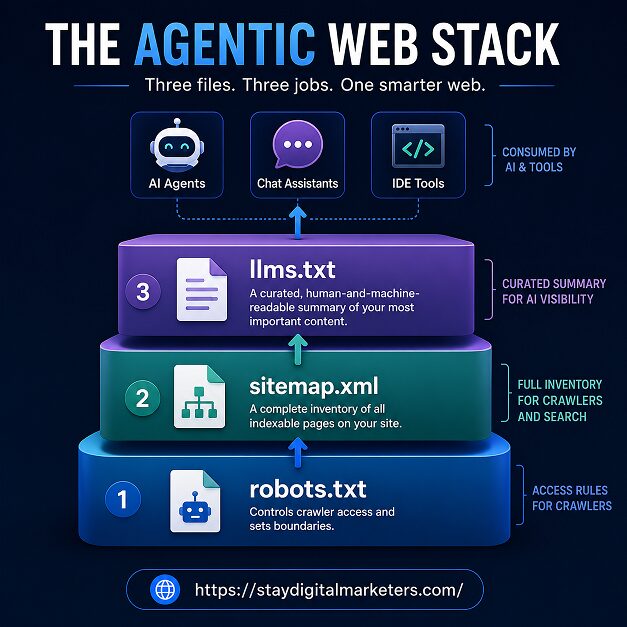
These three files are often confused because they all live at the domain root, but each answers a different question for a different audience.
| File | Purpose | Format | Primary Audience | Update Frequency |
| llms.txt | Curated summary of top content for AI systems | Markdown | LLMs, AI agents, IDE tools | Quarterly or after major content changes |
| robots.txt | Access control – allow or block crawlers | Plain text directives | Search and AI crawlers | As crawl policy changes |
| sitemap.xml | Full inventory of indexable URLs | XML | Search engine indexers | On every publish or structural change |
An llms.txt file is a plain Markdown file placed at a site’s root, such as example.com/llms.txt, that lists a site’s most important pages with one-line descriptions. It gives AI systems and autonomous agents a curated entry point to a site’s content instead of forcing them to crawl and interpret full HTML pages.
It belongs at the domain root, alongside robots.txt and sitemap.xml, so it is reachable at yoursite.com/llms.txt. Some teams also publish llms-full.txt at the same location for a longer, more detailed version of the same curated content.
No. Independent studies through 2026 have found no measurable correlation between having an llms.txt file and being cited more often by AI Overviews or chat assistants. Citation likelihood still depends on content quality, structure, and entity authority, not file presence alone.
llms.txt is a short index of links and one-line descriptions, meant to be scanned quickly. llms-full.txt is an expanded companion file that includes fuller content or context for the same pages, intended for systems that can process more text before deciding what to fetch next.
Not yet. It remains a community-managed proposal rather than a body-ratified standard like robots.txt. Support is inconsistent across AI platforms, but adoption keeps climbing among developer tools, documentation platforms, and technically sophisticated sites, which keeps the convention relevant despite its informal status.
Keep it concise. A focused list of the highest-value pages with clear one-line descriptions works better than an exhaustive dump of every URL. Most effective examples run well under a few hundred lines, prioritizing curation over completeness.
Yes, they serve different jobs. robots.txt controls crawler access and sitemap.xml lists every indexable URL, but neither tells a visiting system which pages matter most or how to describe the brand. llms.txt fills that specific curation gap.
llms.txt will not rewrite a site’s AI Overview visibility on its own, and any team expecting that outcome is working from an outdated premise. What it does offer is a low-cost, forward-looking piece of infrastructure: a curated, well-maintained map that helps developer tools, documentation crawlers, and the next generation of autonomous agents understand a site faster and more accurately. For sites with technical audiences or large content libraries, that is reason enough to build one properly rather than skip it entirely.
Teams weighing whether to prioritize llms.txt alongside broader technical SEO and entity-building work often benefit from an outside audit of what is already in place. Stay Digital Marketers works with brands on the full range of AI and search visibility groundwork, including structured data, Google Knowledge Panel creation, Wikipedia page development, and backlink-building services such as guest posting, press release distribution, SaaS backlinks, and niche edits, giving sites a more complete foundation before layering on newer conventions like llms.txt.

Filza Taj is an MPhil in Human Resources-turned SEO Specialist, Content Strategist, and Digital Marketing Consultant with over 5 years of experience helping businesses in 30+ countries grow online. As the Founder of Stay Digital Marketers (staydigitalmarketers.com), she delivers results-driven solutions in link building, guest posting, PR distribution, niche edits, multilingual backlinks, and content marketing. She publishes daily SEO insights and actionable strategies to help brands strengthen their online presence, attract the right audience, and convert clicks into loyal customers.
Filza@staydigitalmarketers.com
Stay Digital Marketers
Need SEO, Link Building or Digital Marketing Services?
Request a Free Audit →