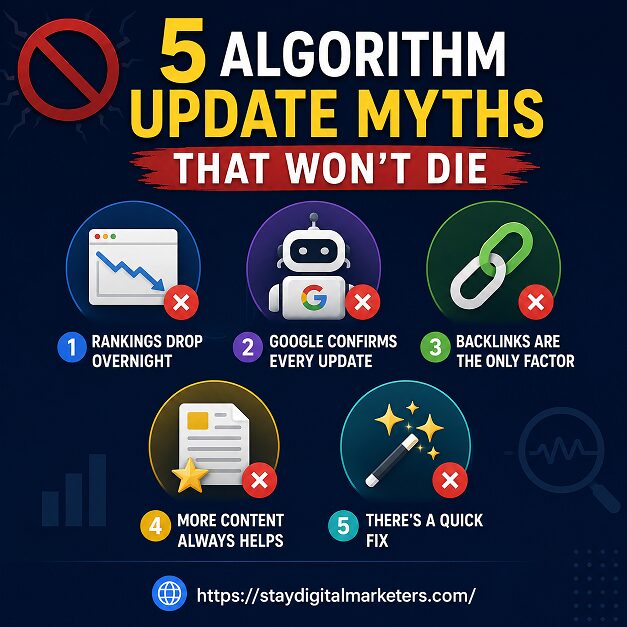

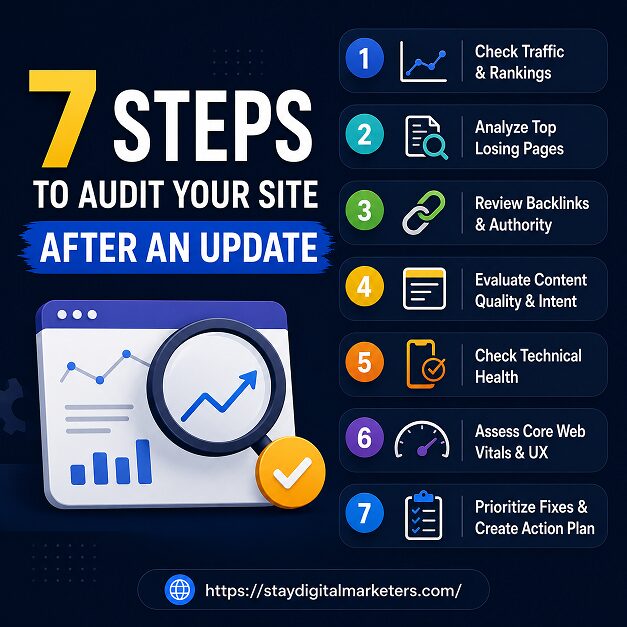
A Google algorithm update changes how the search engine evaluates and ranks pages across the web, and a post-update audit is the structured process of finding out exactly how those changes affected a specific site. The two ideas are connected but not identical: an algorithm update is Google’s action, while the audit is the site owner’s response. Getting that response right depends on distinguishing an actual update impact from ordinary ranking noise, a technical fault, or a seasonal dip that happens to coincide with a rollout.
This guide walks through seven steps for auditing a site after a core update, using Google Search Console, crawl data, and content review together rather than in isolation. It also covers how long recovery realistically takes, since that expectation shapes almost every decision made during the audit itself.
Key Takeaways
A post-update site audit is a scoped review that isolates the effect of a specific Google core update on a site’s rankings, traffic, and visibility, then maps those effects back to content quality, technical health, and E-E-A-T signals. It differs from a general SEO audit because it is time-bound to a rollout window and focused on change detection rather than a full-site health check.
The stakes are higher than they were a few years ago. Google now runs a broad core update roughly every six to eight weeks, and each one can move a large share of top rankings within days. Skipping a structured audit means reacting to symptoms, such as a traffic graph that dropped, instead of the underlying cause, which could be anything from thin content to a crawl budget problem that has nothing to do with the update at all.
The instinct after a visible drop is to start editing pages immediately. That instinct works against the audit, because Google’s ranking systems continue reweighting signals for the full length of the rollout window, and edits made mid-rollout get folded into noisy, still-shifting data. A single before-and-after snapshot also misleads, since rankings can move at several points during a rollout rather than only at the start and finish.
A structured, seven-step approach separates data collection from action. The first few steps establish what actually happened; the later steps decide what to do about it. Reversing that order is the most common reason recovery efforts stall.
Open Search Console and compare two equal-length windows: the two weeks before the rollout began against the two weeks after it completed. Clear signals of a direct hit include impressions falling by 30% or more, average position dropping ten or more spots, or clicks declining while impressions hold steady, which suggests the page still ranks but is being clicked less. A sudden loss of Discover traffic is a less obvious but equally telling signal.
Fluctuation under roughly 10% during a normal week is within typical noise and does not, by itself, confirm an update impact. Cross-reference the timing against the update’s confirmed start and end dates on Google’s Search Status Dashboard before concluding the update is the cause.
Aggregate site-wide traffic numbers hide more than they reveal. Break the data down by page type (blog posts, product pages, category pages, landing pages) and by query intent (informational, transactional, navigational). A drop concentrated in one template or one topic cluster points to a specific quality issue, while a broad, even decline across the whole site more often signals a technical or crawl-related cause.
This segmentation step is also where a practitioner typically finds that the pages losing the most ground share a common trait, such as being written by a single unnamed author, missing structured data, or covering a topic with unusually thin depth compared to what is now ranking above them.
Google’s helpful content systems weigh experience, expertise, authoritativeness, and trust more heavily with each core update. For every affected page, check whether the content demonstrates first-hand experience, names a credible author with relevant credentials, cites sources appropriately, and answers the query completely enough that a reader would not need to open a second tab.
The gap between recovery speeds tells its own story here. Sites with strong E-E-A-T signals and no thin content have been observed recovering within the rollout window itself, often inside two weeks, while sites that also had a linked spam issue typically need four to eight weeks after cleanup before rankings stabilize, based on recovery patterns tracked across the 2026 core update cycle.
Rewriting a thin page with AI-generated text alone rarely closes this gap. If the underlying page lacked depth or a credible point of view before the rewrite, a smoother version of the same shallow content still lacks depth and a credible point of view after it.
Before attributing every loss to content quality, rule out the technical causes that frequently coincide with a rollout by pure timing: broken internal links, accidental noindex tags left over from a staging deploy, slow Core Web Vitals scores, or crawl errors reported in Search Console’s Pages report. A log file review can confirm whether Googlebot’s crawl frequency changed for the affected sections.
Technical issues compound content problems rather than replacing them as an explanation. A well-written page that search engines cannot reliably crawl or index will underperform regardless of how strong its E-E-A-T signals are.
Pull the pages currently outranking yours for the queries that lost position and compare structure, depth, and format side by side. Note headings they cover that the affected page does not, whether they include original data or examples, and how they format answers for direct extraction by AI Overviews and featured snippets.
This is a diagnostic exercise, not a copying exercise. The goal is identifying genuine coverage gaps, not mirroring a competitor’s structure line for line, which tends to produce derivative content that still underperforms the pages it was modeled on.
With diagnostic data in hand, prioritization becomes the next bottleneck. The RADAR framework below structures that decision into five stages so fixes get sequenced by impact rather than by whichever issue is easiest to act on first.
Sequencing matters because Google’s systems reassess a site’s overall quality signal gradually. Fixing a handful of high-authority pages tends to influence that broader signal more than spreading the same effort thinly across dozens of low-traffic pages.
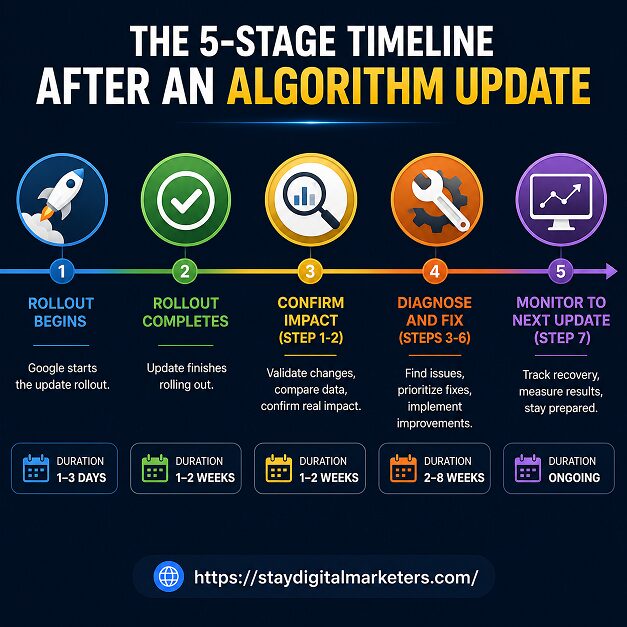
Recovery is measured in updates, not weeks. Full, confirmed recovery from a core update typically takes three to six months and often only registers fully once the next broad core update reassesses the site, since Google’s systems need to confirm that an improvement is sustained rather than temporary.
That said, sites making meaningful E-E-A-T and user experience improvements have shown partial gains within six to eight weeks, even before the next named update lands, because Google runs smaller, unannounced adjustments between major releases. Document every change made, with a date, so any movement in the weeks that follow can be attributed correctly instead of guessed at.
Across the content work behind this series, one pattern shows up repeatedly: sites that treat the seven steps as a recurring cadence, tied to each new update announcement, spend far less time in reactive panic than sites that only audit once traffic has already collapsed.
Recovery timelines vary by cause and response speed. The comparison below summarizes what to expect under different scenarios.
| Recovery Scenario | Typical Timeline | What Drives It |
| Strong E-E-A-T, no thin content | Within the rollout window, roughly 2 weeks | Google’s systems reweight signals in real time during rollout |
| Site cleaned up after a linked spam issue | 4 to 8 weeks post-cleanup | Google needs to re-crawl and confirm the fix is stable |
| Meaningful quality and UX improvements, no update yet | Partial gains in 6 to 8 weeks | Smaller, unannounced adjustments run between named core updates |
| Full, confirmed recovery | 3 to 6 months, often tied to the next core update | Google needs a full reassessment cycle to confirm sustained quality |
Not always. Audit when you see a confirmed ranking or traffic shift tied to the rollout window. If Search Console shows no meaningful movement, a full audit can wait for your normal quarterly review instead of being triggered by every announcement.
Wait until the rollout officially completes before drawing conclusions, since rankings shift throughout the window. You can begin data collection immediately, but hold off on structural changes until you have at least a few days of stable, post-rollout data to work from.
Compare two equal time windows in Search Console, one before the rollout and one after it completes. Look for impression drops of 30% or more, average position falling by ten or more spots, or Discover traffic disappearing while other metrics stay flat.
Yes. A crawl error, a broken redirect, or a bad deploy can land in the same week as a rollout and look identical in the data. Rule out technical causes first with a crawl and log file check before assuming the update is the sole cause.
No. Google’s own guidance is to avoid reactive edits while a rollout is still in progress, since the systems are actively reweighting signals. Making changes mid-rollout adds noise that makes it harder to read your true post-update baseline once things settle.
That happens. Some drops are collateral movement from shifts elsewhere on the page, not a direct quality signal about your content. In that case, document your findings, keep monitoring, and revisit after the next core update rather than making unnecessary changes.
Treat it as ongoing. Core updates now arrive every six to eight weeks on average, so a single audit only covers one moment. Build the seven steps into a recurring cadence tied to Google’s Search Status Dashboard announcements rather than a one-time project.
Patterns like these, where E-E-A-T gaps and technical noise get mistaken for one another, are exactly what Stay Digital Marketers works through with clients navigating core update recovery. Beyond audits, the agency supports sites with guest posting, press release distribution, SaaS backlinks, niche edits, multilingual backlinks, Wikipedia page creation, Google Knowledge Panel creation, and broader SEO services aimed at building the kind of authority and trust signals these updates increasingly reward.

Filza Taj is an MPhil in Human Resources-turned SEO Specialist, Content Strategist, and Digital Marketing Consultant with over 5 years of experience helping businesses in 30+ countries grow online. As the Founder of Stay Digital Marketers (staydigitalmarketers.com), she delivers results-driven solutions in link building, guest posting, PR distribution, niche edits, multilingual backlinks, and content marketing. She publishes daily SEO insights and actionable strategies to help brands strengthen their online presence, attract the right audience, and convert clicks into loyal customers.
Filza@staydigitalmarketers.com
Stay Digital Marketers
Need SEO, Link Building or Digital Marketing Services?
Request a Free Audit →