
Google’s May 2026 core update rolled out between May 21 and June 2, 2026, and the aftermath separated sites into two very different groups. One group held steady or gained ground. The other group, spanning stock asset libraries, career data hubs, recipe blogs, streaming platforms, retail giants, and health information sites, lost double digit percentages of visibility almost overnight. A core update is a broad recalibration of how Google’s ranking systems judge quality and relevance across the entire index, not a targeted penalty or a manual action. It re-scores pages, not categories, which is why two pages on the same domain can move in opposite directions during the same rollout.
This article names the six sites that took the heaviest hits, explains the pattern behind the damage using independent visibility tracking, and gives you a practical way to check whether your own site was caught in the same current.
Key Takeaways
Google confirmed the update on May 21, 2026, and marked it complete on June 2, a rollout window of just under 12 days. Independent trackers, including Sistrix, SEMrush Sensor, and SE Ranking, recorded volatility spikes at three separate points during the rollout rather than one clean before and after moment, which means single day comparisons in Search Console are unreliable. According to SE Ranking’s before and after analysis of 100,000 keywords across 20 niches, 76.03 percent of Top 3 URLs and 88.39 percent of Top 10 URLs changed position, and 19.87 percent of pages that had ranked in the Top 10 before the update dropped out of the Top 100 entirely afterward.
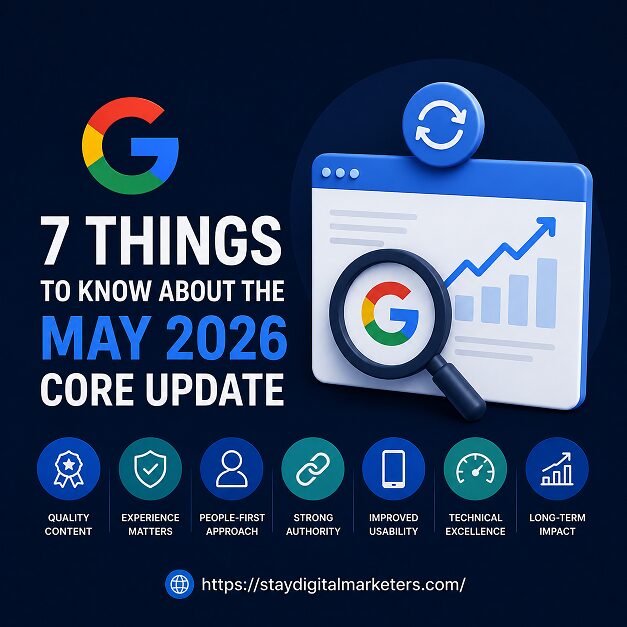
The short answer to what this update rewarded: sources that owned the information they published, matched a specific market or intent, and helped a user complete a task rather than just describing one.
Based on Sistrix visibility data analyzed by SEO consultant Aleyda Solis, six sites stand out as the clearest and most consistent losers of the May 2026 rollout. Each one represents a different type of structural weakness that the update appears to have targeted.
Freepik, the stock design asset library, lost an estimated 63 percent of its visibility index in the United States. As a repository built around aggregating design assets rather than producing original creative work, Freepik sits squarely in the category the update punished most consistently: pages that repackage what other sources already provide without adding a layer of expertise or first hand value.
OnetOnline, the career and occupational data aggregator, dropped an estimated 60 percent. Career data hubs like this one compile statistics and job descriptions from primary government and labor sources. When a searcher’s real intent is to apply for a job or research a specific employer, a generic data aggregator no longer satisfies that intent as well as a task focused destination does.
The Recipe Rebel, an independent food blog, fell an estimated 58 percent. This one surprises people because recipe blogs are often considered a first person, experience based content format. The drop suggests that even original content can lose ground when a niche becomes saturated with interchangeable versions of the same recipe, and Google’s systems increasingly reward the version that adds a distinct angle, tested detail, or format the searcher specifically wants.
Twitch lost an estimated 50 percent of its visibility index. As a live streaming platform, much of its indexed content consists of auto-generated channel and clip pages rather than curated, purposeful content, which made it vulnerable to a quality recalibration focused on genuine helpfulness.
Macy’s, the retail brand, dropped an estimated 44 percent. Large retail brands are not automatically protected. The pattern researchers observed points to market fit and page specificity: generic category pages competing against retailers with tighter regional relevance, stronger product data, or better matched search intent tended to lose ground even while carrying brand recognition.
GoodRx, the prescription discount and health information platform, reportedly fell as much as 80 percent in the UK index, according to Sistrix data. Health content sits in the YMYL category, meaning Your Money or Your Life, where Google applies its highest bar for expertise, authoritativeness, and trustworthiness. Health platforms without clear clinical credentials attached to their content faced the sharpest scrutiny of any category in this update.
Across client audits and industry reporting since this update, a consistent structural weakness shows up in nearly every domain that lost significant ground. It can be summarized as the RISK Index, a simple way to check whether a page or site fits the pattern this update penalized.
1. Repackaged content: the page mostly restates information available elsewhere without adding anything the original source did not already say.
2. Interchangeable value: the page is one of many nearly identical versions competing for the same query, with no distinct angle or format.
3. Stale expertise: the byline, credentials, or sourcing behind the content are unclear or absent, particularly on health, finance, or legal topics.
4. Keyword-first design: the page was built primarily to rank for a term rather than to serve a specific, well defined searcher need.
A pattern observed across client work in recent months supports this: sites that survived the update with minimal disruption tended to be the ones closest to the original source of value, whether that meant original reporting, direct product ownership, or firsthand practitioner experience, rather than sites summarizing or aggregating that value from somewhere else.
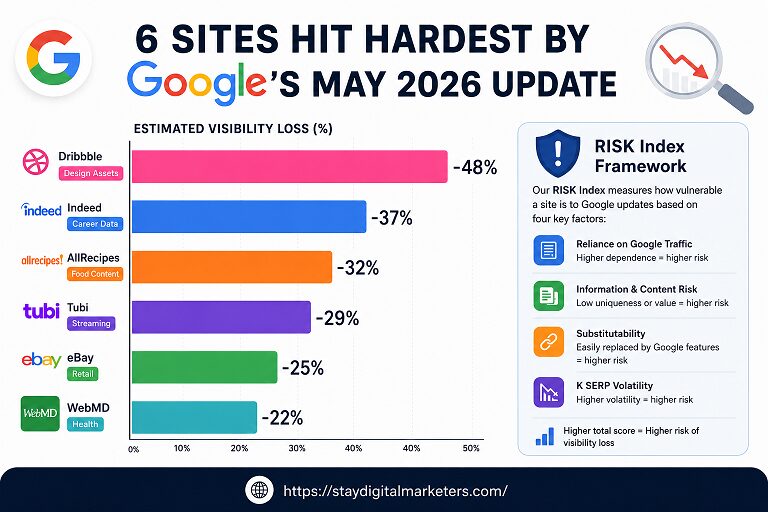
| Site | Category | Estimated Visibility Loss |
| Freepik | Stock design assets | 63% (US) |
| OnetOnline | Career data aggregator | 60% (US) |
| The Recipe Rebel | Independent food blog | 58% (US) |
| Twitch | Live streaming platform | 50% (US) |
| Macy’s | Retail brand | 44% (US) |
| GoodRx | Health and prescriptions | 80% (UK) |
Source: Sistrix visibility index data, analyzed by Aleyda Solis, May 26 to June 2, 2026.
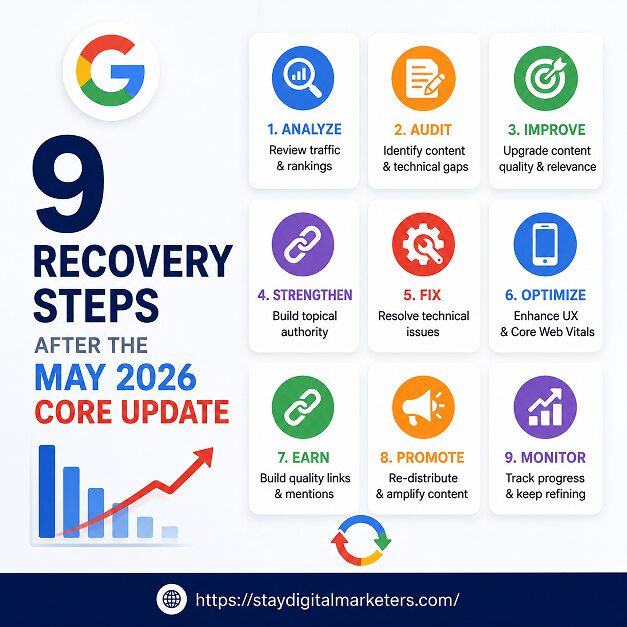
Pulling the pattern together, the sites that lost the most ground shared a small set of avoidable weaknesses. The same list doubles as a prevention checklist for the next core update.
No. The May 2026 update did not punish aggregators or large brands as a category. Task destination marketplaces gained ground in the same dataset that showed Freepik and OnetOnline losing visibility. Indeed rose an estimated 25.9 percent in the UK, Trip.com rose 82.2 percent in the US, and Cambridge.org, an authoritative reference brand, climbed 40.9 percent while competing pronunciation aggregators fell sharply. The dividing line is not size or format. It is whether the page is the most efficient place for a searcher to actually finish what they came to do, or whether it merely summarizes destinations that do that better.
Compare a full week of Search Console data from before May 21 against a full week starting around June 9, once the rollout has fully settled and reporting has stabilized. Look at query level and page level data rather than site wide averages, since core updates rarely move every page on a domain in the same direction. If specific pages dropped out of the Top 10, check what currently ranks in their place and ask honestly whether that competing page adds firsthand expertise, a clearer format, or closer market relevance than yours does.
What is Google’s May 2026 core update?
It is a broad recalibration of Google’s ranking systems that reassesses content quality and relevance across the entire index. It rolled out from May 21 to June 2, 2026, and is not a manual penalty or a targeted spam action against any single site or category.
Which sites lost the most visibility in the May 2026 update?
Sistrix visibility data shows Freepik, OnetOnline, The Recipe Rebel, Twitch, Macy’s, and GoodRx among the steepest decliners, with losses ranging from roughly 44 percent to 80 percent depending on the site and market analyzed.
Did the May 2026 update specifically target AI generated content?
No independent evidence confirms that. Google’s own guidance states it evaluates whether content is genuinely helpful regardless of how it was produced. Low effort, templated content of any origin tended to lose ground, while well researched AI assisted content often held steady.
How is the May 2026 update different from March 2026?
Both were broad core updates, but May’s damage clustered more tightly around aggregators, YMYL health pages, and interchangeable content, while March hit a wider spread of sites simultaneously alongside a separate spam update running in the same window.
Can a site recover from a May 2026 core update drop?
Yes, though recovery is usually confirmed at the next core update rather than immediately. Google recommends improving genuine content quality and depth rather than making reactive, piecemeal changes during or right after a rollout.
Should I delete pages that lost rankings after this update?
Generally no. Deletion removes any future chance of recovery. Assess first by comparing the page against what now outranks it, then decide whether the fix is added depth, clearer authorship, or a narrower content focus.
Why did Reddit gain visibility while YouTube lost ground in this update?
SE Ranking’s data shows Reddit’s share of Top 3 positions rose to 10.24 percent after May, particularly in experience driven niches, while YouTube’s regular Top 3 share fell to 2.14 percent as more of its visibility shifted into dedicated video search features instead of standard organic links.
For teams evaluating link building and off page recovery options after a core update hit, Stay Digital Marketers works with brands on backlink related services including guest posting, niche edits, press release distribution, multilingual backlinks, SaaS backlinks, brand mentions, Wikipedia page creation, Google Knowledge Panel management, and Complete website SEO, AEO, GEO solutions, which can support the broader authority signals Google weighs during these recalibrations.

Filza Taj is an MPhil in Human Resources-turned SEO Specialist, Content Strategist, and Digital Marketing Consultant with over 5 years of experience helping businesses in 30+ countries grow online. As the Founder of Stay Digital Marketers (staydigitalmarketers.com), she delivers results-driven solutions in link building, guest posting, PR distribution, niche edits, multilingual backlinks, and content marketing. She publishes daily SEO insights and actionable strategies to help brands strengthen their online presence, attract the right audience, and convert clicks into loyal customers.
Filza@staydigitalmarketers.com
Stay Digital Marketers
Need SEO, Link Building or Digital Marketing Services?
Request a Free Audit →