
Google rolls out algorithm updates to search results on an ongoing basis, and a handful of these changes are broad enough that Google names and announces them publicly. A core update is Google’s term for a significant, sitewide adjustment to how its ranking systems evaluate content quality, relevance, and trustworthiness across the entire web. Unlike a spam update, which targets specific manipulative tactics such as cloaking or paid links, a core update does not single out individual pages or sites. It recalibrates the entire ranking system at once, which is why traffic for some sites rises while traffic for others falls, even when nothing on those sites changed.
Understanding how these updates work matters more in 2026 than it has in previous years. Google has already shipped several major ranking changes this year, and the volatility associated with each one has grown. Site owners, SEO practitioners, and content teams who understand the mechanics behind core updates are better positioned to interpret ranking shifts correctly and avoid reactive, damaging changes.
Key Takeaways
A Google algorithm update is any change Google makes to the systems that determine how web pages are crawled, indexed, and ranked in search results. These updates range from small, unannounced tweaks that happen almost daily to major, named releases that reshape rankings across entire industries. Google’s own documentation describes core updates specifically as changes designed to better fulfill the mission of delivering helpful, reliable results, not as punishments aimed at particular websites. The distinction matters: a ranking drop after a core update is not automatically a penalty. It often means another page somewhere on the web is now judged to serve the same search query more usefully than yours does.
Three categories of update recur most often: core updates, spam updates, and system-specific signals such as the reviews system or the Helpful Content system, which Google folded into its core ranking systems in 2024. Each category behaves differently, and treating them as interchangeable leads to the wrong recovery strategy.
Google does not target individual pages when it prepares a core update. Engineers refine the broader systems that assess factors like expertise, originality, and user satisfaction, then release the refined systems all at once. Google has compared the process to reassessing a list of restaurant recommendations: nothing about a specific restaurant changes overnight, but new information and new competitors mean the ranked list shifts. A site that loses position after a core update has often been outranked by content that now better satisfies the same search intent, not flagged for a violation.
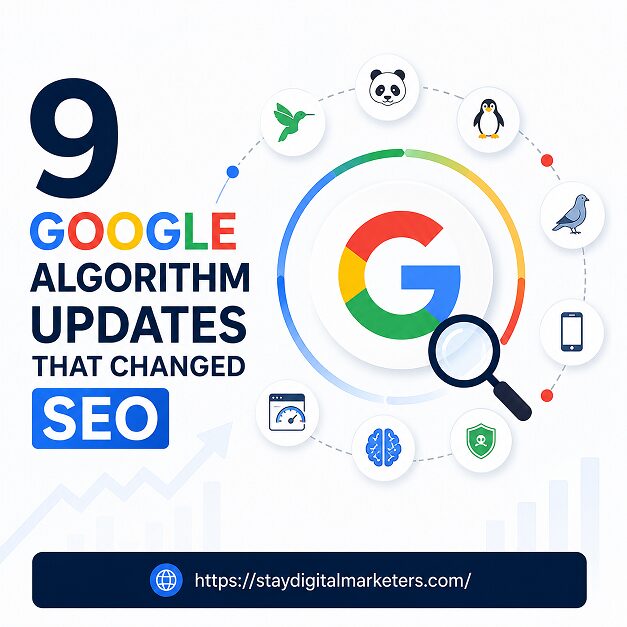
Google typically issues a core update every three to four months, though the cadence varies from year to year. Google has released eight named ranking updates since March 2025 alone, made up of five core updates, two spam updates, and one Discover-focused update introduced in February 2026. That pace is faster than in prior years, and each 2026 release has been described by independent ranking trackers as more volatile than the one before it.
Core updates and spam updates solve different problems. A core update reassesses overall content quality and relevance across the web. A spam update targets specific manipulative practices defined in Google’s spam policies, including cloaking, scraped content, and artificial link schemes. Spam updates tend to roll out faster, sometimes in under a day, while core updates typically take twelve to twenty days to fully complete.
Google merged its standalone Helpful Content system into its core ranking systems in 2024, meaning helpfulness signals are now evaluated continuously rather than through a separate update cycle. The reviews system, which evaluates product and service review content specifically, still operates as its own signal set layered on top of core ranking.
Update Type Comparison
| Update Type | Primary Focus | Typical Rollout | Recovery Path |
| Core Update | Overall content quality and relevance across the web | 12-20 days | Broad content improvement; often tied to the next core update |
| Spam Update | Manipulative tactics: cloaking, link schemes, auto-generated spam | Hours to a few days | Remove the violation; request reconsideration if penalized |
| Helpful Content Signals | Sustained usefulness of a page or site for real readers | Continuous, no separate rollout | Ongoing quality investment over time |
| Reviews System | Depth and originality of product or service review content | Periodic refreshes | Add first-hand testing evidence and original analysis |
When a core update lands, teams often make the mistake of reacting within the first 48 hours, before the rollout has even finished. The PULSE framework offers a five-step way to structure that response so changes are deliberate rather than reactive.
Practitioners who work across many client accounts often observe that the biggest recovery gains come from sites that resist the urge to delete content in the first two weeks after a core update and instead spend that window on structured competitive analysis.
No. Google’s Search Advocate John Mueller stated in late 2025 that Google’s ranking systems do not treat content differently based on whether it was written by a person or generated with AI assistance; what matters is whether the content demonstrates genuine expertise and satisfies the reader. What core updates increasingly catch is not AI authorship itself but the absence of first-hand expertise that mass-produced content, AI-assisted or not, frequently lacks. Observation across a wide range of client accounts suggests the sites hit hardest tend to be those publishing high volumes of generic, templated content with no unique data, testing, or perspective behind it, regardless of how that content was drafted.
Recovery timelines vary widely. Google has said some improvements show results within days, while others take several months for its systems to confirm a site’s content is consistently helpful. In practice, meaningful recovery is often tied to the next core update rather than appearing gradually in between. That is one reason acting too quickly after a drop, before fully understanding what changed, tends to waste effort: a site can spend weeks reworking pages based on an incomplete read of the data, then need to redo that work once the full picture is clear.
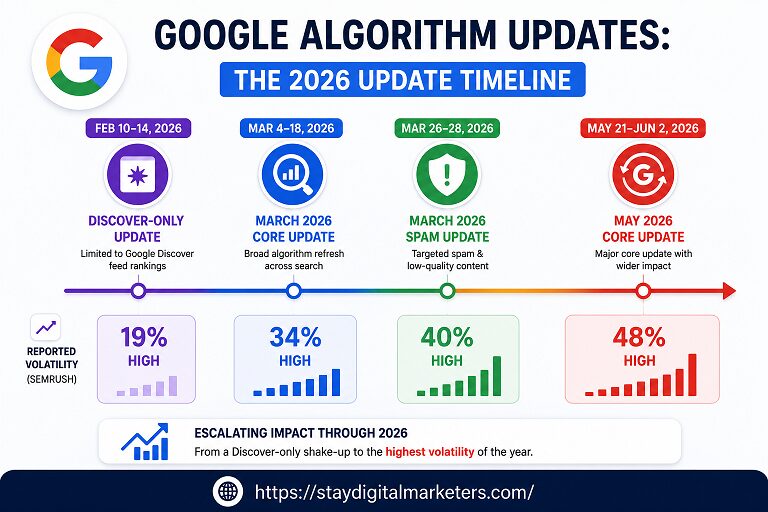
The 2026 core updates have been unusually volatile compared to prior years. The March 2026 core update reshuffled roughly 79.5% of top-three rankings and pushed nearly one in four former top-10 pages out of the top 100 results entirely, based on post-rollout tracking data from SE Ranking. The May 2026 core update that followed was described by multiple independent trackers as heavier still, rolling out from May 21 to June 2, 2026. Google has issued eight named ranking updates since March 2025, a noticeably faster release cadence than the roughly two to three core updates per year seen earlier in the decade. Together, these figures point to a search landscape where rankings shift more frequently and more sharply, making a documented recovery process more valuable than it has been in previous years.
A Google core update is a broad, periodic change to the systems Google uses to rank search results. It reassesses content quality and relevance across the entire web rather than targeting specific pages, meaning ranking shifts after a core update reflect a recalibration, not necessarily a problem with any one site.
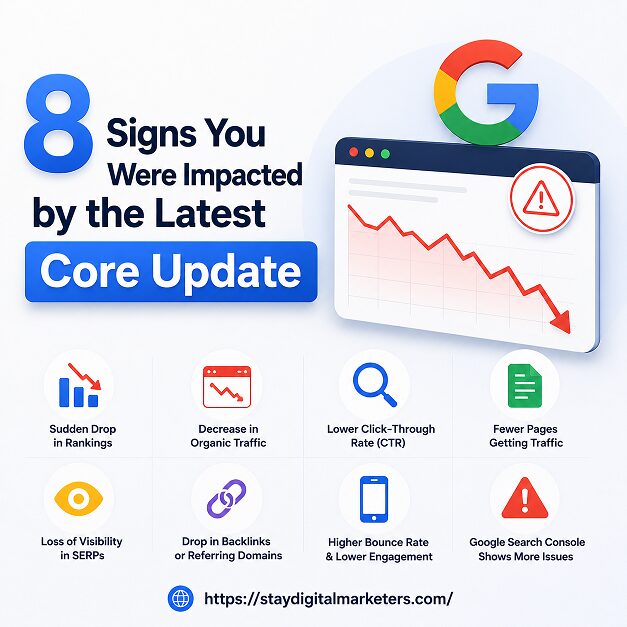
Compare Search Console performance data from a full week before the update to a full week after it finished rolling out. A steady, sitewide change in impressions or average position that lines up with the update’s dates is the clearest sign your site was affected.
Yes. Recovery is possible and common, though it is not guaranteed on a fixed timeline. Meaningful improvements to helpfulness and expertise can show results within weeks, though full recovery from a larger drop is often tied to the arrival of the next core update.
No. Google has confirmed its systems do not evaluate content based on whether it was written by a human or generated with AI tools. Core updates instead reward demonstrated expertise and penalize thin, generic content, regardless of how that content was produced.
Most core updates take twelve to twenty days to fully complete, though Google sometimes releases smaller, unannounced core updates that are not publicly timed. Site owners should wait until a rollout is officially finished before analyzing performance data.
Generally, no. Making structural changes while a rollout is still in progress makes it difficult to know which change caused which effect. It is usually better to wait until the rollout completes, then assess the full data set before acting on it.
A core update reassesses overall content quality across the web, while a spam update specifically targets manipulative tactics such as cloaking, scraped content, or artificial link schemes. Spam updates usually roll out faster and require different fixes than core updates do.
Teams that track these ranking shifts closely often lean on outside specialists for the technical and off-page work that core updates increasingly reward, from earning genuine editorial coverage to building topical authority signals that do not disappear with the next rollout. Stay Digital Marketers works with brands on exactly this kind of supporting SEO infrastructure, offering guest posting, niche edits, press release distribution, SaaS backlinks, Wikipedia page creation, and Google Knowledge Panel support for businesses looking to strengthen their off-page presence alongside their content strategy.

Filza Taj is an MPhil in Human Resources-turned SEO Specialist, Content Strategist, and Digital Marketing Consultant with over 5 years of experience helping businesses in 30+ countries grow online. As the Founder of Stay Digital Marketers (staydigitalmarketers.com), she delivers results-driven solutions in link building, guest posting, PR distribution, niche edits, multilingual backlinks, and content marketing. She publishes daily SEO insights and actionable strategies to help brands strengthen their online presence, attract the right audience, and convert clicks into loyal customers.
Filza@staydigitalmarketers.com
Stay Digital Marketers
Need SEO, Link Building or Digital Marketing Services?
Request a Free Audit →