

A practical guide to earning citations from generative answer engines
Generative Engine Optimization, or GEO, is the practice of structuring web content so that AI answer engines such as ChatGPT and Perplexity can find it, understand it, and cite it in a generated response. Traditional search engines return a ranked list of links and let the reader choose. AI answer engines synthesize a single answer and select a small handful of sources to support it, which means the competition is no longer for a spot on page one. It is for a spot in the citation list itself.
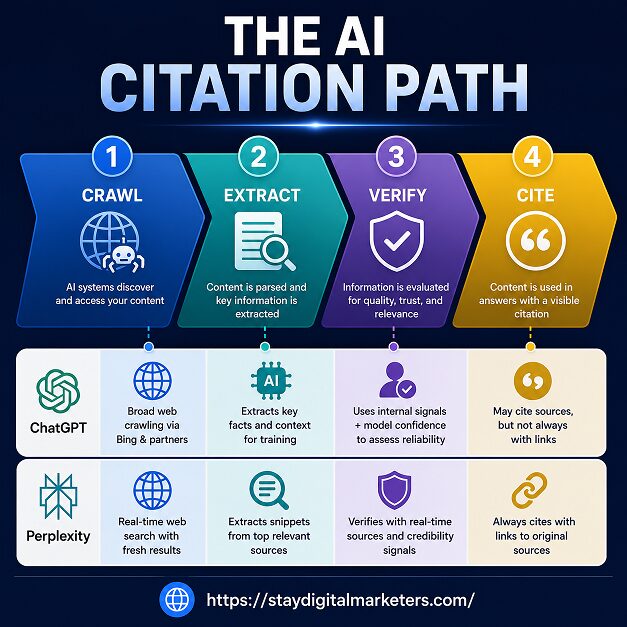
ChatGPT and Perplexity do not choose sources the same way. ChatGPT relies on a mix of training data and periodic live browsing, while Perplexity performs a real time web search before nearly every answer and always displays its sources. Because the two engines draw from different pools of content, industry tracking has found that only about 11 percent of domains are cited by both platforms for the same query. A brand that wants durable AI visibility has to satisfy two different retrieval systems, not one, and that is exactly what the nine methods below are built to do.
Key Takeaways
An extractable answer is a self-contained sentence that makes sense even if it is lifted out of the page and dropped into someone else’s response. AI answer engines are built to do exactly that lifting, so content that opens with a direct claim gets pulled into generated answers far more often than content that builds up to the point over several paragraphs.
A widely cited analysis of AI citation patterns found that 44.2 percent of citations are pulled from the first 30 percent of a page. That means the opening two or three sentences under any heading do more work than the rest of the section combined. Writers who bury the answer under throat clearing and context are effectively hiding it from the systems most likely to quote them.
Most guidance on AI visibility treats citation factors as a loose checklist. It is more useful to group them into a single framework that can be audited page by page. The C.R.A.F.T. Signal Model breaks the factors that influence AI citation into five categories: Consensus, Recency, Answer-first structure, Fact density, and Third-party validation.
AI systems look for agreement across multiple independent sources before confidently citing a claim. A single confident sentence on a company blog carries less weight than the same claim echoed across a review site, a forum thread, and an industry publication.
Perplexity in particular favors content that has been published or meaningfully updated within the last year, and current tracking suggests that roughly 65 percent of AI bot activity targets recently touched pages.
Covered above: the claim comes before the explanation, not after it.
Pages with specific numbers, named studies, and concrete examples are easier for a model to lift as a citation than pages built on generic statements.
Independent mentions on forums, review platforms, and press outlets function as evidence the model can point to, which is different from evidence the brand asserts about itself.
Large scale citation tracking has repeatedly identified Reddit as the single most cited domain across major AI engines, with one analysis attributing roughly 24 percent of Perplexity’s citations in a recent month to Reddit threads alone. Community platforms carry weight precisely because the content was not written by the brand being discussed, which makes it read as independent evidence.
Spam systems on both the search and AI side are built to discount inauthentic mentions, so the objective is genuine participation rather than planted posts. Practitioners who manage AI visibility across several client accounts consistently notice that a handful of well-answered questions on Reddit or industry forums does more for citation frequency than a much larger volume of self-published content.
A visible, accurate last-updated date and a clean revision history give both crawlers and readers a reason to trust that a page reflects current information. Content cited by AI engines tends to run noticeably fresher than the content that ranks in traditional organic results, since generative systems weight recency more heavily than classic ranking algorithms do.
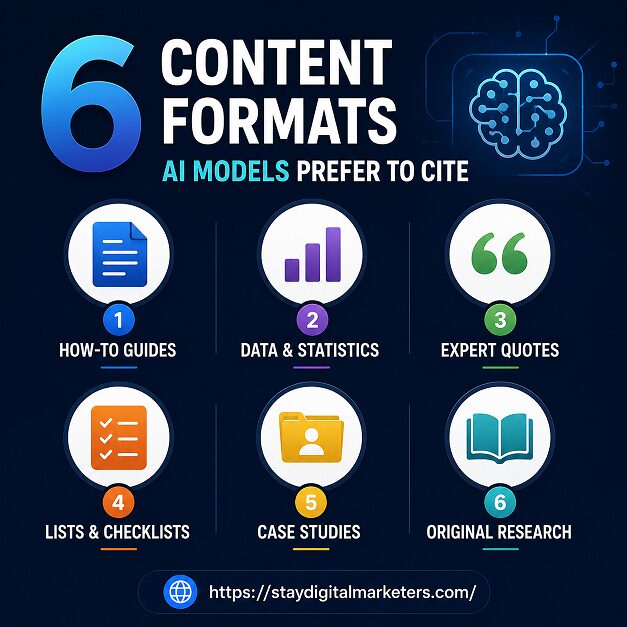
AI engines assemble answers from parts they can isolate cleanly, which is why lists, tables, and clearly labeled question headings extract more reliably than long unbroken paragraphs. Content hidden inside collapsed accordions or tabbed panels is often skipped entirely, since many crawlers only read what renders in the default view.
Google confirmed in 2026 that AI Overviews and AI Mode draw from the same underlying search index using retrieval augmented generation rather than a separate AI-only index. That means the basics still decide whether a page is even eligible: indexing status, crawl access, page speed, and a clear internal linking structure. No amount of framework-building compensates for a page that a crawler cannot reach or render.
Structured data helps machines parse a page’s meaning, but controlled testing has shown that adding schema to a page that is already visible and well structured does not reliably increase AI citations on its own. Schema is best treated as a support signal rather than a shortcut.
When ChatGPT or Perplexity recommends a brand, the underlying training and retrieval data often traces back to outlets that have independently covered that brand. A single placement in a respected trade publication can outperform months of owned-channel publishing, because it functions as third-party validation rather than a self-made claim. Teams that pair a modest content calendar with a steady stream of earned coverage tend to see AI mentions compound over time in a way that owned content alone rarely produces.
AI visibility is not a set-and-forget project. It has to be measured the same way organic rankings are measured, using a repeatable set of test queries and a schedule for reviewing results.
Run the same set of strategic queries on both platforms on a monthly basis and log the results in a simple tracker. Patterns that show up over three or four cycles are far more reliable than a single snapshot, since both engines update their retrieval behavior frequently.
| Signal | ChatGPT | Perplexity |
| Retrieval method | Training data plus periodic live browsing | Real time web search on nearly every query |
| Freshness weight | Moderate; depends on browsing schedule | High; favors content updated within a year |
| Source overlap | Only about 11 percent shared with Perplexity | Only about 11 percent shared with ChatGPT |
| Citation display | Inconsistent; not always shown to the user | Always shown, formatted as numbered references |
| Heavily cited domain type | Reddit, review sites, established publications | Reddit, live news, recently updated brand pages |
Generative Engine Optimization, or GEO, is the practice of structuring content so AI answer engines such as ChatGPT and Perplexity can find, parse, and cite it. It focuses on direct answers, factual density, and third-party validation rather than traditional ranking signals alone. GEO works alongside SEO rather than replacing it.
Traditional SEO optimizes for a ranked list of links on a results page. GEO optimizes for inclusion in a synthesized answer that an AI engine generates and cites directly. The two overlap heavily on technical access and content quality but diverge on formatting, freshness weighting, and the importance of third-party consensus.
Yes, but less often than recently updated pages. Perplexity in particular favors content refreshed within the past year, so older posts benefit from a scheduled review that updates statistics, examples, and the visible last-modified date rather than a full rewrite.
Yes. Multiple independent analyses identify Reddit as the single most cited domain across major AI answer engines, with a substantial share of Perplexity citations traced back to Reddit threads. Genuine participation in relevant discussions carries more weight than posts written purely for visibility.
Backlinks still support domain authority and search rank, which remains a meaningful citation factor. However, brand mentions across forums, review sites, and press coverage now correlate with AI visibility more strongly than backlinks alone, making mention-building a necessary complement rather than a replacement.
Run a consistent set of strategic queries directly on both platforms and log whether the brand appears, how it is described, and which competitors show up alongside it. Analytics referrer data from chatgpt.com and perplexity.ai also confirms actual referral traffic reaching the site.
No paid placement exists for organic citations as of 2026. Citations are earned through content quality, technical accessibility, domain authority, and structured data, though some platforms are testing separate advertising placements that are distinct from organic citation results.
Building the kind of third-party consensus described above, spanning guest placements, press coverage, and structured mentions, is a slower process than most content calendars account for. Stay Digital Marketers works with brands on exactly this layer of visibility, offering guest posting, press release distribution, SaaS backlinks, niche edits, multilingual backlinks, Wikipedia page creation, Google Knowledge Panel creation, and broader SEO services aimed at building the kind of independent presence that both traditional search and AI answer engines look for before they cite a brand with confidence.

Filza Taj is an MPhil in Human Resources-turned SEO Specialist, Content Strategist, and Digital Marketing Consultant with over 5 years of experience helping businesses in 30+ countries grow online. As the Founder of Stay Digital Marketers (staydigitalmarketers.com), she delivers results-driven solutions in link building, guest posting, PR distribution, niche edits, multilingual backlinks, and content marketing. She publishes daily SEO insights and actionable strategies to help brands strengthen their online presence, attract the right audience, and convert clicks into loyal customers.
Filza@staydigitalmarketers.com
Stay Digital Marketers
Need SEO, Link Building or Digital Marketing Services?
Request a Free Audit →