
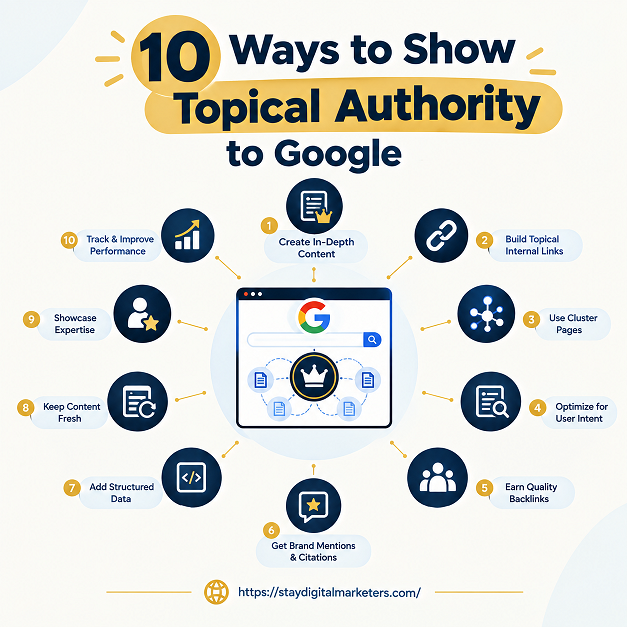
Showing topical authority means giving Google clear, checkable evidence that your site is a focused, expert source on one subject. You do it with complete coverage, connected pages, visible expertise, and outside references, because Google offers no setting or tag that declares it.
The concept touches several entities: pillar pages, topic clusters, internal links, E-E-A-T, bylines, structured data, and the Knowledge Graph. Google has not confirmed a metric by this name. Gary Illyes said in 2016 that Google doesn’t “really have overall domain authority,” and John Mueller reportedly answered “Don’t worry about it” in a 2023 Reddit thread on the term. Treat the ten ways below as quality practices that line up with what Google documents.
Key Takeaways
I reviewed the four pages in the brief. Each lists tactics, but none tells you which tactics rest on Google’s own words and which rest on vendor data.
That is the gap. This guide scores every tactic by its evidence source, so you can decide where to spend effort first.
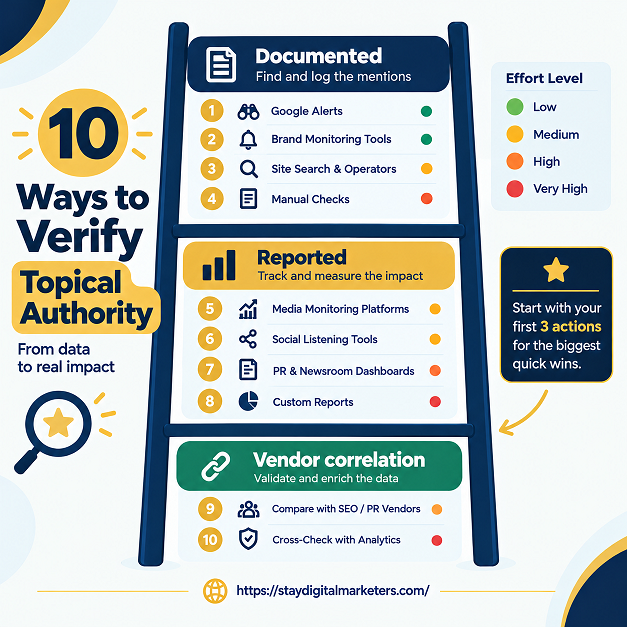
The Signal Source Scorecard rates each tactic on two questions: who says it works, and how hard it is to do. Start with tactics Google documents, then add those backed by reported or vendor evidence.
In practice, the ten ways below cluster at the first two levels, which is why they hold up better than lists built on tool metrics.
Google’s helpful content guidance asks, “Does your site have a primary purpose or focus?” Write one sentence naming your subject and what falls outside it, then cut or move off-topic pages. Evidence level: documented.
Map the subtopics, entities, and questions around your subject using People Also Ask, related searches, and your Search Console queries. Surfer’s study of 1 million queries, with the top 20 results for each, found topical coverage to be the strongest on-page factor, while exact keyword density showed almost no correlation. Surfer notes the method measures correlation, not causation, and it sells tools built on the finding. Evidence level: vendor correlation.
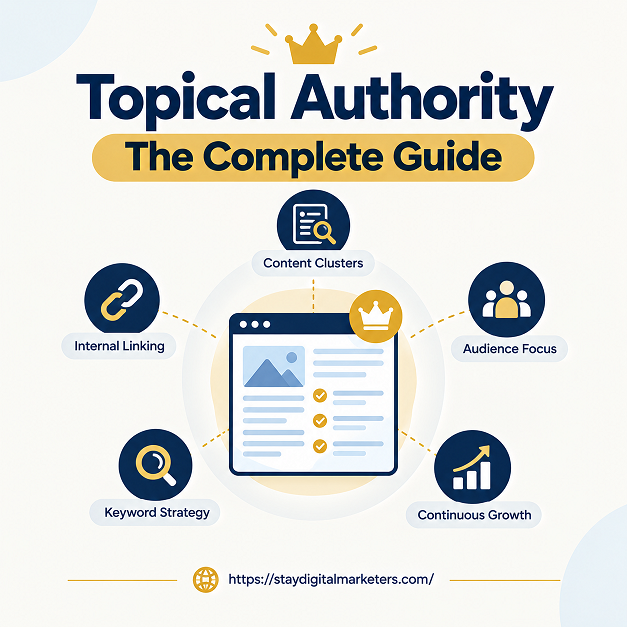
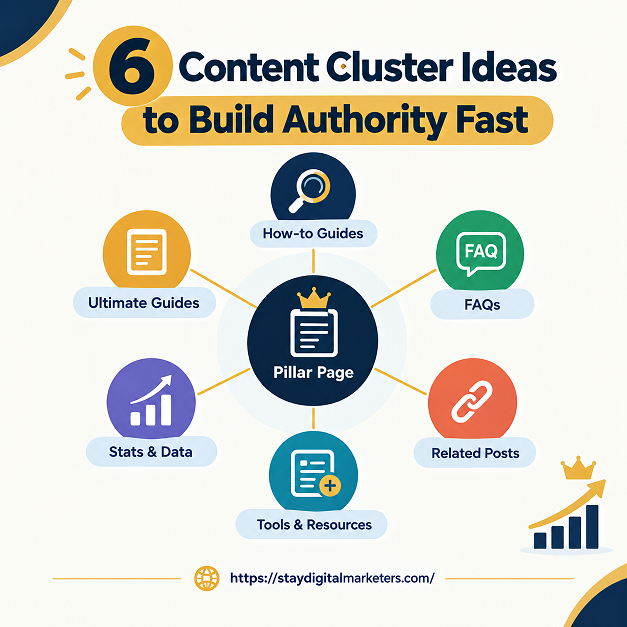
Create one overview page for the subject and supporting pages for each subtopic, with each page serving one intent. Search Engine Land describes both pillar-first and cluster-first approaches. Either works if the structure is clear.
Link every cluster page to the pillar and to its closest siblings. Descriptive anchors tell Google what each target page is about. Evidence level: practitioner method, since Google makes no topical authority claim about links.
Observed across client work, sites that stall often have several near-identical pages chasing one query. Merge them into the strongest URL and redirect the rest. This does more for clarity than a tenth article on the same angle.
Google’s guidance says, “We strongly encourage adding accurate authorship information, such as bylines,” and asks whether bylines lead to further information about the author. Build short author pages with credentials and link them from every article. Evidence level: documented.
Google asks whether content “clearly demonstrate[s] first-hand expertise and a depth of knowledge.” Add original screenshots, test notes, and decisions you made, because a summary of other pages cannot show this. Evidence level: documented.
Links and mentions from trusted sites in your field confirm your coverage beyond your own pages. In practice, a complete cluster with no outside references is harder to prove than a smaller one that others cite. Judge each link by relevance and editorial standards, not by a DA or DR number. A Wikipedia page can be a reference point, but it requires independent coverage and follows conflict of interest rules, so do not treat it as a shortcut.
Name tools, people, and concepts the same way across pages. Add author markup with sameAs links to the writer’s profiles, as Search Engine Land suggests. Structured data labels what a page contains, but it does not create authority by itself.
Update key pages when facts change and remove pages that drift off topic. Then record a baseline before you publish and track the same query group monthly in Search Console. Teams that skip the baseline cannot say whether the work helped.
The table scores each way using the Signal Source Scorecard.
| Way | Evidence level | Effort | Where to check it |
| 1. Primary focus | Documented | Low | Site audit |
| 2. Complete coverage | Vendor correlation | High | Search Console queries |
| 3. Pillar and clusters | Practitioner method | High | Site structure |
| 4. Descriptive internal links | Practitioner method | Medium | Crawl report |
| 5. Merge competing pages | Practitioner method | Medium | Query to URL overlap |
| 6. Real bylines | Documented | Low | Author pages |
| 7. First-hand expertise | Documented | High | Content review |
| 8. Relevant references | Practitioner method | High | Backlink report |
| 9. Entities and markup | Practitioner method | Medium | Rich results test |
| 10. Refresh and track | Practitioner method | Medium | Search Console |
The 2024 Content Warehouse leak held 2,596 modules and 14,014 attributes, according to Wikipedia’s summary, and Google confirmed on May 29, 2024 that the documents were authentic. Google also said, “We would caution against making inaccurate assumptions about Search.”
Two attributes, siteFocusScore and siteRadius, appear to measure topical coherence and how far pages drift from a site’s main topic. That supports staying focused. It does not reveal their weight, so no ranking claim follows.
Focus the site on one subject, cover its subtopics and questions in depth, and connect the pages with internal links. Add clear bylines and first-hand expertise, earn relevant references, and track cluster-level results in Search Console. Google has no official topical authority score, so these steps build quality signals indirectly.
No. John Mueller reportedly replied “Don’t worry about it” in a 2023 Reddit thread, and Google’s documented guidance asks about a site’s primary purpose and demonstrated expertise instead. Leaked attributes such as siteFocusScore exist, but Google cautioned against inaccurate assumptions about them.
No official number exists. Surfer’s case study of its own blog compared only 20 pages, so it cannot set a threshold. Cover the questions your audience asks, then compare your subtopic coverage with the pages ranking for your target queries and fill the largest gaps first.
They can support it, but the evidence is indirect. Relevant references from trusted sites in your field confirm your coverage elsewhere. Gary Illyes said in 2016 that Google doesn’t really have overall domain authority, so judge links by topical relevance and editorial quality, not by DA or DR scores.
No reliable timeline exists. Surfer’s guide says authority can build quickly on new sites but offers no evidence. Record a baseline in Search Console before publishing, release a complete cluster, and review cluster-level impressions and ranking pages monthly instead of expecting a fixed date.
Yes, if it stays narrow. A small site can cover one subject completely, with clear bylines and first-hand detail that larger sites often lack. Google’s guidance asks whether a site has a primary purpose and demonstrates depth of knowledge, not how many pages it has.
Coverage and expertise build trust on your own site, while outside references confirm it elsewhere. Stay Digital Marketers assists brands with backlink-related services, including guest posting, press release distribution, SaaS backlinks, niche edits, multilingual backlinks, Wikipedia page creation, Google Knowledge Panel creation, and complete SEO services.
Sources were read on October 14, 2026. Google has published no topical authority score, so each way below is labeled by how well it is supported.

Filza Taj is an MPhil in Human Resources-turned SEO Specialist, Content Strategist, and Digital Marketing Consultant with over 5 years of experience helping businesses in 30+ countries grow online. As the Founder of Stay Digital Marketers (staydigitalmarketers.com), she delivers results-driven solutions in link building, guest posting, PR distribution, niche edits, multilingual backlinks, and content marketing. She publishes daily SEO insights and actionable strategies to help brands strengthen their online presence, attract the right audience, and convert clicks into loyal customers.
Filza@staydigitalmarketers.com
Stay Digital Marketers
Need SEO, Link Building or Digital Marketing Services?
Request a Free Audit →