
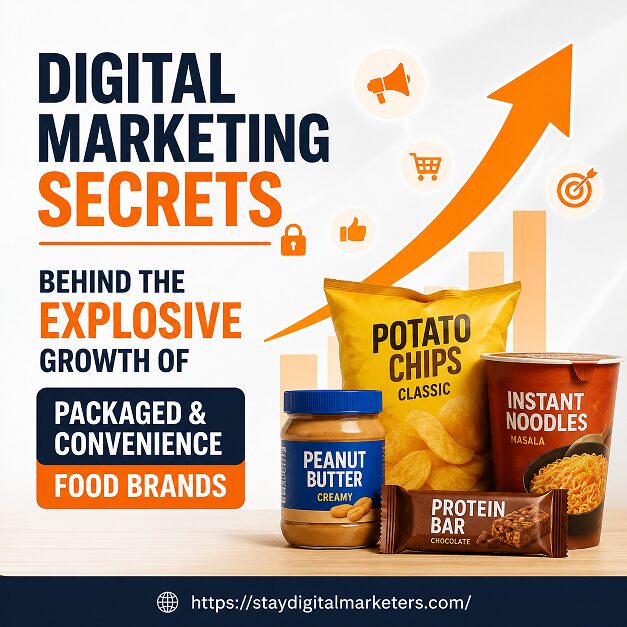
It’s no longer enough to produce the finest food products in this hyper-competitive food space. Before Consumers even reach a store shelf, they use the web, social media platforms, online retail stores and quick-commerce apps to search, compare, and buy their favourite branded foods. And in the current world of food buying-consumers have shifted their approach; the buyer of today shops before they shop, making a good digital presence the key to sustained, massive brand growth in the packaged and convenience foods segment.
In a hyper-connected food world, the convenience and packaged food market are booming as consumers have redefined their shopping habits. The global convenience foods market reached USD
673.8 billion in 2025 and is expected to rise to USD 1,121.4 billion by 2034 and register a steady 5.8% CAGR during this predicted growth period, as stated in the DataIntelo Convenience Foods Market research. This consistent growth is driven by the shifting habits of our busiest professionals
and households – the younger generation, dual-income homes, and the modern busy professional who need convenience foods like instant ready to eat snacks, frozen foods, noodles, canned vegetables and more.
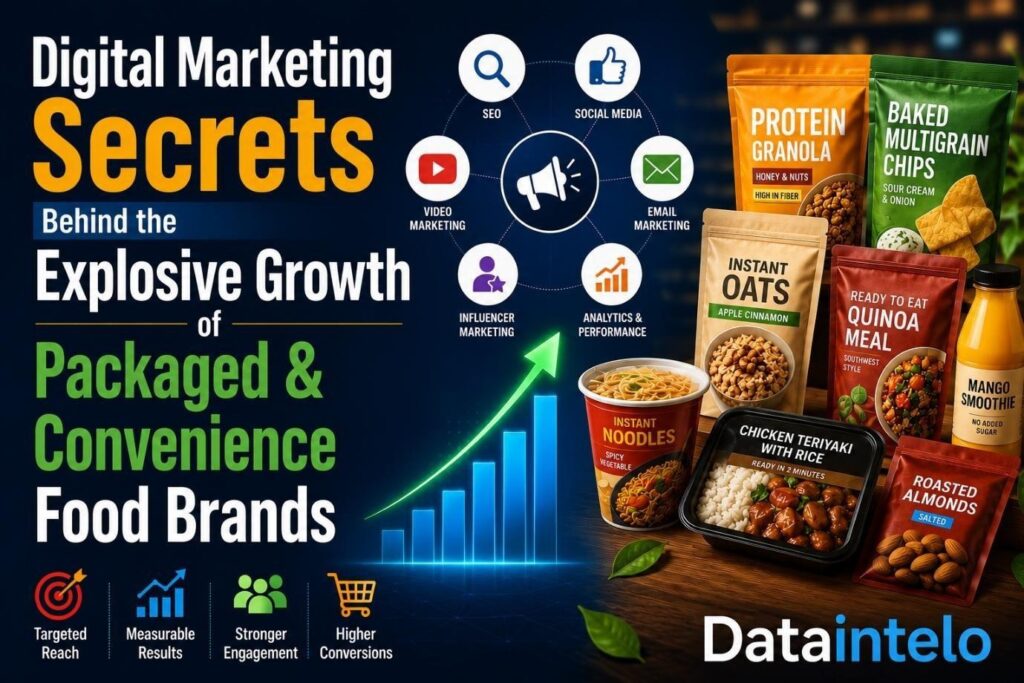
From SEO and content marketing to influencer and affiliate programs, AI personalized advertising to social media engagement and paid media – today’s marketers rely on an integrated digital strategy to translate visibility and awareness to bottom line growth. Success will belong to brands that leverage compelling storytelling in conjunction with sophisticated data-driven marketing for rapid growth.
Key Takeaways
Consumers are not starting the buying process at the supermarket aisles anymore. From search and marketplaces to quick commerce, YouTube, and Instagram, it’s everywhere – be it social media or review sites.
Before adding a product to the cart, customers typically:
This means the first impression happens online—not on the physical shelf.
Today’s shoppers are tired of pretty labels on uninteresting contents. They demand clarity about the why. Why it good, or bad, for them.
Successful packaged food brands publish valuable content that answers common questions, including:
Recipes, blogs, cheat sheets and short videos make brands appear to be leading the industry, instead of simply selling goods.
SEO offers one of the best ROI for any digital marketing efforts available to business.
Instead of competing only through paid advertisements, leading food brands optimize their websites for searches such as:
Brand that ranks number 1 on a SERP for a significant keyword range establishes authority and draws quality traffic that are already interested in buying.
Once established in organic search, unlike paid campaigns, SEO traffic can be sustained for a long period of time.
We don’t tend to buy the food just on its specs. We buy experiences, weightlessness, convenience. Trust.
Brands may present their products in the context of their customers’ every day life via Instagram, Facebook, Pinterest, TikTok, YouTube and more.
Popular content includes:
Rather than simply trying to sell someone a product, the savvy brands engage the public into conversations which convince and lead individuals into buying decisions on their own.
Users follow creator advice even more these days. Food brands collaborate with:
It’s not surprising micro-influencers generate higher engagement rates; for their communities their recommendations feel more genuine and trustworthy. People tend to search for an honest product review, or for an example to demonstrate exactly how the item works in real life scenarios as oppose to perfectly crafted advertising campaigns.
Using digital advertising, food brands can reach consumers based on their interests, shopping and buying preferences, as well as their location and demographics.
Popular channels include:
Unlike traditional media, every click, impression, and purchase can be measured. Brands continuously optimize campaigns by monitoring:
Further, as with programmatic on performance-driven methods, the spending could be viewed, evaluated and prioritised with the correct perspective.
Getting a customer is only part of the battle. Keeping a customer is even more important. Email marketing helps brands:
Email automation, designed correctly, not only drive up repeat purchases but also build long-term customers.
Modern consumers expect relevant experiences.
Using customer data responsibly, brands personalize:
A loyal protein bar buyer might see different suggestions to a regular family meal kit shopper. This enhances engagement levels and in turn increases conversion.
Blinkit, Zepto, Instamart and other such fast delivery services has revolutionize packaged foods discovered and bought .
Food brands now compete for:
Other than pricing, the important factors for a successful sale on online channel include quality product images, keyword optimized descriptions, customer reviews, and digital merchandising.Online quick-commerce sites are evolving as a crucial digital retail window, where a customer’s purchase choice relies on product visibility.
AI assists marketers in gaining insight into customer behavior. Brands now use AI to:
This insight helps the company react swiftly to preferences as well as create more efficient operating methods.
They want you as a repeat consumer. Those are your leading packaged-food brand names. They encourage loyalty through:
Connected packaging, QR codes, and in-product digital experiences are enabling other brands to turn mundane products into ongoing engagement drivers.
Packaged food and convenience food brands that are winning the space, though, are not winning solely with digital ads. Instead, success comes from a medley of Search, content quality and influencer-centric initiatives all fueled by intelligently measured performance, personalized and data-enrichment, engaged communities. And in the wake of increasingly digital-first paths, the winners in these rapidly more competitive categories will be those that can execute against real stories, demonstrable performance, and experience-focused customers strategies.

Filza Taj is an MPhil in Human Resources-turned SEO Specialist, Content Strategist, and Digital Marketing Consultant with over 5 years of experience helping businesses in 30+ countries grow online. As the Founder of Stay Digital Marketers (staydigitalmarketers.com), she delivers results-driven solutions in link building, guest posting, PR distribution, niche edits, multilingual backlinks, and content marketing. She publishes daily SEO insights and actionable strategies to help brands strengthen their online presence, attract the right audience, and convert clicks into loyal customers.
Filza@staydigitalmarketers.com
Stay Digital Marketers
Need SEO, Link Building or Digital Marketing Services?
Request a Free Audit →