

The world of search has entered a new era. In 2026, Google is not just a search engine anymore; it has evolved into an intelligent answer engine driven by generative artificial intelligence. For SEO professionals, this transformation demands an entirely new way of thinking. Ranking alone is no longer enough; now, your content must be recognized, summarized, and cited by AI systems themselves.
In this detailed guide, we will explore the latest Google AI Search Updates for 2026, analyze how top SEO experts are adapting, and provide actionable insights on how you can stay ahead of this evolution.
| Feature or Update | Description | SEO Impact |
|---|---|---|
| AI Mode Becomes Default | Google is gradually making AI Mode the default search interface for most users. | Visibility depends on being cited in generated answers instead of ranking among the classic blue links. |
| AI Generated Snippets | Google’s AI creates summaries that replace or merge with traditional meta descriptions. | Your content must be precise and structured for AI summarization. |
| Removal of “num=100” Parameter | The old method of pulling 100 search results is no longer supported. | Rank tracking tools must adjust their data collection methods. |
| Expansion of AI Overviews | AI summaries now appear for a majority of queries in many regions. | Organic clickthrough rates are dropping; focus must shift to citation presence. |
| Rise of GEO and AI SEO | Generative Engine Optimization (GEO) and AI SEO emerge as new strategies. | SEOs must optimize not just for ranking, but for influence in generative outputs. |
| Data Control and Transparency Updates | Google is changing how content is sourced and cited within AI outputs. | First party data and clear author credibility become essential. |
These updates have reshaped the foundation of SEO. Many websites that relied on traditional tactics are now losing visibility because AI-driven systems interpret and present information differently.
Many of the highest-ranking articles on Google about AI Search updates focus on surface-level explanations. They discuss the impact of AI Mode, declining clickthrough rates, and general AEO strategies. While these are important, they often miss deeper details such as:
This blog goes beyond those points to give you a clear understanding of the inner workings of AI search and how to align your content for maximum visibility.
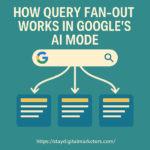
In AI Mode, Google no longer processes one query at a time. Instead, it breaks every query into several related subqueries, often called “query fan-out.” The system collects data from multiple angles before composing a single, summarized answer.
To benefit from this system, your content must cover multiple subtopics and related concepts. If your article covers only a narrow aspect of a topic, AI might skip it in favor of more comprehensive sources.
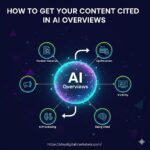
AI Overviews select content from sources that demonstrate authority, originality, and structured readability. These include:
Pages that check these boxes are more likely to appear in AI summaries. Websites that depend on generic or repetitive information are less favored in 2026’s search environment.
Studies show that websites appearing under AI summaries have seen traffic drops ranging from 20 percent to as high as 60 percent, depending on the query type. While this sounds alarming, it also indicates that the focus should shift from clicks to visibility within AI citations.
Google is testing AI-generated summaries that either override or merge with the original meta descriptions. This means you must make the first few lines of your article strong, clear, and ready for summarization. Each paragraph should serve as a self-contained thought that AI can easily extract.

Traditional SEO focused on ranking high in the search results. In 2026, the goal has evolved toward recognition within AI answers. The new success metrics are:
You are no longer only optimizing for keywords but also for prompt intent and semantic influence.
Move from keyword lists to topic clusters and prompt mapping.
AI systems prefer structured and logically organized writing.
E-E-A-T (Experience, Expertise, Authoritativeness, Trustworthiness) remains at the heart of Google’s AI systems.
You can track your presence in AI Overviews by observing impressions, new types of search console data, and brand mentions. Some SEO tools are adding “AI citation tracking” to measure how often your domain appears in generative responses.
Google’s generative systems gather content not just from websites but also from YouTube, Reddit, and LinkedIn. Publishing multi-format content increases your chance of being cited.

Recent studies from SEO research firms reveal these trends for 2026:
| Metric | Observation | Source Insight |
|---|---|---|
| CTR decline after AI summaries | 30 to 60 percent average | Based on publisher and brand data collected during 2025 and early 2026 |
| Increase in AI citation visibility | 15 to 25 percent rise for authoritative sites | Brands with strong schema and structured data benefited the most |
| Preference for fresh content | 70 percent of AI citations came from content updated within six months | Indicates that freshness plays a direct role in selection |
These statistics make it clear that optimization today must focus not just on ranking but also on maintaining freshness and credibility across platforms.
Imagine you run a site about fitness and nutrition. Instead of writing one long article about “Healthy Diet Plans,” you could create multiple connected pieces, such as:
Each of these serves a different subquery and increases your chances of being cited in AI summaries. You would then connect them internally and update them every few months with new data.
Google will continue to expand AI Mode and integrate advertising directly within AI Overviews. Search engines are becoming interactive spaces where users ask questions and receive conversational responses.
As a result, SEOs must transition from traditional metrics like keyword ranking and page impressions to more advanced ones, such as:
Those who focus on this shift early will build a durable online presence.
1. Is traditional SEO still relevant?
Yes, traditional SEO remains the foundation. However, optimization now includes structuring information for AI systems to easily extract and present.
2. Why are clicks decreasing despite high rankings?
AI summaries provide direct answers, so users often do not need to click through. The solution is to aim for being featured within the AI summary itself.
3. How can I ensure my site appears in AI Overviews?
Use structured data, publish expert content, and keep your information updated and factual. Avoid superficial or repetitive topics.
4. How often should I update content in 2026?
Ideally, every 3 to 6 months for key pages. AI systems prefer recent, refreshed data.
5. What is GEO?
GEO stands for Generative Engine Optimization. It focuses on optimizing content for AI systems that generate answers rather than traditional search engines.
Google’s AI-powered SEO search is reshaping how visibility, traffic, and authority are earned online. As AI Mode becomes the standard experience, the role of SEO is evolving from ranking on search pages to being recognized by AI systems.
To stay ahead, focus on creating authentic, structured, and expert content that can be easily summarized by AI. Measure your performance through visibility in generative results rather than traditional clicks. Build your authority across platforms, maintain freshness, and engage audiences with original insights.
The future of SEO belongs to those who adapt early and design content that both humans and AI trust.

Filza Taj is an MPhil in Human Resources-turned SEO Specialist, Content Strategist, and Digital Marketing Consultant with over 5 years of experience helping businesses in 30+ countries grow online. As the Founder of Stay Digital Marketers (staydigitalmarketers.com), she delivers results-driven solutions in link building, guest posting, PR distribution, niche edits, multilingual backlinks, and content marketing. She publishes daily SEO insights and actionable strategies to help brands strengthen their online presence, attract the right audience, and convert clicks into loyal customers.
Filza@staydigitalmarketers.com
Stay Digital Marketers
Need SEO, Link Building or Digital Marketing Services?
Request a Free Audit →