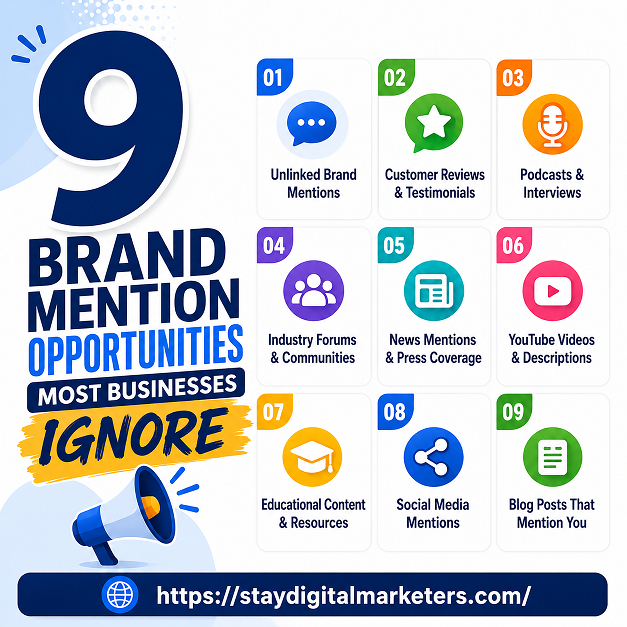

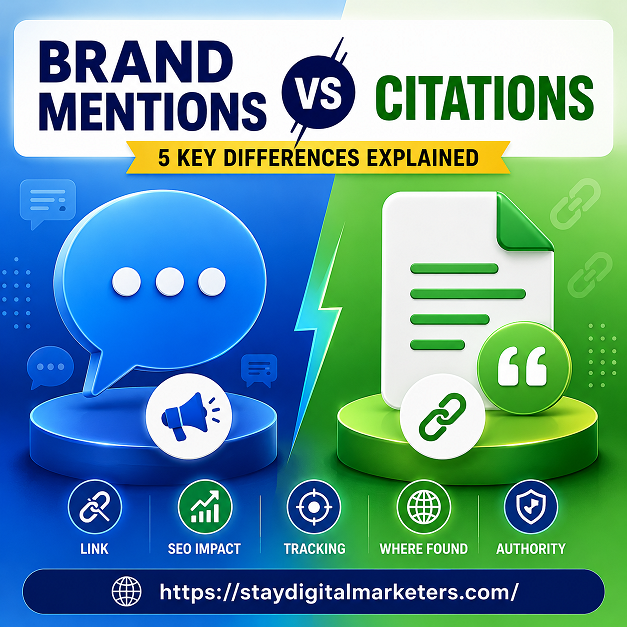
A brand mention is any reference to a business name on a third-party platform, with or without a link. A citation, depending on context, is either a structured name, address, and phone listing used in local SEO or a sourced reference an AI system attaches to a generated answer. The two terms get used interchangeably across SEO content, but they measure different things, get tracked with different tools, and respond to different tactics.
That confusion matters more now than it did before generative search became a daily habit for searchers. Google’s AI Overviews, ChatGPT, and Perplexity all surface brand names without necessarily linking to a source, and they also attach citations to answers without necessarily naming the brand behind them. A business can be talked about constantly and still show up nowhere in an AI Overview’s source list. Another business can be cited once and never named at all. Understanding why requires separating what a mention does from what a citation does.
What Is a Brand Mention?
A brand mention is any appearance of a business name, product name, or branded term on a platform the business doesn’t control, regardless of whether a hyperlink is attached. That includes blog posts, news coverage, forum threads, podcast transcripts, review platforms, and AI-generated answers.
Linked, Unlinked, and Implied Mentions
Mentions are split into three categories. A linked mention pairs the brand name with a clickable URL, the version most outreach teams chase because it doubles as a backlink. An unlinked mention names the brand with no link attached, common in comparison posts, Reddit threads, and AI summaries that synthesize information without sourcing it. An implied mention never states the brand name directly but describes its product, method, or positioning closely enough that readers and language models still connect the dots, for example referencing a link building agency known for Knowledge Panel work without naming the company outright.
Research from BrightEdge on ChatGPT prompt behavior found that a large share of prompts surface zero brand names at all, and only a small fraction surface ten or more. That means appearing by name in an AI answer already puts a brand ahead of most competitors in its category, not just the ones it tracks directly.
What Is a Citation?
A citation means one of two different things depending on which kind of search is being discussed. In local SEO, a citation is a structured listing of a business’s name, address, and phone number on a directory or platform separate from the business’s own site. In AI search, a citation is a source link an AI system attaches to a generated answer to support a specific claim.
Local SEO Citations
The local SEO definition predates AI search by well over a decade. Local SEO researcher David Mihm is widely credited with formalizing the term. The underlying logic hasn’t changed since: when a business’s name, address, and phone number appear consistently across directories like Google Business Profile, Yelp, and industry-specific listings, Google treats that consistency as evidence the business is real and located where it claims to be. Inconsistent NAP data across platforms undermines local pack visibility, even when the business itself hasn’t changed anything.
AI Search Citations
The AI search definition is newer and works through a different mechanism entirely. When a generative engine needs information beyond what it learned during training, it performs live retrieval, breaking the original query into smaller sub-queries through a technique generally called query fan-out, then searching the web in real time. It pulls passages from the pages it finds, evaluates how well those passages support a draft answer, and attaches links to whichever sources it ends up relying on. That link is the citation. It functions less like a vote of confidence and more like a footnote, added to back up a specific sentence rather than to recommend the source as a whole.
What’s the Difference Between a Brand Mention and a Citation?
The core difference is that a mention reflects how an AI system or search engine already understands a brand based on everything it has seen, while a citation reflects what a system chooses to reference in one specific answer. A brand can be deeply embedded in a model’s understanding of a category and still not get cited in a given response, and a page can get cited once for a narrow factual claim without the brand behind it ever being named.
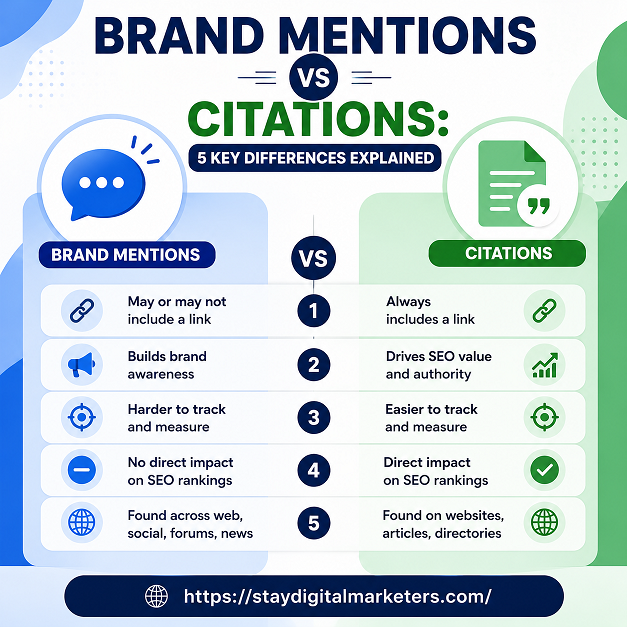
Five Key Differences at a Glance
| Factor | Brand Mention | Citation |
| Link required | No | Yes, by definition |
| Source of origin | Training data and live retrieval | Live retrieval only |
| What it signals | Entity recognition and topical association | Source-level trust for a specific claim |
| Where it shows up | Articles, forums, reviews, AI answers (named) | AI Overview, ChatGPT, and Perplexity source lists |
| How stable is it | Builds gradually, persists over time | Volatile, can change between identical queries |
That last row matters more than it looks. An analysis from BuzzStream comparing citation behavior across Google AI Mode, AI Overviews, Gemini, and ChatGPT found that the large majority of cited URLs were unique to a single platform, with well under one percent cited consistently across all four. Mentions, by contrast, tend to persist once an association is established, because they’re baked into how a model represents a brand rather than recalculated fresh for every query.
Why Do Brand Mentions Matter More Than Citations in AI Search?
Brand mentions matter more in AI search because most of what a language model knows about a brand comes from pattern recognition across training data, not from a citation lookup performed at the moment of answering.
Training Data vs Live Retrieval, Explained Simply
Think of it as two systems running side by side. Training data shapes what a model already associates with a brand before a query is typed; the more often a brand name appears alongside specific terms, problems, or categories across the open web, the stronger that association becomes. Live retrieval is what kicks in when a query needs fresher or more specific information than the model already holds, triggering a real-time search and a citation tied to whatever it finds.
A widely referenced analysis from Digital Information World found that brand mentions correlated with AI visibility at roughly three times the strength of backlinks. That lines up with how these two systems actually work. Backlinks were built for a crawl-based link equity model. Mentions map onto a model that learns by recognizing patterns in language, not by following hyperlinks.
Why Do Citations Still Matter?
Citations still matter because they’re the version of evidence an AI system reaches for when it needs to back up a specific, checkable claim, and they remain one of the only signals tied to actual referral traffic.
When a Link Still Beats a Mention
For fact-heavy or technical claims, statistics, pricing, dates, or anything an AI system treats as needing direct verification, a citation does work, whereas a mention can’t. The link traces the claim to a specific source rather than to a general impression. Citations are also the closest thing AI search has to a clickable result, and while click-through data on AI Overviews remains limited, what’s available suggests at least some portion of users do follow them when an answer leaves something unresolved.
Can an Unlinked Brand Mention Replace a Backlink?
No, not for traditional ranking purposes, but it can carry real weight for AI visibility specifically. The two signals do different jobs and shouldn’t be treated as interchangeable.
The Implied Links Patent Debate
A 2012 Google patent describing implied links gets cited constantly as proof that Google counts unlinked mentions as a ranking factor. A detailed review of the patent published in Search Engine Journal pushed back on that reading, arguing the patent’s implied links actually describe branded search behavior, people searching a brand name directly, rather than unlinked mentions sitting on a webpage. Google’s own John Mueller addressed the broader question directly, stating he didn’t believe Google used unlinked mentions as a ranking signal. So for classic organic rankings, an unlinked mention is not a backlink substitute. For AI visibility, where entity recognition matters more than link equity, the calculation changes, and a single unlinked mention on a credible, topically relevant site can shape how a model associates a brand with a category more than a backlink from a low authority domain ever would.
How Do Brand Mentions Affect Knowledge Panel and Entity Recognition?
Brand mentions feed directly into how confidently Google and AI systems treat a business as a distinct, verifiable entity rather than just a website. A Knowledge Panel is Google’s clearest public signal that it has resolved a brand into an entity with its own identity, separate from any single page, and that resolution depends heavily on consistent mentions across independent sources, not just on site claims.
The same logic extends to large language models. When a brand is described the same way across enough independent, credible sources, the model starts treating that description as a stable fact rather than a single data point. Structured data plays an underused role here. Organization schema, sameAs properties linking to verified profiles, and consistent entity descriptions across a site give both Google and AI crawlers a clearer, machine readable signal to attach to the mentions already happening elsewhere on the web. A business with strong mention volume but no entity infrastructure on its own site is leaving some of that visibility on the table.
Is It Worth Tracking Both Brand Mentions and Citations?
Yes, for any brand investing in AI visibility, but the two need separate tracking systems because they answer different questions. A practical way to think about where a given mention sits is what can be called the Mention Equity Ladder, a four stage model for how a mention’s value compounds as it moves up.
Most mention tracking tools only capture stages two and three. The gap between stage three and stage four is where most of the current AI visibility opportunity sits, because a linked mention doesn’t guarantee a citation, and a citation can happen without climbing through the earlier stages at all if a page gets pulled into live retrieval for the first time.
The Best Way to Build Brand Mentions That Convert Into Citations
The most efficient way to build mentions that eventually convert into citations is to give independent sources a specific, factual reason to name a brand, rather than waiting for general visibility to get noticed.
Publish Data Worth Citing
Original research, surveys, and proprietary benchmarks give journalists, bloggers, and AI systems something concrete to reference. A vague claim gets paraphrased without attribution. A specific number, a named methodology, or a clearly labeled study gets quoted with the source attached, because removing the attribution would make the claim less credible.
Strengthen Entity Signals With Schema
Organization schema, consistent NAP data where relevant, and clearly labeled author and About information give crawlers a structured map of who a brand is, separate from the unstructured mentions happening elsewhere on the web. This doesn’t create mentions on its own, but it makes the mentions a brand already has easier for Google and AI systems to resolve into one confident entity.
Show Up Where AI Already Looks
Forums, review platforms, and Q&A communities show up disproportionately often in AI Overview and ChatGPT source lists, partly because that content tends to be candid, specific, and easy to retrieve in clean passages. Genuine participation in those spaces, answering real questions with real expertise rather than dropping a brand name, tends to produce exactly the kind of unlinked, contextual mention that AI systems weight heavily.
How to Measure and Track Brand Mentions vs Citations
| Goal | What to Track | Typical Tools |
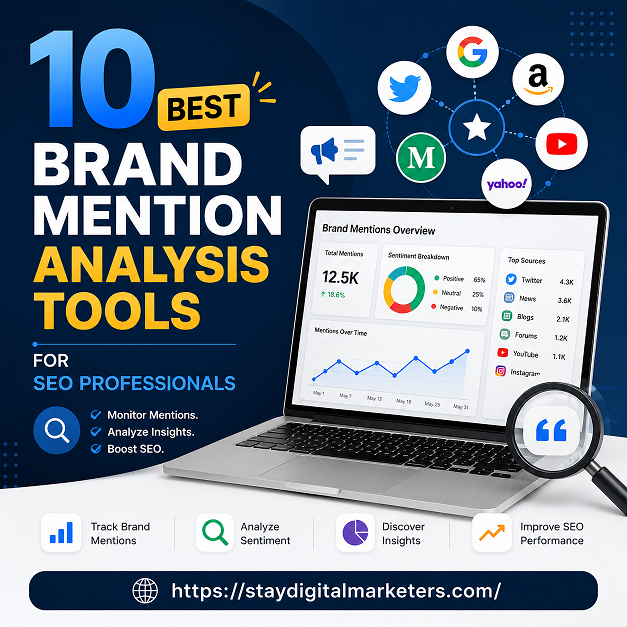
| Web-wide mention volume | Linked and unlinked mentions, sentiment | Brand monitoring platforms, manual alerts |
| Local citation accuracy | NAP consistency across directories | Local citation audit tools |
| AI mention frequency | How often a brand is named in AI answers | AI visibility tracking platforms |
| AI citation frequency | Which pages get linked as sources | AI visibility tracking platforms |
| Link reclamation | Unlinked mentions worth converting | Backlink and content discovery tools |
The most useful habit is reviewing these as separate workflows rather than one combined off-page SEO report. A spike in mentions with no corresponding citation growth usually points to a content gap, not a tracking error, since it means a brand is being talked about without anything specific enough for an AI system to retrieve and cite.
Frequently Asked Questions
Are brand mentions a confirmed Google ranking factor? No. Google has not confirmed that unlinked brand mentions directly affect rankings, and statements from Google’s own team have pushed back on that idea specifically.
Do AI Overviews use citations the same way ChatGPT does? No. Each platform runs its own retrieval process, and overlap between which sources get cited across platforms is low, so a citation on one platform doesn’t predict a citation on another for the same query.
Can a brand be mentioned by AI without ever being cited? Yes, and the reverse is also true. A brand can be embedded in a model’s training data strongly enough to get named without any specific page being cited, and a page can get cited for a narrow fact without the brand behind it being named in the answer.
Is a local SEO citation the same thing as an AI citation? No. A local SEO citation is a structured NAP listing used to confirm geographic legitimacy. An AI citation is a source link attached to a generated answer. They share a name but serve entirely different functions.
How long does it take for brand mentions to influence AI visibility? There’s no fixed timeline, but most practitioners see branded search and AI mention frequency shift gradually over several months of sustained, genuine mention building, since the underlying associations strengthen with repetition rather than appearing overnight.
Should a small or local business bother tracking AI mentions at all? Yes, if its customers are likely to ask AI tools for recommendations in its category, which is increasingly common even for local services. The tracking can stay manual and lightweight at first. The value comes from knowing whether the business shows up at all, not from a sophisticated dashboard.
Key Takeaways
Brand mentions and citations measure different things and need different tracking. A mention reflects how a brand is understood across everything an AI system has seen; a citation reflects what gets pulled into one specific answer. Citations still carry weight for fact heavy claims and referral traffic, but mentions correlate more strongly with overall AI visibility, because they map onto how language models build associations rather than how they crawl links. The brands gaining ground right now are the ones building both, with linked and unlinked mentions feeding entity recognition while citation worthy content keeps them retrievable when AI systems go looking for a source.
For brands working through the backlink side of this equation specifically, Stay Digital Marketers is one resource worth knowing, an agency working across guest posting, press release distribution, SaaS backlinks, niche edits, Wikipedia page creation, and Google Knowledge Panel creation, several of which sit directly at the intersection of mention building and entity recognition described above.

Filza Taj is an MPhil in Human Resources-turned SEO Specialist, Content Strategist, and Digital Marketing Consultant with over 5 years of experience helping businesses in 30+ countries grow online. As the Founder of Stay Digital Marketers (staydigitalmarketers.com), she delivers results-driven solutions in link building, guest posting, PR distribution, niche edits, multilingual backlinks, and content marketing. She publishes daily SEO insights and actionable strategies to help brands strengthen their online presence, attract the right audience, and convert clicks into loyal customers.
Filza@staydigitalmarketers.com
Stay Digital Marketers
Need SEO, Link Building or Digital Marketing Services?
Request a Free Audit →