
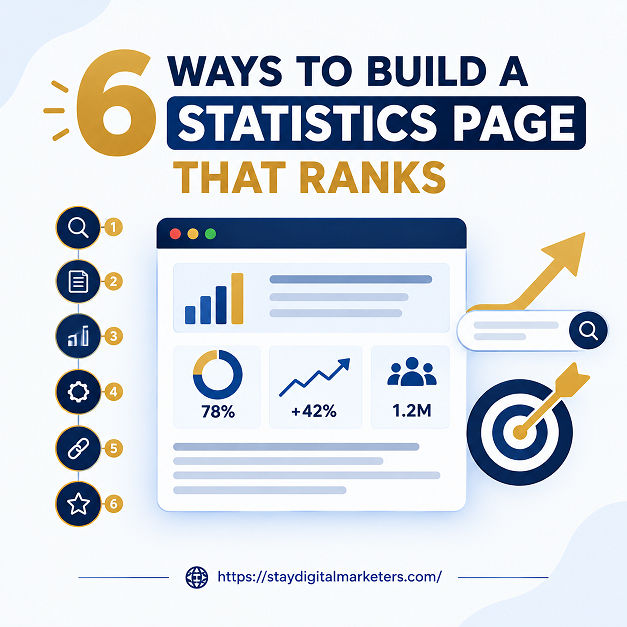
A statistics page is a resource built around a curated set of data points on a single topic, such as link building statistics or SEO ROI figures, organized for quick reference rather than narrative reading. It ranks differently than a typical blog post because its authority comes primarily from earned backlinks: other writers citing individual numbers and linking back to the source, rather than from on-page optimization alone. That distinction shapes every decision that goes into building one, from which data to include to how each figure gets formatted on the page.
The short answer is that a statistics page ranks when it earns links at the level of individual statistics, not just as a whole page. A number that is sourced, dated, and easy to quote gets cited by other writers building their own content around the same topic. A number buried in a paragraph with no clear attribution gets summarized instead, and summarized content does not build backlinks the way a citable, standalone statistic does. The rest of this guide breaks down exactly what separates the two outcomes.
Key Takeaways
Most ranking advice available for this topic covers on-page basics that apply to any page type: keyword placement, meta tags, internal linking, page speed. None of it addresses what actually separates a statistics page that accumulates hundreds of referring domains from one that sits unlinked despite solid on-page optimization. The mechanism is different, and treating a statistics page like a standard blog post misses it entirely, since the ranking signal a statistics page depends on most is earned outside the page itself.
Reviewing how statistics-style pages perform across a range of published examples, including in the SEO and link building space itself, shows a consistent pattern: pages mixing original survey data with aggregated third-party figures, sourced statistic by statistic, accumulate far more referring domains than pages compiling only secondhand numbers. The difference is not visible in a standard on-page audit, which is exactly why generic SEO checklists miss it, and why a page can pass every technical SEO test and still never earn the backlinks a genuinely citable statistics page attracts.
Search volume alone is not enough. The stronger signal is whether writers in the space are already citing statistics on the topic in their own content, since that behavior indicates an active citation habit a new page can plug into. Checking who currently links to the top-ranking statistics pages in a niche reveals whether that citation demand actually exists before committing to build a competing resource. A topic with high search volume but no existing citation culture, where nobody links out to data on the subject, usually signals a harder page to build backlinks for, regardless of how well it ranks on-page.
Original survey or proprietary data is what earns the strongest backlinks, since a number nobody else has cannot be found on a competing page. Aggregated third-party figures still matter, since they make the page comprehensive enough to answer a wider range of related queries, but a page built entirely from other people’s numbers is asking to be treated as a secondary source rather than a primary one. Even a small original dataset, a survey of 50 to 100 industry peers, or an internal analysis of a company’s own campaign results, gives the page at least one figure that only exists there.
A source list at the bottom of the page is not the same as attribution next to each figure. Writers citing a specific number need to trust that exact figure, not the page’s general credibility, so naming the original research organization and its sample size directly beside each statistic is what makes an individual number safe enough for someone else to cite and link.
A statistic buried inside a longer paragraph forces a writer to either rewrite it or skip it. A statistic formatted as its own short, bolded line, source named, can be copied directly into another article with a link back attached. This single formatting choice is one of the most underrated levers on a statistics page’s eventual backlink count.
A visible update date only helps if a real refresh sits behind it. Checking every figure against its original source at least twice a year, replacing outdated numbers rather than just changing the displayed date, keeps the page eligible for citation by writers who specifically avoid linking to visibly stale statistics pages.
A published statistics page does not promote itself. Digital PR, pitching specific, original data points directly to writers and journalists already covering the topic, is rated the most effective link building tactic by roughly 48.6 percent of SEO professionals surveyed in 2026, ahead of guest posting and other outreach methods. A single well-placed pitch introducing one striking original statistic often starts the Citation Flywheel faster than waiting for organic discovery.
Context matters here too. Roughly 96.55 percent of all web pages have zero external backlinks, and pages with at least one earned backlink are markedly more likely to reach the first page of results than pages with none. A statistics page competing for citations is competing against that baseline, which is precisely why the outreach step cannot be skipped, no matter how well-sourced and well-formatted the page itself turns out to be.
| Element | Weak Statistics Page | Ranking-Ready Statistics Page |
| Data mix | 100% aggregated third-party numbers | Original survey or proprietary data plus aggregated figures |
| Sourcing | One source list at the bottom | Named source next to every individual statistic |
| Formatting | Numbers buried in paragraphs | Standalone, bolded, quotable stat lines |
| Freshness | No visible update date | Visible “updated” date with a real refresh behind it |
| Promotion | Published and left alone | Actively pitched to writers already covering the topic |
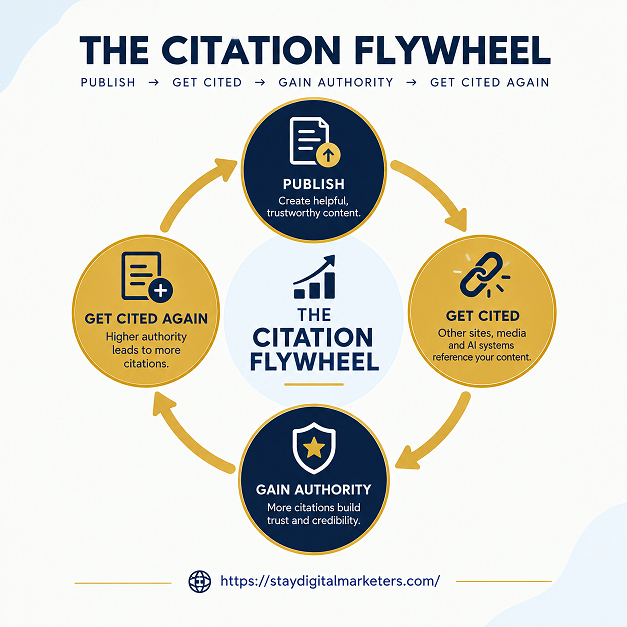
Statistics pages that rank well tend to follow a specific, self-reinforcing pattern worth naming directly, since it explains why some pages compound in authority while others stall.
This is the Citation Flywheel. It only starts turning if the first statistic cited is sourced clearly enough for a writer to trust and attribute it. A page with strong design but weak per-stat sourcing never gets the flywheel moving in the first place.
A statistics page ranks primarily through earned backlinks from writers citing individual numbers, not just through on-page keyword targeting. Its ranking power depends on sourcing hygiene and quotability at the level of each statistic, not only the page as a whole.
Both, when possible. Original survey or proprietary data is what earns the strongest backlinks, since it cannot be found anywhere else, while aggregated third-party figures make the page comprehensive enough to answer a broader range of related queries.
Most well-performing statistics pages are refreshed at least twice a year, with figures checked against original sources and a visible update date changed only when the underlying numbers actually change, not on a cosmetic schedule.
Pages that source every individual statistic and format each one as a standalone, quotable line make it easy for a writer to cite a single number with proper attribution. Pages that bury numbers in dense paragraphs or skip per-stat sourcing get summarized instead of linked.
Yes. Digital PR, including pitching original data to writers already covering a topic, is rated the most effective link building tactic by roughly half of SEO professionals surveyed in 2026, ahead of guest posting and other outreach methods.
It can still rank, but it will generally attract fewer backlinks than a page containing at least some original data, since aggregated-only pages compete directly with several similar roundups instead of offering a number nobody else has.
A statistics page built around these six practices still needs the outreach layer that turns a well-built page into an actual, growing backlink profile. Stay Digital Marketers works on that outreach and placement layer directly, including guest posting, digital PR and press release distribution, SaaS backlinks, niche edits, multilingual backlinks, Wikipedia page creation, and Google Knowledge Panel creation, alongside complete SEO services, so a well-sourced statistics page gets the pitching and placement work needed to start its own citation flywheel.

Filza Taj is an MPhil in Human Resources-turned SEO Specialist, Content Strategist, and Digital Marketing Consultant with over 5 years of experience helping businesses in 30+ countries grow online. As the Founder of Stay Digital Marketers (staydigitalmarketers.com), she delivers results-driven solutions in link building, guest posting, PR distribution, niche edits, multilingual backlinks, and content marketing. She publishes daily SEO insights and actionable strategies to help brands strengthen their online presence, attract the right audience, and convert clicks into loyal customers.
Filza@staydigitalmarketers.com
Stay Digital Marketers
Need SEO, Link Building or Digital Marketing Services?
Request a Free Audit →