
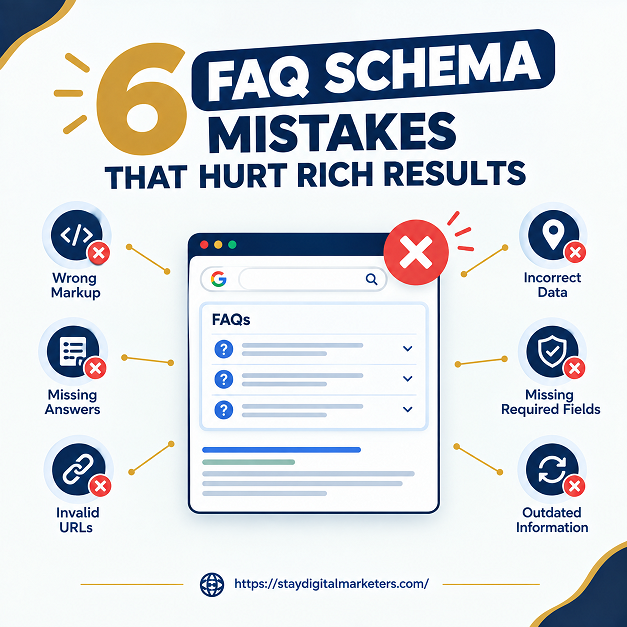
Not in the way this question usually assumes. Google deprecated FAQ rich results entirely as of May 7, 2026, adding a deprecation notice to its developer documentation rather than a formal announcement. The narrow set of government and health sites that had retained eligibility since an August 2023 restriction lost it too, so no website of any kind can currently earn the FAQ rich result, regardless of how well its schema is implemented. Several guides still ranking for this exact topic were written before that change and still frame FAQ schema mistakes purely around losing a SERP feature that no longer exists for anyone, which makes their advice technically outdated even where the underlying practices they describe remain reasonable.
FAQPage schema itself, the Schema.org type, is still valid, and Google has confirmed leaving it on a page causes no errors or penalties. What changed is the reward: the visual expandable snippet is gone, but AI engines including ChatGPT and Google’s own AI Overviews still parse FAQPage schema to extract question-and-answer pairs for their own citations. The six mistakes below are the ones that still cost something today, measured against that narrower, AI-facing purpose rather than a rich result that no longer exists, so a team reading this in 2026 gets guidance built around the reward structure that actually applies now.
Key Takeaways
Two questions decide whether existing FAQ schema is still worth maintaining now that the rich result reward is gone, useful as a quick per-page audit rather than a full rebuild.
A yes to both means the schema is worth maintaining and keeping accurate. A no to both means it was likely added only to chase the old rich result and can be safely removed. A mixed answer calls for judgment, usually in favor of keeping genuinely useful reader-facing content even if the schema itself is no longer doing measurable work.
FAQ schema added years ago often drifts out of sync with a page that has since been edited, redesigned, or partially rewritten. Since there is no longer a rich result reward to lose, teams are more likely to overlook this drift entirely, but a mismatch between schema and visible content still violates Google’s structured data guidelines and still risks confusing AI systems extracting facts from the page. A quick audit comparing schema text against the live page is often enough to catch this, yet it rarely happens once the rich result incentive to check disappears.
FAQPage schema is built for genuine questions and direct answers, not statements reformatted to look like questions after the fact. A heading like “Our Return Policy” marked up as a question inside FAQ schema weakens the clean question-and-answer structure AI systems rely on to extract a citable pair, even though Google Search itself no longer checks this for rich result eligibility. Rewriting it as “What is your return policy?” costs nothing and keeps the markup genuinely useful for extraction.
Stuffing a page with a long list of loosely related questions, written to capture more keyword variations rather than answer things real users ask, was already poor practice before the deprecation. It remains poor practice now, since Google’s structured data spam policies still apply regardless of rich result eligibility, and AI systems are generally better at identifying and discounting content that reads as manufactured rather than genuine. A shorter list of five or six real questions typically outperforms twenty engineered ones for both trust and extraction clarity.
Schema describing question-and-answer content that is not actually visible on the page, tucked away in code with nothing shown to a human visitor, was always against Google’s guidelines. Reviewing site audits across a range of client accounts shows this mistake persisting well after the deprecation, often left over from older implementations built specifically to win the now-defunct rich result without matching visible content.
Google is removing FAQ support from the Rich Results Test in June 2026 alongside the FAQ search appearance filter and rich result report. A team that has only ever validated FAQ schema through that one tool will lose its usual check entirely. The Schema.org Validator checks markup against the full specification regardless of which rich result types Google currently supports, making it the more durable option going forward, and pairing it with a manual spot check against the visible page catches mismatches neither tool flags on its own.
Search Console’s FAQ rich result report disappears in June 2026, and FAQ rich result data leaves the Search Console API entirely by August 2026. Teams running automated dashboards or scheduled reports built on that API data need to update those processes before August, since the underlying data source is being removed rather than simply deprecated in the interface. Building a lightweight, tool-independent audit routine now avoids a scramble when those data sources go dark.
Run the Keep-or-Cut Test above against every page carrying FAQ schema, prioritizing pages where the content was written specifically to chase the old rich result rather than to answer real reader questions. Keep and maintain schema tied to genuinely useful content. Remove schema that exists only as a relic of the pre-2026 rich result era, and shift validation and monitoring workflows away from the Rich Results Test and Search Console API well before their FAQ support disappears. Treating this as a one-time cleanup rather than an ongoing habit is itself a mistake worth avoiding, since the same drift that caused stale schema in the first place will simply recur without a periodic recheck.
| Date | What Changed | Effect |
| August 2023 | FAQ rich results restricted to authoritative government and health sites only | Most commercial sites already lost the visual snippet |
| May 7, 2026 | FAQ rich results stopped appearing in Google Search entirely, including for the remaining eligible sites | No site of any kind can earn the FAQ rich result anymore |
| June 2026 | FAQ search appearance filter, rich result report, and Rich Results Test support removed | Teams lose the standard tool for checking FAQ markup validity |
| August 2026 | FAQ rich result data removed from the Search Console API | Automated dashboards and reports tracking FAQ data stop working |
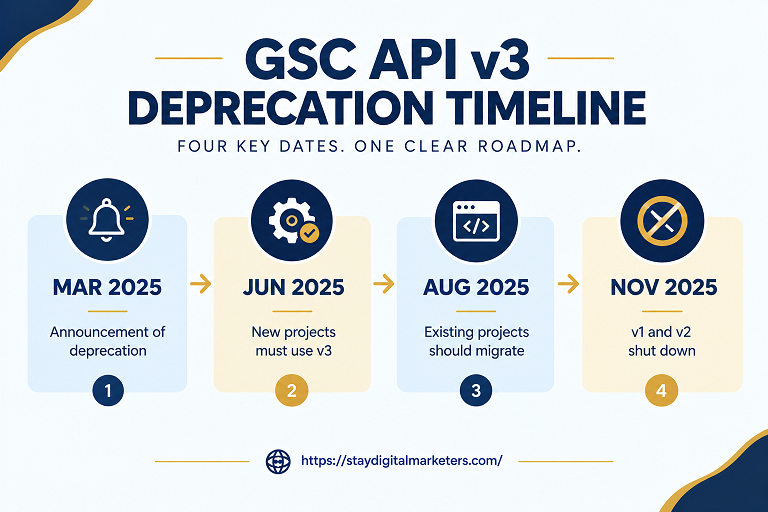
No. Google deprecated FAQ rich results entirely as of May 7, 2026, including for the narrow set of government and health sites that had retained eligibility since an August 2023 restriction. No website of any kind can currently earn the FAQ rich result.
Not necessarily. FAQPage remains a valid Schema.org type, and Google has confirmed leaving the markup in place causes no errors or penalties. The better question is whether the underlying FAQ content still serves real readers and still gets parsed by AI systems for citation.
Yes, in a more limited way. AI engines including ChatGPT and Google’s own AI Overviews still parse FAQPage schema to extract question-and-answer pairs for their own citations, even though the visual search-results snippet Google used to generate from that markup no longer appears.
The Schema.org Validator checks markup against the full specification regardless of which rich result types Google currently supports, making it the more durable validation tool once Google removes FAQ support from the Rich Results Test in June 2026.
Google has not published a detailed explanation, only a deprecation notice added to its developer documentation. The pattern matches how Google retired HowTo rich results in 2023 and seven other structured data types in June 2025, citing low usage and limited user value in each case.
Keep it visible on the page if it genuinely helps readers, and keep the schema accurate if it still serves AI citation purposes. Remove only the FAQ schema that was added purely to chase the old rich result and no longer reflects real page content.
A deprecation like this one is a reminder that schema is a supporting signal, not the foundation of visibility on its own, whether in classic search or AI answers. Stay Digital Marketers works on the foundation that supporting signals actually reinforce, including guest posting, press release distribution, SaaS backlinks, niche edits, multilingual backlinks, Wikipedia page creation, and Google Knowledge Panel creation, alongside complete SEO services, so a page’s authority does not depend on any single structured data feature staying available.

Filza Taj is an MPhil in Human Resources-turned SEO Specialist, Content Strategist, and Digital Marketing Consultant with over 5 years of experience helping businesses in 30+ countries grow online. As the Founder of Stay Digital Marketers (staydigitalmarketers.com), she delivers results-driven solutions in link building, guest posting, PR distribution, niche edits, multilingual backlinks, and content marketing. She publishes daily SEO insights and actionable strategies to help brands strengthen their online presence, attract the right audience, and convert clicks into loyal customers.
Filza@staydigitalmarketers.com
Stay Digital Marketers
Need SEO, Link Building or Digital Marketing Services?
Request a Free Audit →