
Why Does a Stats Page Need a Different Update Cycle Than the Rest of a Website?
A stats page needs its own update cycle because its value depends entirely on accuracy at a single point in time, a figure that was correct last year can be actively wrong today, while a typical page’s design or copy simply looks dated without becoming factually incorrect. A statistics page is any resource organized around a curated set of data points, such as industry benchmarks or survey figures, built to be cited and referenced rather than read once. Keeping one accurate requires tracking each statistic’s original source and knowing when that source itself gets updated, not just refreshing the page’s overall look on a fixed schedule.
The short answer is that a stats page should not run on one blanket update date. Different statistics go stale at different speeds, and treating them all the same either wastes effort re-checking figures that have not moved or leaves fast-changing numbers stale for months. The seven steps below build a system around that reality rather than a single annual refresh, so the page stays trustworthy to both readers checking a figure by hand and AI systems weighing how current a source actually is.
★
Key Takeaways
- A stats page should use statistic-specific recheck dates based on each figure’s decay speed instead of relying on one annual refresh.
- Every statistic should be re-verified against its original source and replaced when newer research supersedes the existing figure.
- A visible changelog should document meaningful updates so readers and AI systems can distinguish genuine freshness from a cosmetic date change.
- Quarterly light checks should catch fast-moving issues, while one comprehensive annual pass should re-verify sources, audit schema, review structure, and add new data.
Why Do Most Website Refresh Guides Miss What a Stats Page Actually Needs?
Most guidance on keeping a website updated covers general refresh cycles: redesigning visuals, checking accessibility compliance, updating a content management system, since the average website reportedly starts looking outdated after roughly two years and seven months, according to Orbit Media’s research. That advice is accurate for a website as a whole, but a statistics page is not primarily a design asset. Its currency depends on data accuracy, not visual appeal, and none of the general refresh guidance ranking for this exact topic addresses that distinction. A page can look freshly designed and still contain a statistic that is two years out of date, sourced from research that has since been superseded. None of the existing guides on keeping content updated separate that data-accuracy problem from the broader, more common advice about redesigning layouts and checking browser compatibility. That gap is what the rest of this article addresses directly
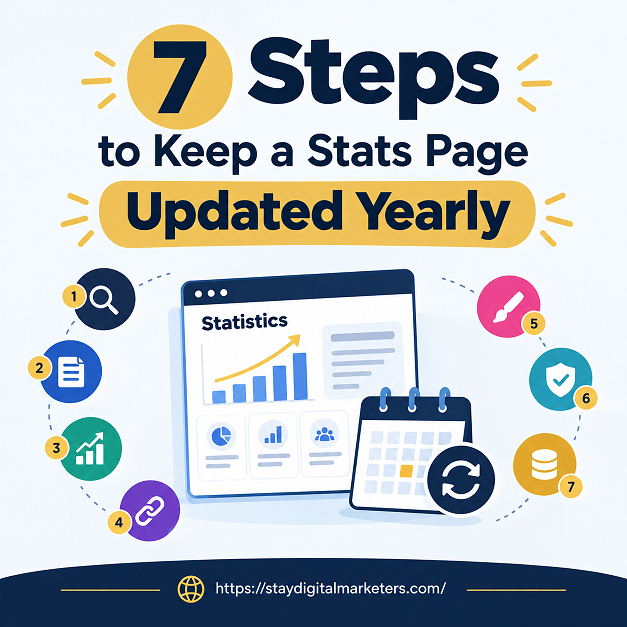
7 Steps to Keep a Stats Page Updated Yearly
1. Categorize Every Statistic by Decay Speed
Before building an update schedule, sort every statistic on the page into fast, medium, or slow decay using the Half-Life Rule above. This single step turns an undifferentiated wall of numbers into a maintenance list with built-in priorities, so effort goes toward the figures actually at risk of going stale first.
2. Set a Recheck Date for Each Stat When It’s First Added
Assign a specific recheck date to each statistic at the moment it goes live, three months out for fast-decay figures, closer to a year for slow-decay ones, rather than leaving every number tied to a single, vague annual review. A spreadsheet or content calendar entry per statistic keeps this from depending on memory.
3. Re-Verify Every Source at Its Scheduled Date, Not Just the Page’s Display Date
When a recheck date arrives, return to the original source, not a secondary citation of it, and confirm the figure still matches. Reviewing statistics pages across a range of client accounts shows a common failure mode: a page’s visible update date gets bumped during a routine content pass, but the actual source data was never revisited, leaving outdated figures dressed up as current ones. Going back to the primary source each time, rather than trusting a summary of it cached from the last review, is what actually catches a figure that has quietly drifted out of date.
4. Replace Statistics Whose Original Source Has Been Superseded
If a recheck finds the original study has been replaced by newer research, swap the figure rather than leaving the older one live simply because it still technically traces to a real source. A statistic that was accurate when published but is now superseded is functionally as misleading as one that was never verified.
5. Keep a Visible Changelog, Not Just a Bumped Date
A short, dated note describing what changed, which figures were updated, which were added, gives readers and AI systems something concrete to verify against. A changelog also protects the page’s credibility, since a visible history of real edits is harder to dismiss as a cosmetic refresh than an update date with no explanation attached.
6. Re-Audit Structure and Schema Alongside the Data
Updating the numbers without touching the page’s schema markup leaves a mismatch between what the structured data claims and what the page actually says. Every substantive update should include a check of the dateModified field and any FAQ or dataset schema tied to the page, correcting both together rather than treating content and markup as separate maintenance tasks.
7. Batch Light Updates Quarterly, Reserve One Deep Pass Annually
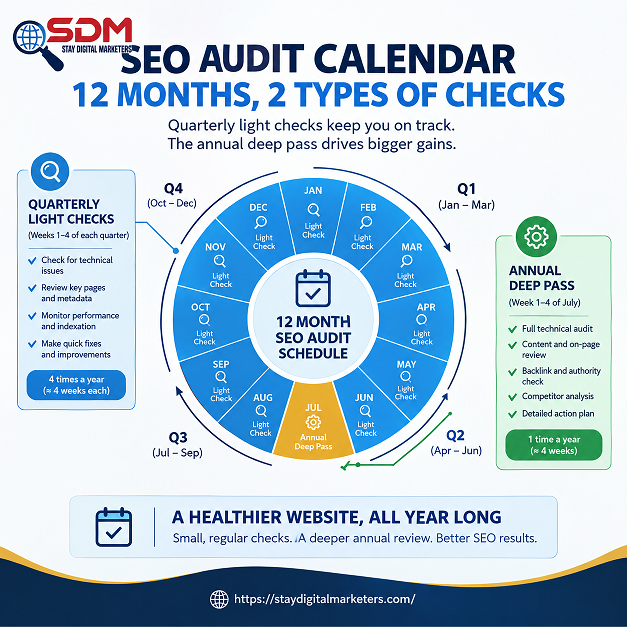
Quarterly reviews should catch fast-decay statistics and fix anything visibly broken, a dead source link, a superseded figure. One deeper annual pass should re-verify every remaining statistic regardless of its decay category, add new data where the topic has moved, and reassess whether any figures have earned a spot on the page since the last full review. Splitting maintenance this way keeps the workload predictable: quarterly checks stay quick because they target only what is likely to have changed, while the annual pass is the one point in the year set aside for a genuinely exhaustive review.
A Sample Annual Update Calendar
| Cadence | What Gets Checked | Applies To |
| Monthly | Spot-check any statistic tied to fast-moving AI or platform data | Fast-decay statistics |
| Quarterly | Re-verify sources, update changelog, fix broken source links | Medium-decay statistics |
| Annually | Full source re-verification, schema audit, structural review, new data added | Slow-decay statistics and the full page |
The Statistic Half-Life Rule
Every statistic on a page decays at a different rate, and matching the update cadence to that rate is more efficient than refreshing everything on one fixed date.
- Fast-decay statistics: figures tied to AI platforms, adoption rates, or citation share, which can shift meaningfully within three to six months given how quickly that space moves.
- Medium-decay statistics: survey-based rankings, pricing benchmarks, and tool comparisons, which typically hold for six to twelve months before a fresh survey cycle supersedes them.
- Slow-decay statistics: foundational, large-sample figures such as backlink prevalence or structural correlations, which often remain accurate for twelve to twenty-four months.
Tagging each statistic with its decay category at the time it is added turns a vague yearly refresh into a specific, trackable maintenance schedule.
Frequently Asked Questions
How often should a statistics page be updated?
It depends on the statistic, not the page as a whole. Fast-moving figures, AI adoption or platform-specific data, need checks every one to three months, while foundational, slow-changing statistics can safely go 12 to 24 months between verifications, following the Statistic Half-Life Rule.
What is the Statistic Half-Life Rule?
The Statistic Half-Life Rule categorizes each statistic on a page by how quickly its underlying data changes, fast, medium, or slow, so a maintenance schedule can be built around each figure’s actual decay speed rather than refreshing the whole page on one fixed date.
Does changing the publish date count as updating a statistics page?
No. A publish date changed without a real edit behind it does not reflect genuine freshness, and both readers and AI systems increasingly treat cosmetic date changes as unreliable. A real update means at least one figure, source, or piece of context actually changed.
Should every statistic on a page be rechecked at the same time?
No. Rechecking every statistic on the same fixed date wastes effort on figures that have not changed while potentially missing fast-moving ones that went stale months earlier. Assigning each statistic its own recheck date based on its decay speed is more efficient and more accurate.
What happens if a source statistic gets superseded by newer research?
The statistics page should replace the old figure and note the change in a visible changelog, rather than leaving an outdated number live because the display date still looks recent. Leaving a superseded statistic live undermines the page’s credibility once a reader cross-checks it.
Does structured data need to be updated along with the statistics themselves?
Yes. Schema markup, including the dateModified field and any FAQ or dataset schema, should be checked and corrected during every substantive content update, since mismatched schema and content can undermine the trust signal freshness is meant to build.
Where This Fits Into a Broader Content and Link Building Strategy
A well-maintained statistics page protects the backlinks it has already earned, since a writer who cross-checks a cited figure and finds it outdated is less likely to trust or link to the page again. Stay Digital Marketers works on the surrounding authority layer that complements this kind of maintained asset, including guest posting, digital PR and press release distribution, SaaS backlinks, niche edits, multilingual backlinks, Wikipedia page creation, and Google Knowledge Panel creation, alongside complete SEO services, so a well-maintained statistics page keeps earning citations rather than quietly losing them to staleness.

Filza Taj is an MPhil in Human Resources-turned SEO Specialist, Content Strategist, and Digital Marketing Consultant with over 5 years of experience helping businesses in 30+ countries grow online. As the Founder of Stay Digital Marketers (staydigitalmarketers.com), she delivers results-driven solutions in link building, guest posting, PR distribution, niche edits, multilingual backlinks, and content marketing. She publishes daily SEO insights and actionable strategies to help brands strengthen their online presence, attract the right audience, and convert clicks into loyal customers.
Filza@staydigitalmarketers.com
Stay Digital Marketers
Need SEO, Link Building or Digital Marketing Services?
Request a Free Audit →