Call or WhatsApp us anytime
Mail Us For Support

Link building tools are software platforms that help SEO teams find link opportunities, reach the right contact, run outreach and confirm that earned backlinks stay live. Agencies rarely rely on a single product. A working link building stack usually combines a backlink index such as Ahrefs or Semrush, an email finder such as Hunter.io, an outreach CRM such as Pitchbox or BuzzStream, and a monitoring tool that flags lost links.
This guide reviews 15 link building tools agencies keep paying for, grouped by the job each one does in a campaign. Every price was checked on the vendor’s own site as of November 2026. The guide also introduces the 5-Stage Link Stack, a model for building a stack without paying twice for one feature.
Key Takeaways
Link building tools are applications that automate the research, contact and tracking work behind earning backlinks, while the link itself still comes from an editor’s decision. They fall into five groups: backlink indexes, prospecting crawlers, contact finders, outreach CRMs and link monitors. Each group answers a different campaign question.
A backlink index such as Ahrefs or Majestic crawls the web and stores which pages link to which. A contact finder such as Hunter.io searches public sources for professional email addresses. An outreach CRM (a customer relationship management tool built for pitching) such as Pitchbox sends personalized emails, schedules follow-ups and records every reply. A link monitor such as Linkody rechecks earned links on a schedule.
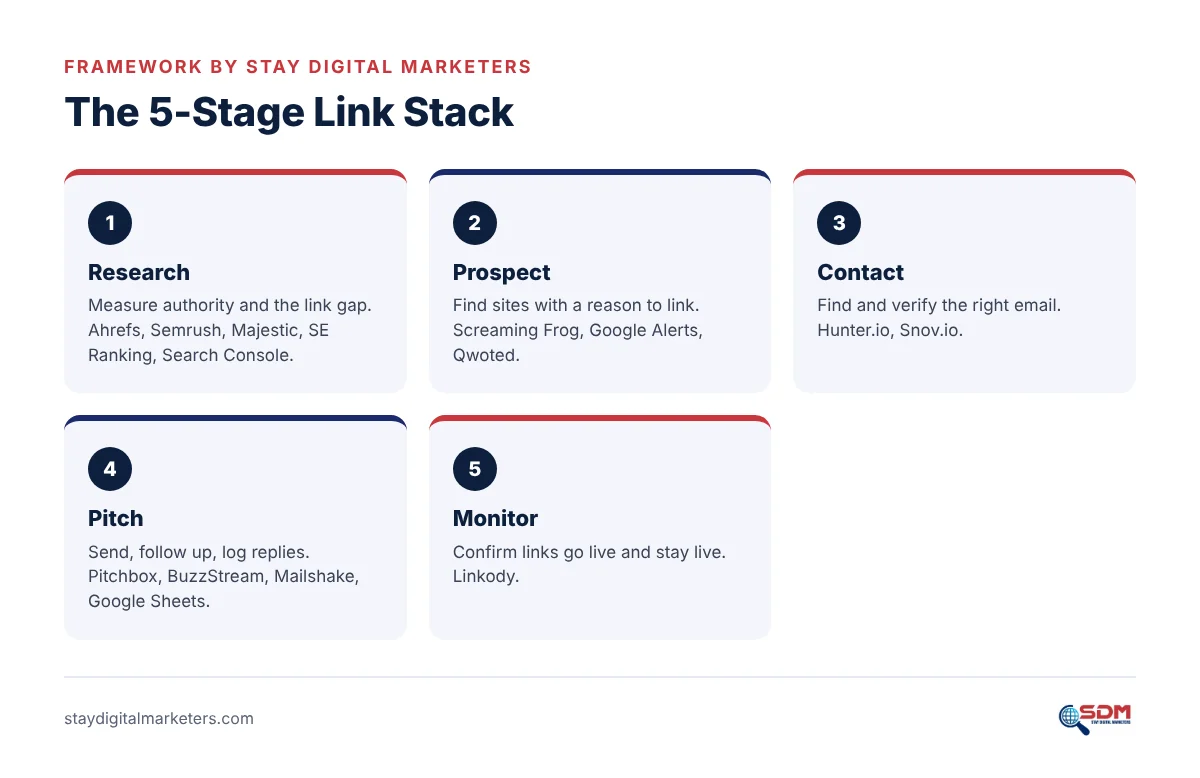
An agency should build its link building tool stack stage by stage, buying one tool per stage and skipping any stage a cheaper tool already covers. The 5-Stage Link Stack, developed by Stay Digital Marketers, maps every tool to Research, Prospect, Contact, Pitch or Monitor. Gaps and duplicate subscriptions then become visible.
The five stages work as follows:
Agencies tend to overspend at the Pitch stage and underspend at Monitor. Observed across client work, lost links often go unnoticed until a monthly report. A monitoring plan under $15 per month protects link budgets many times larger.
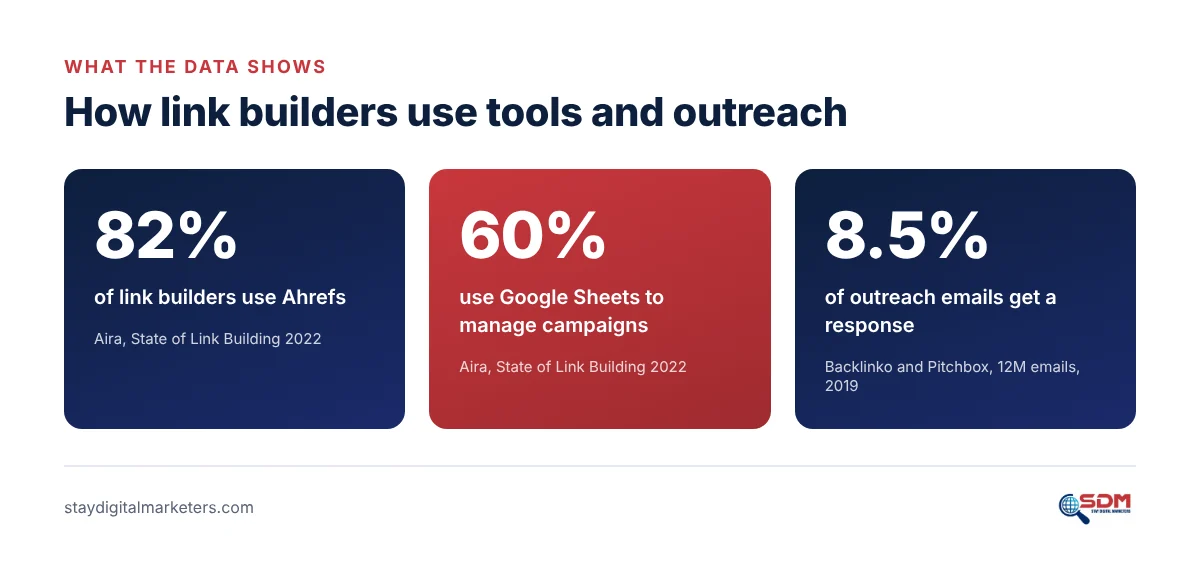
Ahrefs is the most widely used link building tool, followed by Google Sheets and Semrush. Aira’s State of Link Building survey (2022 edition) found that 82% of respondents used Ahrefs, 60% used Google Sheets and 56% used Semrush. Spreadsheets still sit at the centre of many campaigns.
Outreach data explains why follow-up features weigh so heavily in tool choice. A 2019 Backlinko study of 12 million outreach emails, run with data partner Pitchbox, found that only 8.5% of outreach emails received a response, and that one extra follow-up raised replies by 65.8%. The lesson still holds: easy follow-up often beats a bigger database.
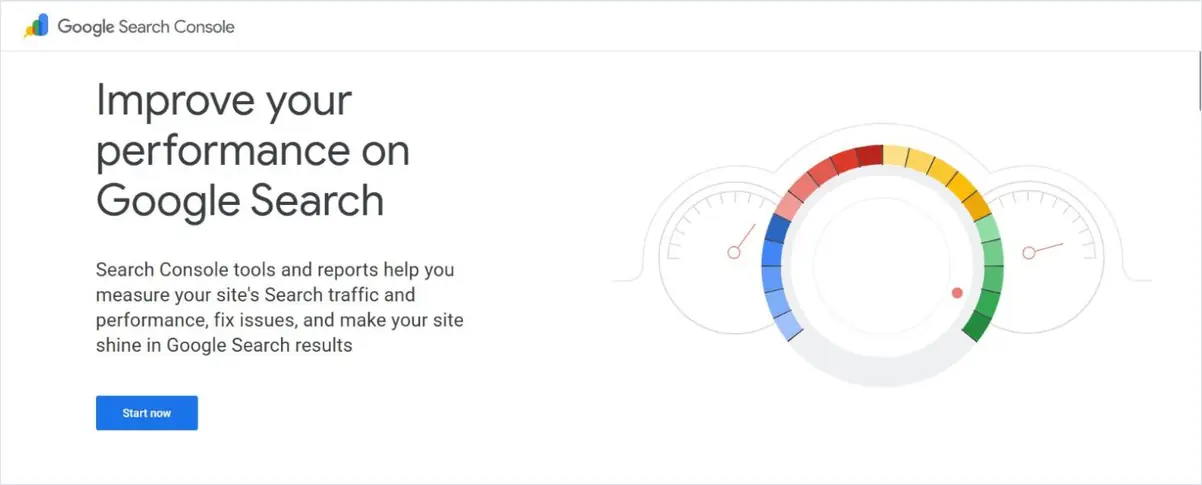
Ahrefs, Semrush, Majestic, SE Ranking and Google Search Console are the five research tools agencies rely on for backlink data. The first four index the wider web and show competitor links. Google Search Console shows only the links Google reports for a verified site, at no cost.
Ahrefs is a paid SEO platform built around one of the largest commercial backlink indexes. Agencies use Site Explorer to audit a client’s referring domains and competitor comparisons to find sites that link to several competitors but not to the client. Forum users note that lower tiers can run short of credits on agency workloads.
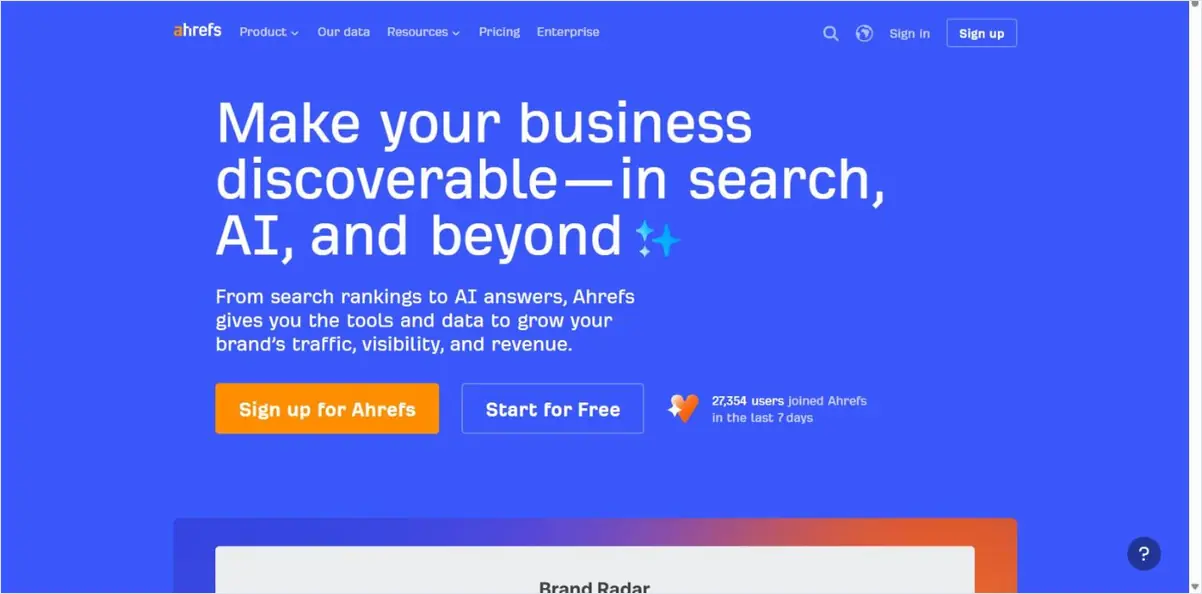
Pricing: Starter costs $29 per month, Lite $129, Standard $249 and Advanced $449, as of November 2026. Ahrefs Free gives verified site owners limited Site Explorer and Site Audit data. Best for: agencies that need the deepest competitor link data.
Semrush is an all-in-one marketing platform whose SEO Toolkit includes Backlink Analytics, Backlink Gap and Backlink Audit. Backlink Gap lists sites that link to competitors but not to the client, while Backlink Audit flags potentially harmful links before any disavow decision.
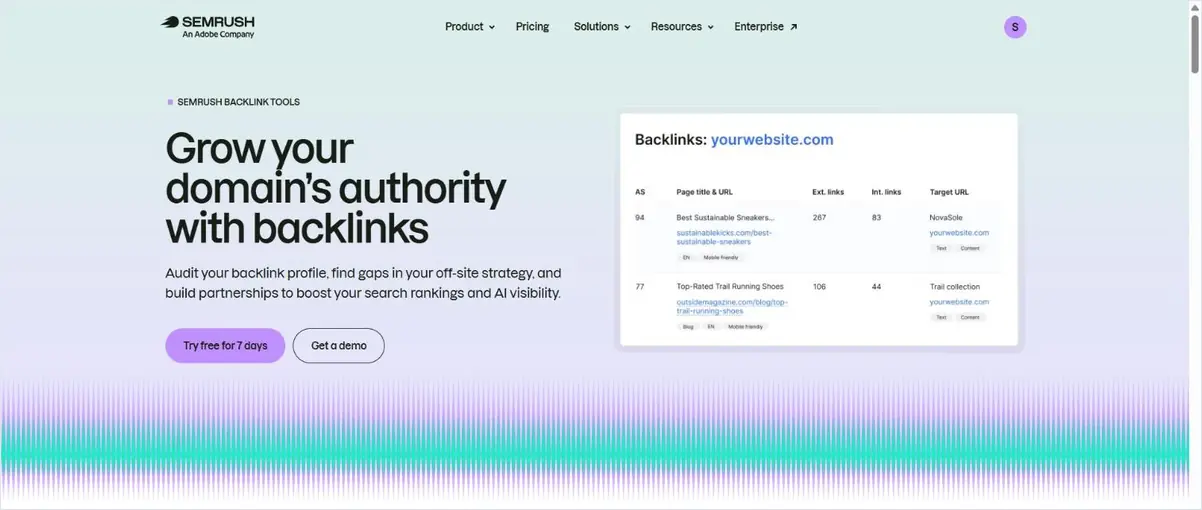
Pricing: SEO Toolkit Pro costs $139.95 per month, Guru $249.95 and Business $499.95, with a 7-day free trial, as of November 2026. Best for: agencies that also sell PPC, content and local SEO and want one login.
Majestic is a link intelligence tool that focuses only on backlinks. Its Trust Flow metric scores how closely a site connects to trusted seed sites, and Topical Trust Flow shows which subject categories that authority comes from. A side-by-side breakdown of authority metrics sits in this guide to backlink analysis tools, free and paid.
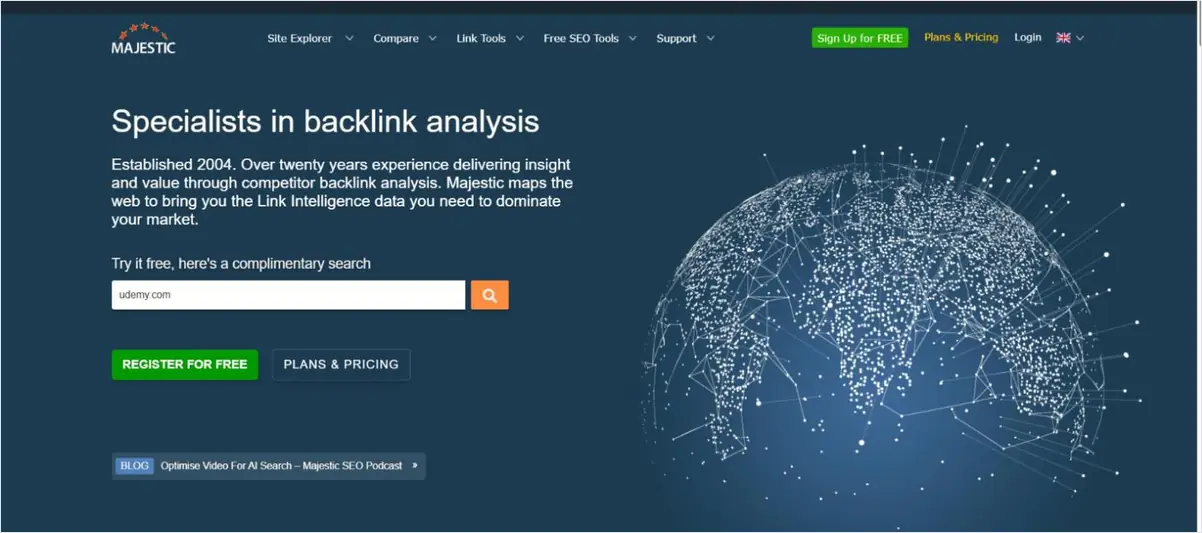
Pricing: Lite costs $49.99 per month or $499.99 per year, excluding VAT, as of November 2026, and a free account covers basic checks. Best for: vetting guest post and niche edit prospects by topic.
SE Ranking is an SEO platform that combines rank tracking, site audits and a backlink checker. SE Ranking states that its database holds 3 trillion backlinks. SEO community threads often name it as the budget alternative to Ahrefs.
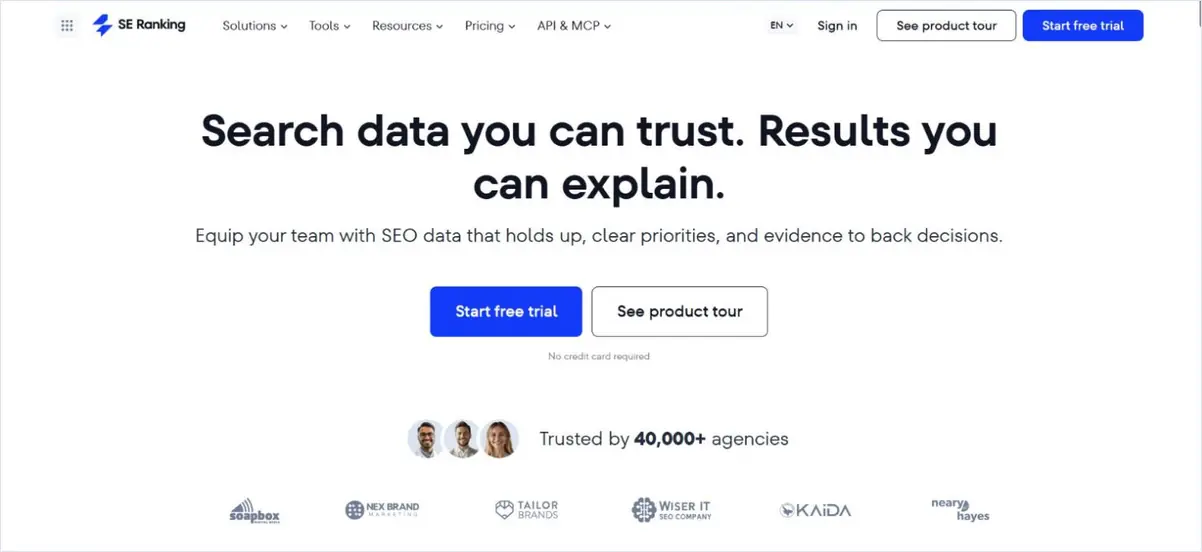
Pricing: Core costs $129 per month and Growth $279 on SE Ranking’s own comparison page, with a 14-day free trial, as of November 2026. Best for: small agencies that want rank tracking and link data in one tool.
Google Search Console is Google’s free reporting tool for verified site owners. Its Links report shows top linked pages, top linking sites and top linking text. According to Google documentation for the Search Console Links report, the report shows a sample of links rather than every link, and on-page tables stop at 1,000 rows. Best for: confirming Google has found a new link.
Screaming Frog SEO Spider, Google Alerts and Qwoted cover the prospecting stage for most agencies. Screaming Frog finds broken links on resource pages, Google Alerts surfaces unlinked brand mentions, and Qwoted connects experts with journalists who need sources.
Screaming Frog SEO Spider is a desktop website crawler. For link building, agencies crawl resource pages and competitor content to find broken outbound links, then offer a working replacement.
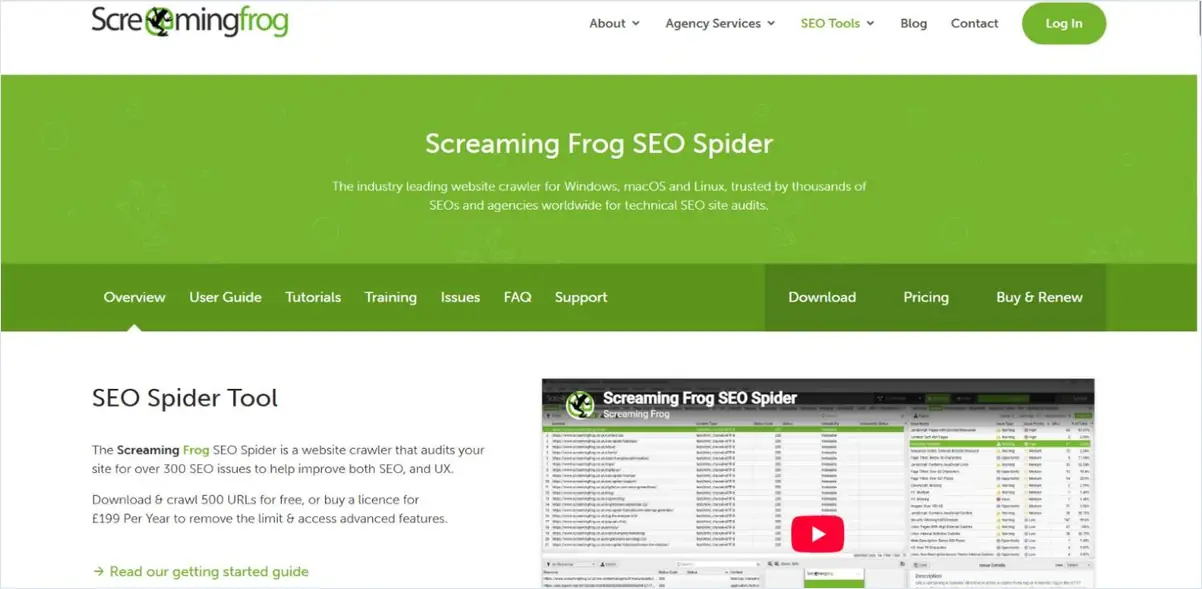
Pricing: the free version crawls up to 500 URLs, and a paid licence costs €245 per year, as of November 2026. Best for: broken link building and auditing prospect sites before outreach.
Google Alerts is a free Google service that emails new search results for any term. Agencies set alerts for client brand names, founder names and product names, then ask publishers that mention the brand without linking to add a link. Paid options with wider coverage are compared in this roundup of tools to find unlinked brand mentions.
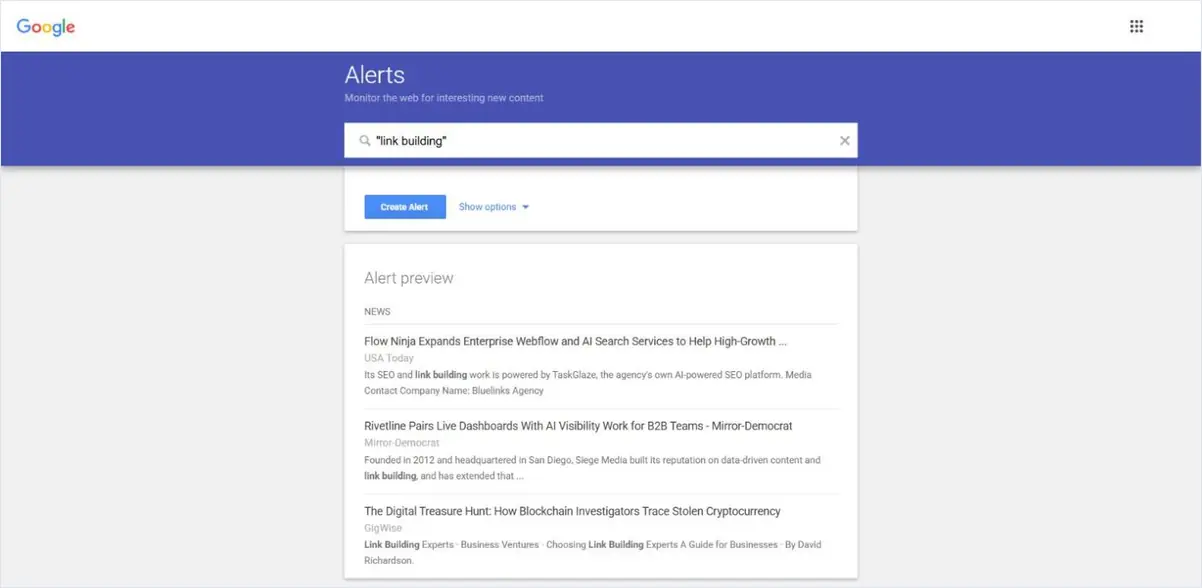
Best for: unlinked mention reclamation on a zero budget.
Qwoted is a platform that matches journalists and podcasters with expert sources. Agencies use it to pitch client experts for quotes in news articles, which often include a brand mention or a link. It is one of several digital PR and journalist outreach platforms.
Pricing: the free Basic plan allows 2 pitches per month with a 2-hour delay, and Pro costs $149.99 per month or $1,188 per year, as of November 2026. Best for: clients with quotable, credentialed experts.
Hunter.io and Snov.io are the two contact finders agencies use most often for link outreach. Both search public web sources for professional email addresses, verify deliverability and include basic sequence sending. Snov.io has the lower entry price.
Hunter.io is an email finder that returns the most likely address for a person at a domain. Agencies use Domain Search to see an editor’s address pattern and the Email Verifier to avoid bounces that damage sender reputation.
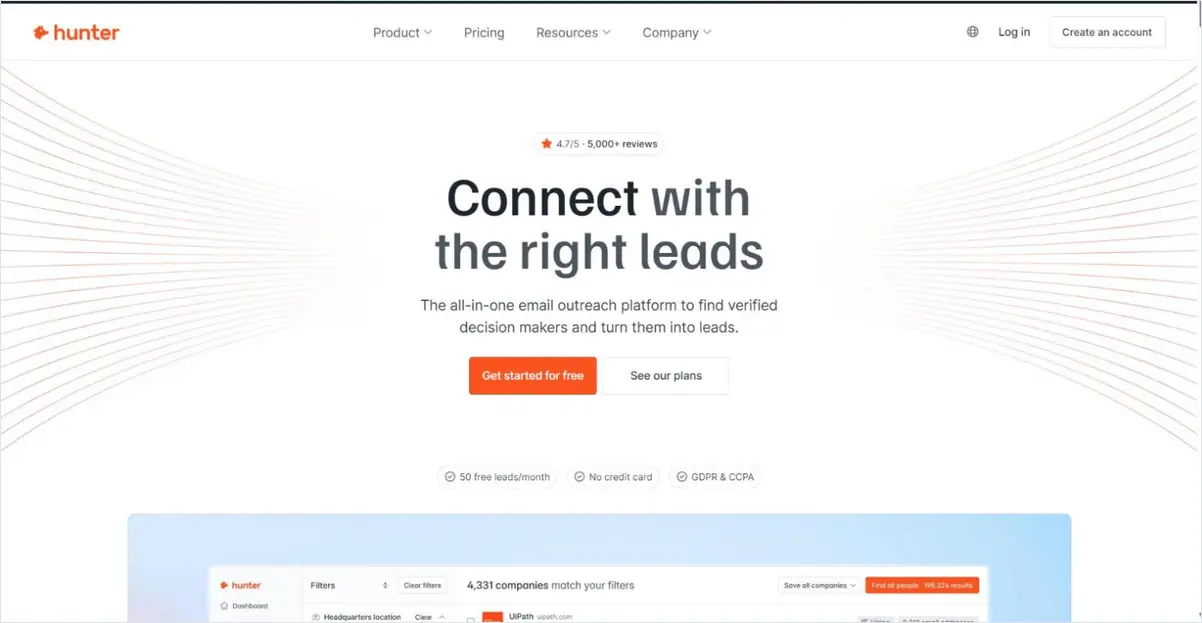
Pricing: the free plan includes 50 credits per month, and Starter costs $49 per month or $34 per month billed yearly, as of November 2026. Best for: fast, accurate lookups during prospect vetting.
Snov.io is a sales prospecting platform that combines an email finder, an email verifier and drip campaigns. Link builders use its browser extension to collect contacts, then send a short sequence from the same account.
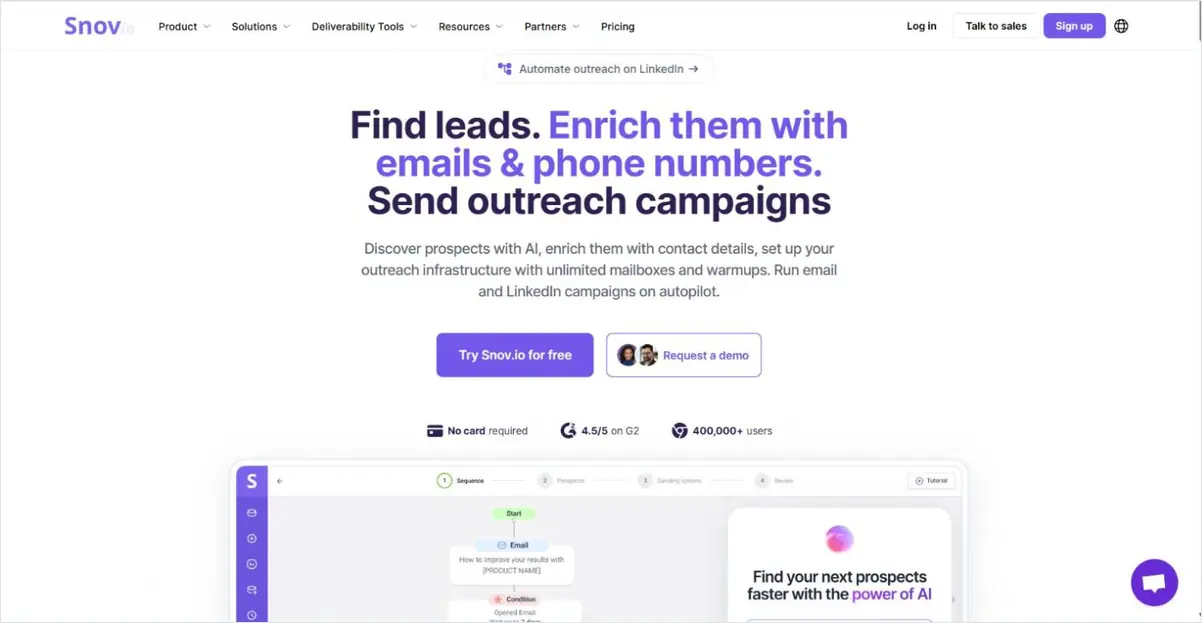
Pricing: a free trial includes 50 credits and 100 recipients, and Starter costs $39 per month or $29.25 per month billed annually, with 1,000 credits, as of November 2026. Best for: freelancers who want finding and sending in one tool.
Pitchbox, BuzzStream, Mailshake and Google Sheets are the outreach tools agencies rely on to send pitches and track replies. Pitchbox suits high-volume agency teams, BuzzStream suits relationship-led campaigns, and Mailshake suits simple sequences. Google Sheets remains the free fallback, used by 60% of link builders in Aira’s 2022 survey.
Pitchbox is an outreach and link building CRM built for agencies. It includes ready campaign types for broken backlinks and link reclamation, automated follow-ups, link monitoring and metric integrations with Ahrefs, Semrush, Moz and Majestic.
Pricing: Pro costs $300 per month billed monthly or $210 per month billed annually, and every plan requires a one-year commitment, as of November 2026. Best for: agencies running several client campaigns that need team permissions and reporting.
BuzzStream is an outreach CRM focused on relationship history. It records every email, note and placed link per contact. Teams writing their first sequences can adapt these guest post outreach templates that get replies.
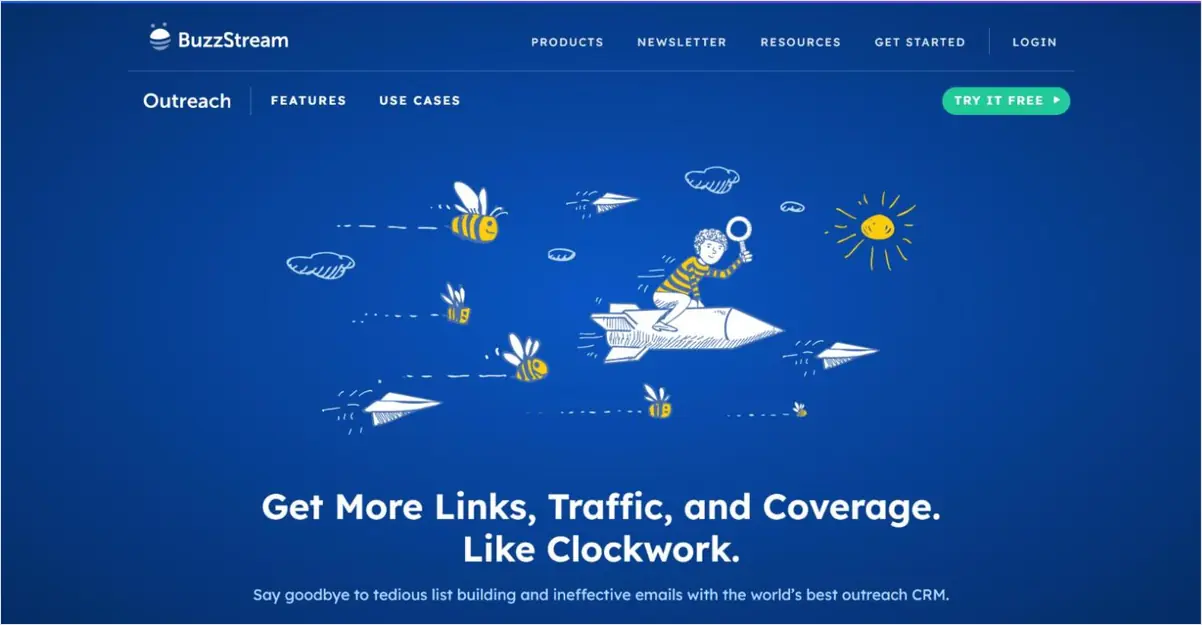
Pricing: BuzzStream’s pricing page lists entry plans between $19 and $49 per month across its two plan tables, with one month free on annual payment, as of November 2026. Best for: digital PR and guest post teams that pitch the same editors repeatedly.
Mailshake is a cold email platform with automated follow-up sequences and A/B testing. It suits teams that keep prospect data in a spreadsheet.
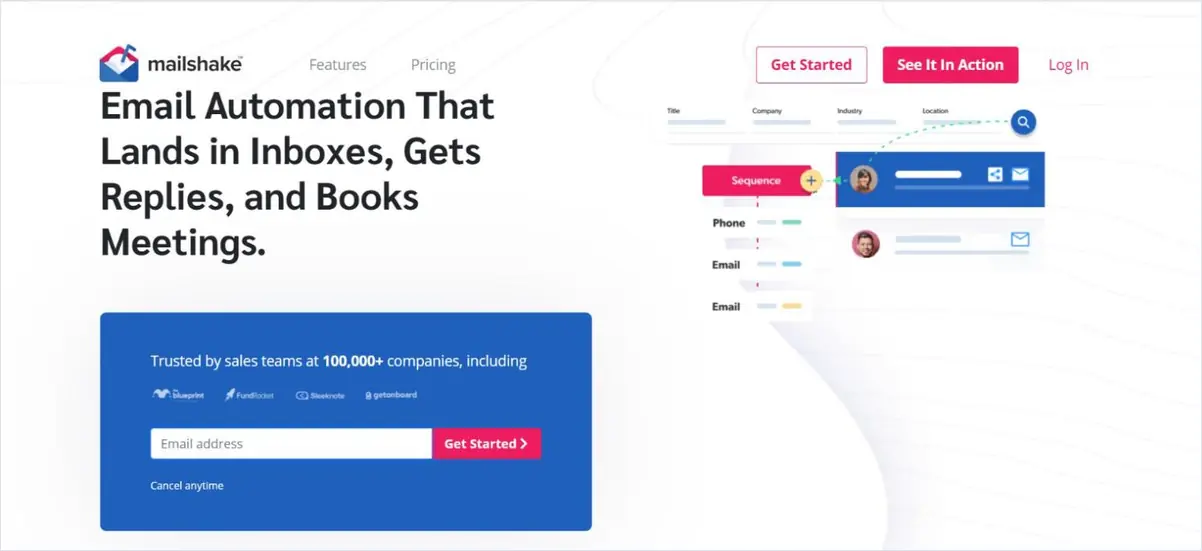
Pricing: Starter costs $29 per user per month or $25 billed annually, with 1,500 sends per month and no free trial, as of November 2026. Best for: teams that want reliable sequences without a full CRM.
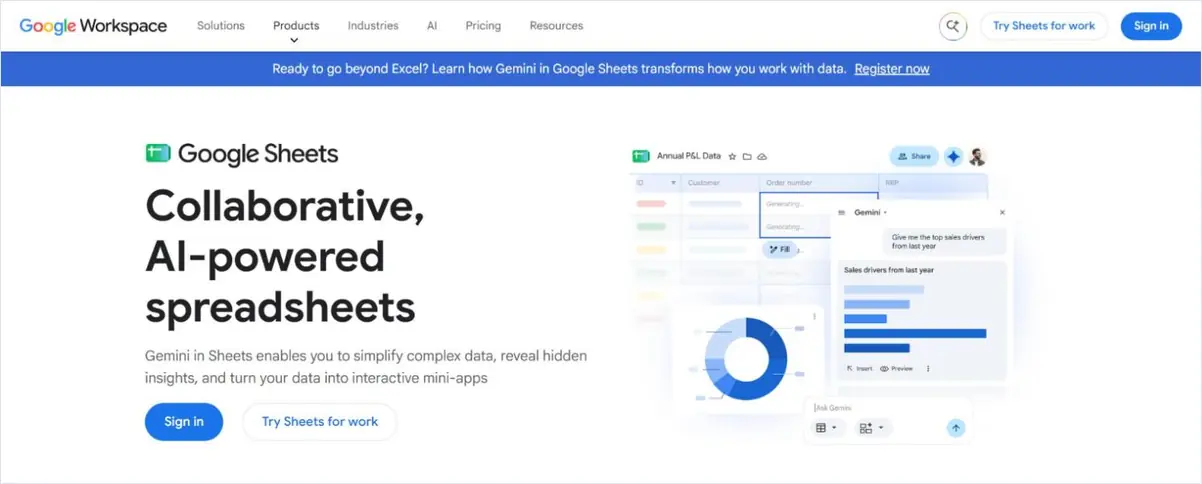
Google Sheets is Google’s free online spreadsheet, and it was the second most used link building tool after Ahrefs in Aira’s 2022 survey. Shared sheets hold prospect lists, contact status and live link URLs. Best for: new agencies and pilot campaigns, until follow-ups depend on someone remembering a date.
Linkody is the dedicated link monitoring tool in this stack. It rechecks every tracked backlink daily and alerts the team when a link disappears or changes. Monitoring proves what actually stays live.
Linkody is a backlink monitoring tool that checks link status daily, sends alerts for new and lost links on client and competitor sites, and generates disavow files. For a one-off check of a single page, the free dofollow and nofollow link checker confirms a link’s attributes in seconds.
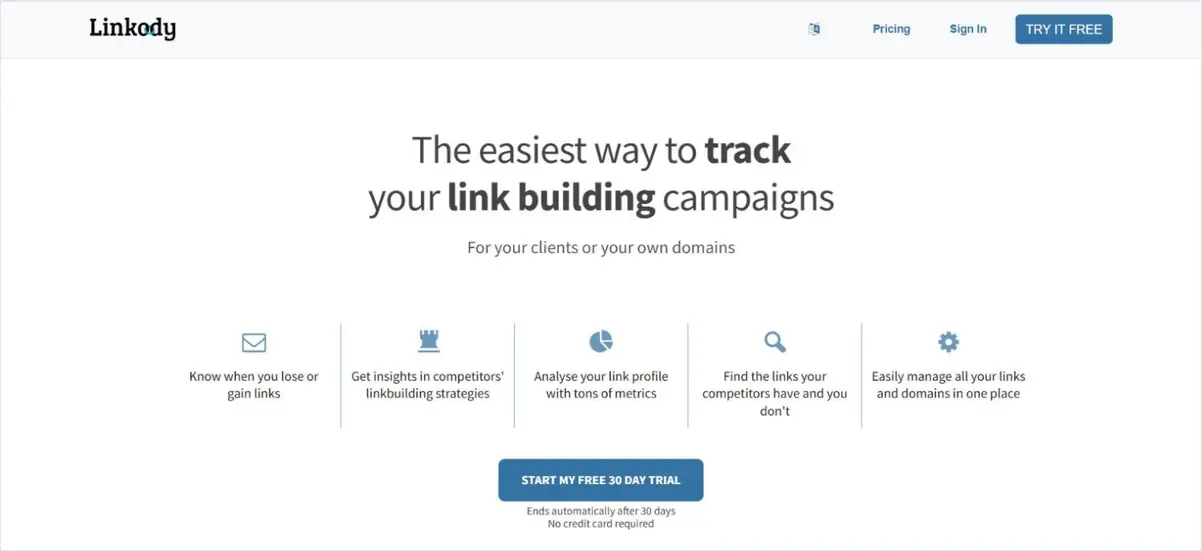
Pricing: the Webmaster plan costs $14.90 per month or $11.20 per month billed annually, covering 2 sites and 500 monitored links, with a 30-day free trial, as of November 2026. Best for: proving link retention in client reports.
Entry prices for the 15 link building tools range from free to $300 per month as of November 2026. Three tools are free (Google Search Console, Google Alerts and Google Sheets), seven start under $50 per month, and Pitchbox sits at the top with a one-year commitment.
| Tool | Stack stage | Entry paid price (Nov 2026) | Free option |
|---|---|---|---|
| Ahrefs | Research | $29/month (Starter) | Ahrefs Free for verified sites |
| Semrush | Research | $139.95/month (SEO Toolkit Pro) | 7-day trial |
| Majestic | Research | $49.99/month (Lite, excl. VAT) | Free account |
| SE Ranking | Research | $129/month (Core) | 14-day trial |
| Google Search Console | Research | Free | Yes |
| Screaming Frog SEO Spider | Prospect | €245/year | Free up to 500 URLs |
| Google Alerts | Prospect | Free | Yes |
| Qwoted | Prospect | $149.99/month (Pro) | 2 pitches/month |
| Hunter.io | Contact | $49/month (Starter) | 50 credits/month |
| Snov.io | Contact | $39/month (Starter) | 50-credit trial |
| Pitchbox | Pitch | $300/month, or $210 billed annually | Trial on request |
| BuzzStream | Pitch | $19 to $49/month | Free trial |
| Mailshake | Pitch | $29/user/month (Starter) | None |
| Google Sheets | Pitch | Free | Yes |
| Linkody | Monitor | $14.90/month (Webmaster) | 30-day trial |
A solo link builder can run a complete stack for about $74 per month, while a multi-client agency needs a deeper index, a team CRM and monitoring. The right stack depends on campaign volume, team size and whether clients buy digital PR. The decision table below matches each stage of the 5-Stage Link Stack to agency size.
| Stage | Solo consultant | Small agency (2 to 5 people) | Multi-client agency |
|---|---|---|---|
| Research | Ahrefs Starter + Search Console | Semrush Pro or SE Ranking Core | Ahrefs Standard or higher + Majestic Lite |
| Prospect | Google Alerts + free Screaming Frog | Screaming Frog licence + Google Alerts | Screaming Frog + Qwoted Pro |
| Contact | Hunter.io free or Starter | Hunter.io or Snov.io Starter | Hunter.io or Snov.io higher tier |
| Pitch | Google Sheets | BuzzStream or Mailshake | Pitchbox |
| Monitor | Linkody Webmaster | Linkody | Linkody or Pitchbox monitoring |
The solo figure is a calculation from published prices as of November 2026, with annual billing and before tax: Ahrefs Starter at $29, Hunter.io Starter at $34 and Linkody at $11.20, totalling $74.20 per month, with Google tools free.
Agencies adding AI drafting to this stack can compare options in this review of AI tools for link building outreach.
Staff hours usually exceed software spend, which is why some agencies hand the Pitch and Monitor stages to managed quality backlink building services and keep research in-house.
No legitimate link building tool creates backlinks automatically; tools automate research and outreach, while editors decide whether to link. Automatic backlink generators usually produce spam links from comments, profiles or private networks, which Google can ignore or penalize.
The spam policies for Google web search list “using automated programs or services to create links to your site” as link spam, and require paid links to carry a rel=”sponsored” or rel=”nofollow” attribute.
The safe line is clear. Automating email discovery, follow-up timing and link checks saves hours without touching the editorial decision. Automating the link itself removes the editor, and that is exactly the signal Google’s systems are built to discount.
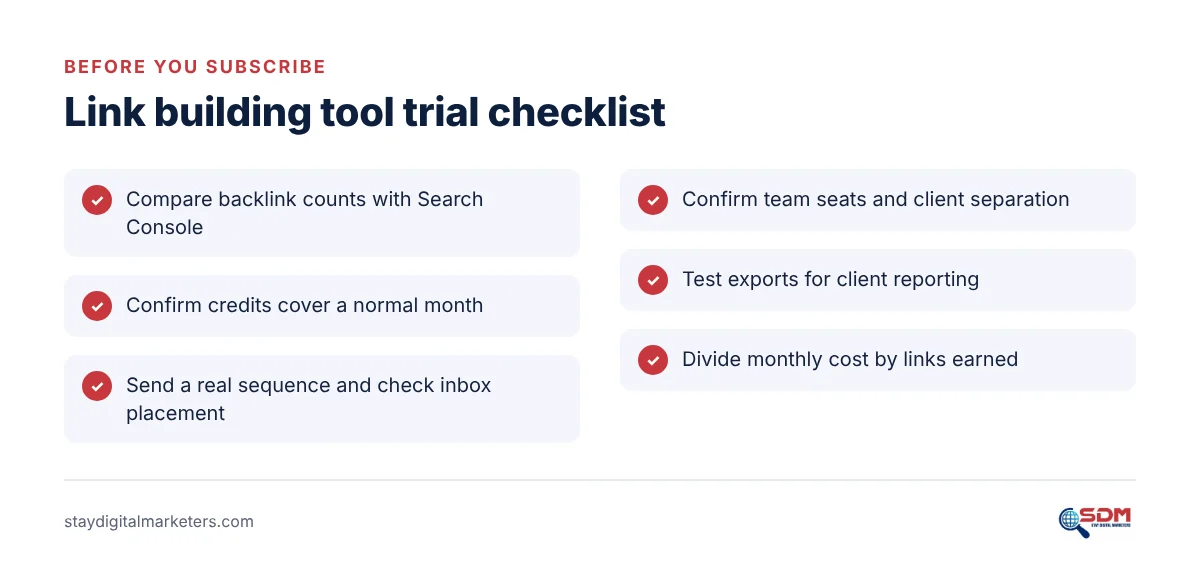
An agency should test a link building tool on one live campaign for the full trial period and score it on data accuracy, workflow fit and cost per earned link. A live campaign reveals credit limits, deliverability and remaining manual work.
Six checks catch most poor purchases: compare backlink counts against Search Console for one client, confirm credit limits cover a normal month, send a real sequence and check inbox placement, confirm team seats and client separation, test exports for reporting, and divide the monthly cost by links earned during the trial.
Contract terms matter too: Pitchbox requires a one-year commitment, and Mailshake has no free trial, so both justify a structured demo first.
No single tool wins every stage, but Ahrefs is the most widely used, with 82% of link builders using it in Aira’s 2022 survey. Most agencies pair Ahrefs or Semrush for research with Hunter.io for contacts, Pitchbox or BuzzStream for outreach, and Linkody for monitoring. The best choice depends on team size and campaign volume.
Ahrefs is usually preferred for backlink depth and competitor link research, while Semrush suits agencies that also need PPC, content and local SEO features in one platform. Both offer backlink gap analysis. Practitioners in SEO forums often describe Semrush as strong for keyword tracking but slightly less detailed than Ahrefs for backlinks.
Yes. Google Search Console shows a sample of the links Google has found, Google Alerts surfaces unlinked brand mentions, Google Sheets tracks outreach, and the free Screaming Frog version crawls up to 500 URLs. Hunter.io’s free plan adds 50 email credits per month as of November 2026. Together they cover a small campaign at no cost.
Yes, when the tool creates links rather than assisting outreach. Google’s spam policies list using automated programs or services to create links as link spam. Tools that automate prospecting, email finding and follow-ups carry no such risk, because an editor still decides whether each link gets published on the page.
Pitchbox suits agencies running several campaigns at once, but its $300 monthly Pro plan and one-year commitment, as of November 2026, are hard to justify for one or two clients. Small teams usually start with BuzzStream, Mailshake or a Google Sheets tracker paired with Hunter.io, then move to Pitchbox when volume grows.
Agencies use contact finders such as Hunter.io and Snov.io, which search public web sources for professional addresses and verify deliverability. The usual workflow checks the site’s contact or author page first, uses a domain search to find the address pattern, then verifies the address before sending. Verification protects sender reputation and reduces bounces.
Agencies that prefer to outsource part of this workflow can also work with a specialist provider. Stay Digital Marketers is one such resource, helping brands with guest posting, press release distribution, SaaS backlinks, niche edits, multilingual backlinks, Wikipedia page creation, Google Knowledge Panel creation and complete SEO services, with the same research, outreach and monitoring discipline described in this guide.

Filza Taj is an MPhil in Human Resources-turned SEO Specialist, Content Strategist, and Digital Marketing Consultant with over 5 years of experience helping businesses in 30+ countries grow online. As the Founder of Stay Digital Marketers (staydigitalmarketers.com), she delivers results-driven solutions in link building, guest posting, PR distribution, niche edits, multilingual backlinks, and content marketing. She publishes daily SEO insights and actionable strategies to help brands strengthen their online presence, attract the right audience, and convert clicks into loyal customers.
Filza@staydigitalmarketers.com
Stay Digital Marketers
Need SEO, Link Building or Digital Marketing Services?
Request a Free Audit →