
AI SEO tools are no longer optional add-ons. In 2026, they have become the operational backbone of competitive search strategies. The global AI SEO software market reached $1.8 billion in 2024 and is projected to hit $6.2 billion by 2030, according to Market Research Future. That growth reflects a fundamental shift: teams that once spent weeks on manual audits, content scoring, and rank tracking now run the same processes in hours.
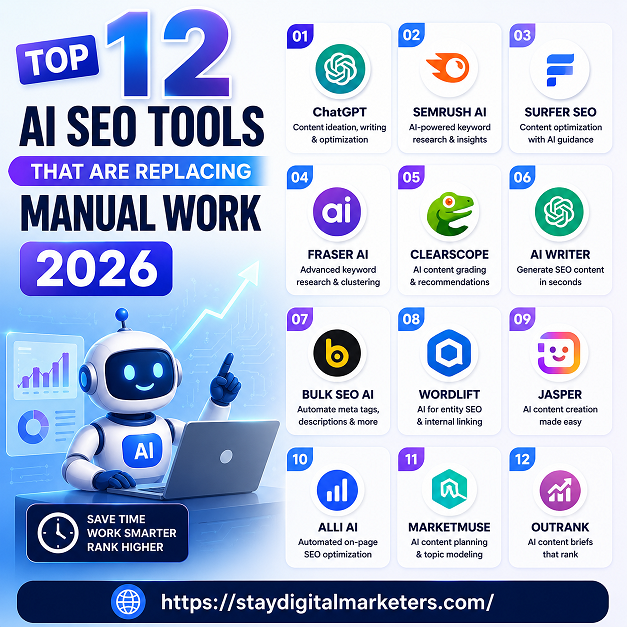
The 12 tools covered in this article represent the current standard for AI-assisted SEO across content optimization, technical auditing, rank tracking, link intelligence, and AI visibility monitoring. Each has been selected based on functionality, real-world impact, and relevance to both traditional Google search and the growing influence of AI Overviews, ChatGPT search, and Perplexity.
The answer comes down to one distinction: does the tool automate execution, or does it only generate reports you still have to act on manually?
Earlier generations of SEO software excelled at diagnosis. They told practitioners what was wrong with a site, which keywords to target, and which pages needed improvement. The practitioner then had to implement everything by hand. In 2026, the best AI SEO tools close that loop by integrating automation, machine learning, and natural language processing directly into workflows.
Three capabilities separate leading tools from lagging ones:
Any tool missing all three is operating on an older model of SEO, one that worked well before 2024 but struggles to keep pace with how search results are generated today.
Surfer SEO remains the benchmark for content optimization. Its content editor scores pages in real time against the top-ranking SERP results, using NLP to identify which terms, entities, and structural elements the page needs. Writers and SEO professionals can see a content score update as they draft, which removes the guesswork from optimization.
What separates Surfer from general AI writers is its grounding in live SERP data. Rather than applying generic rules, it analyzes what is actually ranking for a given query and uses that as the scoring baseline. Its Topical Map feature also allows teams to build out content clusters systematically, reducing the manual effort of planning pillar-and-cluster architecture.
Best for: Content teams producing high volumes of optimized articles who need measurable quality control at scale.
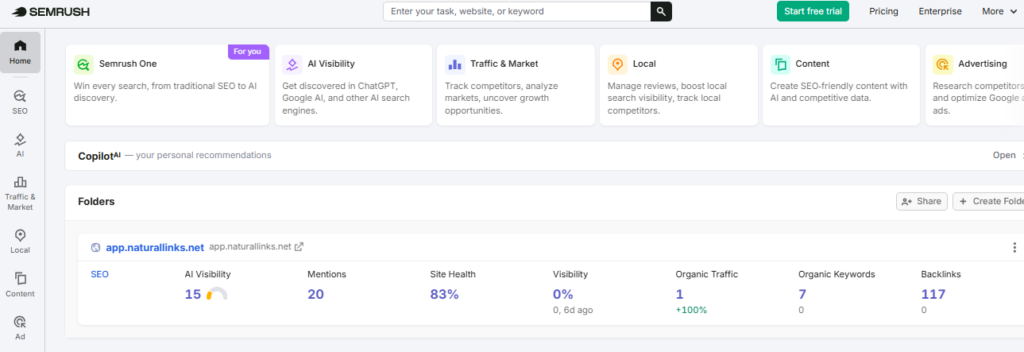
Semrush has expanded its AI capabilities significantly, embedding automation across its keyword research, site audit, content writing, and rank tracking modules. The AI Writing Assistant now generates SEO-optimized drafts that pull context directly from keyword and SERP data inside the platform, reducing the need to switch between tools.
Its site audit module automatically identifies and prioritizes technical issues, grouping them by severity and potential impact. For agencies managing multiple clients, Semrush remains the most consolidated option, with position tracking, competitor analysis, and link building tools all under one dashboard.
Best for: Agencies and in-house teams that need a single platform covering the full SEO workflow.
Ahrefs continues to hold the strongest backlink index in the industry. Its AI-enhanced keyword explorer surfaces difficulty scores, traffic potential, and parent topic data at a level of granularity that competitors have not matched. The Site Explorer module now surfaces AI-generated insights alongside its standard link data, flagging unusual patterns in referring domain profiles and suggesting outreach targets.
For practitioners focused on link building strategy, Ahrefs provides the most reliable picture of a site’s authority relative to competitors. Its Content Gap tool, which identifies keywords ranking competitors rank for that a target site does not, has been updated to group suggestions by topical cluster, reducing the manual sorting required.
Best for: Link builders, keyword researchers, and teams doing deep competitive analysis.
Jasper AI focuses on the content production side of SEO, offering a writing assistant trained on marketing data with a dedicated SEO mode. Its Brand Voice feature allows teams to upload existing content and have Jasper learn the tone, vocabulary, and structure before generating new material. This reduces editing time significantly for teams producing content across multiple channels.
Jasper integrates directly with Surfer SEO, which addresses its primary limitation: it produces fluent content but requires a separate tool to ensure that content is optimized against live SERP data. Used together, the combination covers drafting and optimization in a connected workflow.
Best for: Marketing teams that need to scale content production without sacrificing brand consistency.
MarketMuse applies AI-driven topic modeling to identify where a site has authority, where it has gaps, and which content investments will deliver the highest return. Its Content Score evaluates a page not just against keyword density but against the full semantic context of a topic, measuring coverage depth against the competitive SERP.
The Compete module shows how a site stacks up against the top-ranking pages for any topic, broken down by subtopics covered. This removes the manual process of auditing competitor articles and manually cataloguing what they include that a target site does not.
Best for: Content strategists who need to build topical authority systematically across large sites.
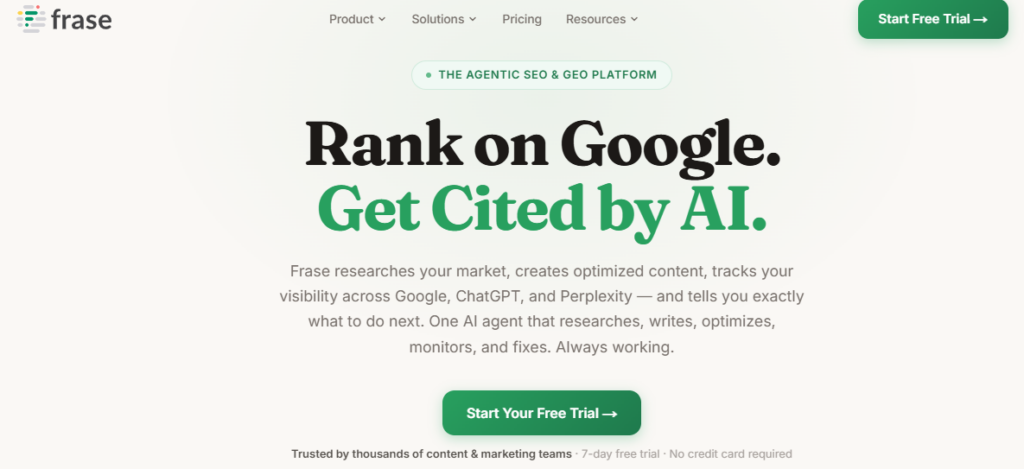
Frase automates the most time-consuming part of content planning: the research phase. It pulls together SERP analysis, related questions from People Also Ask, and competitor article outlines into a structured brief in minutes. Writers receive a complete roadmap for the article before they write a single sentence.
Its AI answer engine optimization features also allow teams to structure content specifically for featured snippets and AI Overviews. Frase is one of the few tools that directly addresses the question of how to format content for extraction by AI systems, making it particularly relevant for practitioners targeting dual-channel visibility in 2026.
Best for: Content teams that need to produce research-backed briefs quickly without manual SERP analysis.
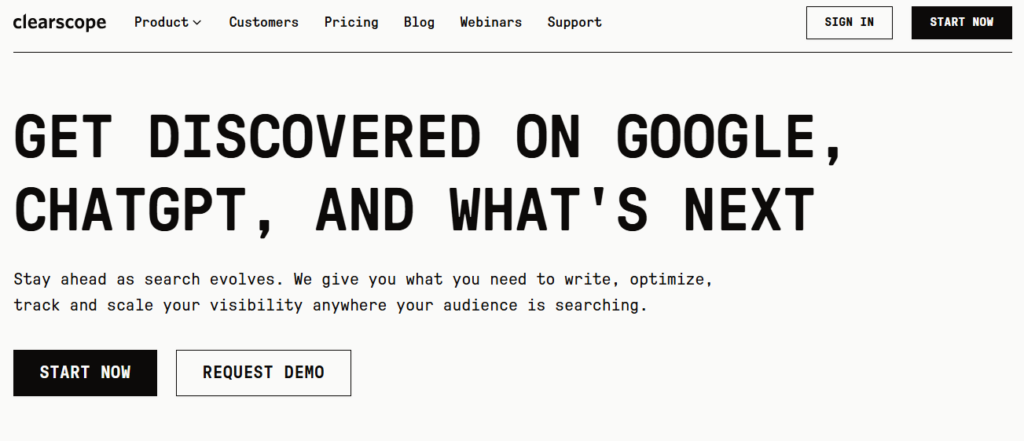
Clearscope takes a simpler, cleaner approach than MarketMuse or Surfer, focusing on a single core function: grading the relevance of content in real time against high-performing pages for a target keyword. Its grading system is intuitive enough for writers without SEO backgrounds to use without training, which makes it effective in larger organizations where content is produced by non-specialist teams.
The tool integrates with Google Docs and WordPress, allowing writers to grade their content within the platform they already use. This reduces friction compared to tools that require content to be pasted into a separate interface.
Best for: Enterprise content teams where clarity and ease of use matter as much as advanced features.
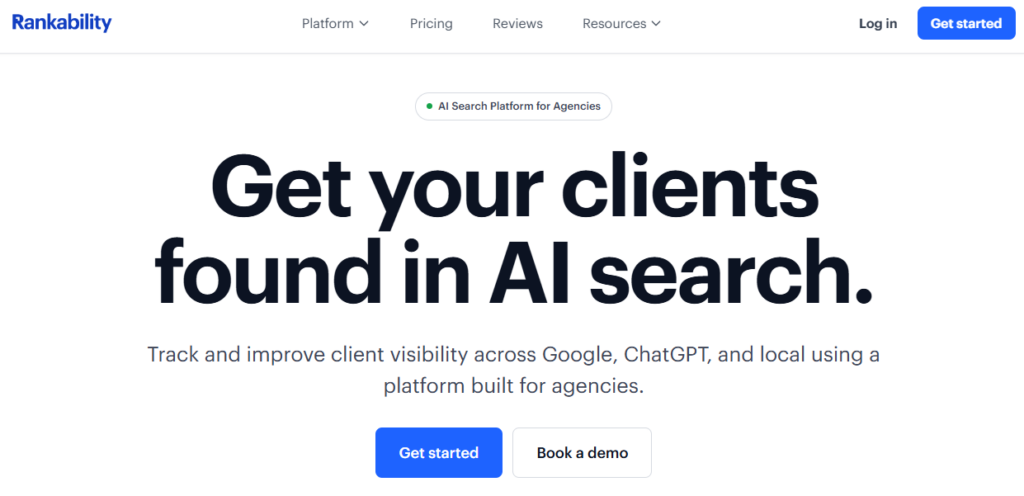
Rankability addresses the visibility problem that most traditional SEO tools ignore: whether a brand or page is being cited by AI systems. It monitors how a site appears inside ChatGPT, Perplexity, Google AI Overviews, and other LLM-powered surfaces, tracking mention frequency, context, and framing.
This matters because a significant and growing share of informational queries in 2026 are resolved inside AI-generated answers without a click ever reaching the site. Practitioners who optimize only for traditional rankings are missing a large portion of the visibility picture. Rankability gives teams the data to understand and optimize for that channel alongside organic search.
Best for: Brands and publishers who need to monitor and grow their presence in AI-generated search results.
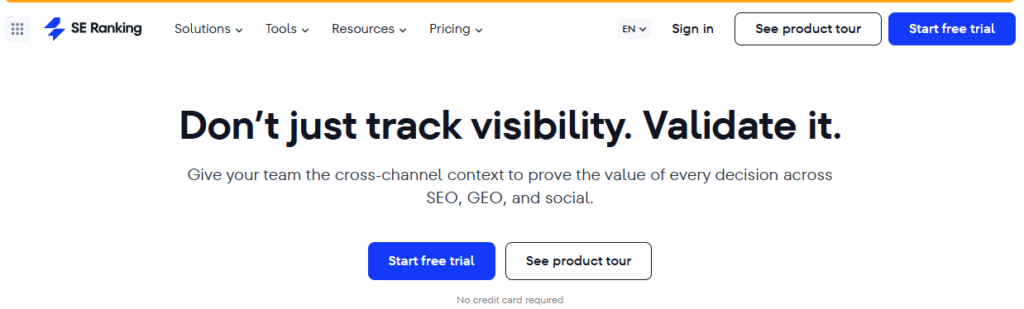
SE Ranking has become one of the most capable mid-market tools available, with features that punch above its price point. Its AI Overview Tracker monitors whether a page appears in Google’s AI-generated summaries for target keywords, an ability that was absent from most tools until late 2024.
The platform’s integration with Google Analytics 4 and Google Search Console allows teams to correlate ranking data with actual traffic outcomes, which is more valuable than isolated position data. Its white-label reporting features also make it a strong option for agencies managing client accounts.
Best for: Agencies and mid-market teams that need AI Overview tracking alongside traditional rank monitoring.
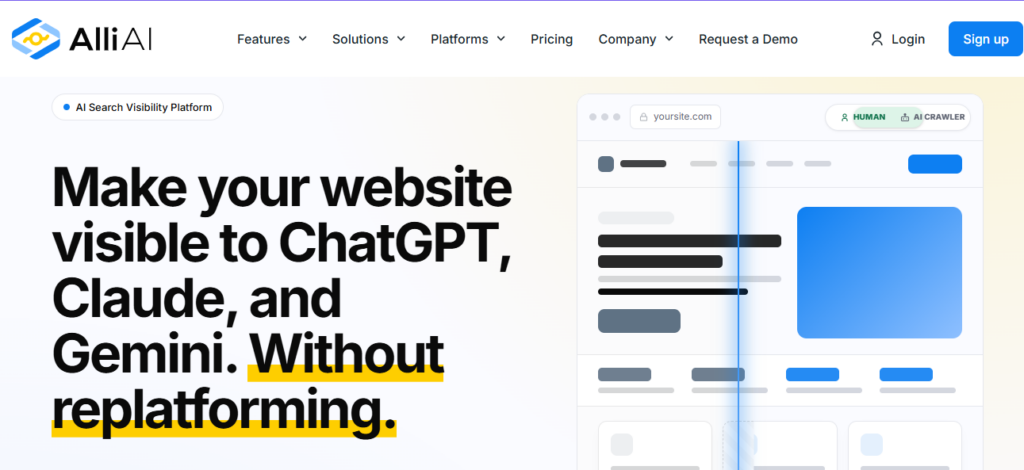
Alli AI is built specifically for technical SEO execution at volume. Rather than generating a list of issues for a developer to fix, it deploys on-page changes, schema markup, internal links, and title tag updates across entire sites automatically. A practitioner sets the rules and the tool applies them across thousands of pages.
This is the category of tool that most directly replaces manual work. Site-wide title tag optimizations that once required developer involvement or hours of manual updates can be deployed in minutes. For e-commerce sites with tens of thousands of product pages, this capability alone justifies the investment.
Best for: Large sites and e-commerce teams where technical SEO changes need to be deployed at scale without developer dependency.
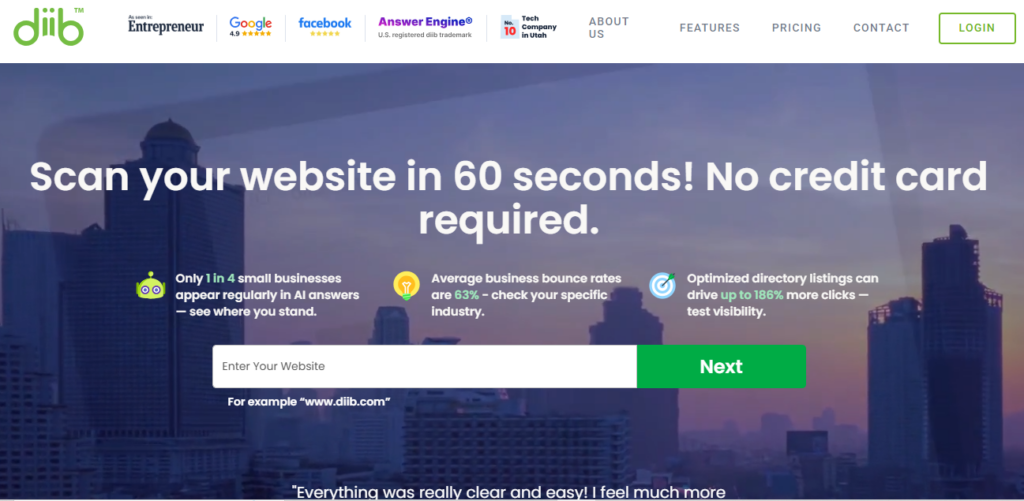
Diib occupies a different segment from the other tools on this list. It is designed for small business owners and solo practitioners who need automated SEO monitoring without the complexity or cost of enterprise platforms. It generates daily growth plans, competitor benchmarks, and performance alerts automatically, making it accessible to non-specialists.
Its AI analyzes a connected site each day and surfaces prioritized recommendations, tracking progress against them over time. For businesses that do not have a dedicated SEO team but still want to maintain search visibility, Diib provides a workable entry point into AI-assisted SEO management.
Best for: Small businesses and solo practitioners who need guided SEO automation without a steep learning curve.
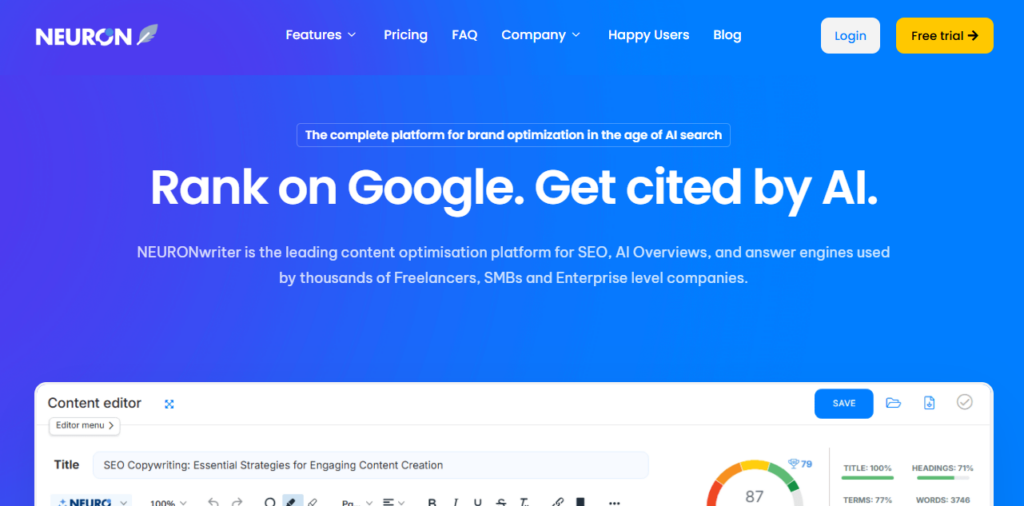
NeuronWriter focuses on semantic optimization, helping writers build content that covers a topic comprehensively rather than just targeting individual keywords. Its NLP-driven content editor identifies related concepts, entities, and questions that high-ranking pages address, guiding writers toward more authoritative coverage.
Its internal linking module is particularly valuable. It automatically identifies opportunities to link between existing pages, a task that is notoriously time-consuming to do manually on sites with deep content archives. For teams working on topical authority, this feature directly reduces one of the most repetitive tasks in content SEO.
Best for: Content teams focused on building topical authority through semantic coverage and structured internal linking.
The table below provides a side-by-side overview of all 12 tools, organized by primary use case, key strength, entry-level pricing, and SEO impact level.
| Tool | Primary Use | Key Strength | Starting Price | SEO Impact |
| Surfer SEO | Content Optimization | Real-time NLP scoring, SERP analysis | $89/mo+ | High |
| Semrush AI | All-in-One Suite | Keyword research, site audit, AI writing | $140/mo+ | High |
| Ahrefs | Backlink & Research | Largest backlink index, keyword explorer | $129/mo+ | High |
| Jasper AI | AI Content Writing | Brand-voice content, SEO mode | $49/mo+ | Medium |
| MarketMuse | Topic Modeling | Content scoring, gap analysis, briefs | $149/mo+ | High |
| Frase.io | Content Briefs | AI-generated briefs from SERP data | $15/mo+ | Medium |
| Clearscope | Content Grading | Real-time keyword grading, readability | $189/mo+ | High |
| Rankability | AI Visibility Tracking | Monitors brand in ChatGPT, Perplexity | $50/mo+ | Medium |
| SE Ranking | Cross-Channel Tracking | Traditional + AI Overview rank tracking | $65/mo+ | High |
| Alli AI | Technical SEO Automation | Bulk on-page edits, schema deployment | $299/mo+ | High |
| Diib | Automated SEO Monitoring | Daily growth plans, alerts, competitor watch | $7.99/mo+ | Low |
| NeuronWriter | Semantic Content Writing | NLP content editor, internal linking | $23/mo+ | Medium |
Most practitioners make the mistake of selecting tools based on feature lists rather than workflow fit. The AIRA framework provides a structured way to evaluate which AI SEO tools belong in a stack and why.
| The AIRA Selection Framework Use this four-step framework to select the right AI SEO tool stack: A Automate: Identify which manual SEO tasks consume the most time each week I Integrate: Check whether the tool connects to your existing CMS, analytics, and GSC R Report: Verify the tool tracks both traditional rankings and AI Overview or LLM citations A Act: Prioritize tools that implement fixes, not just diagnose problems |
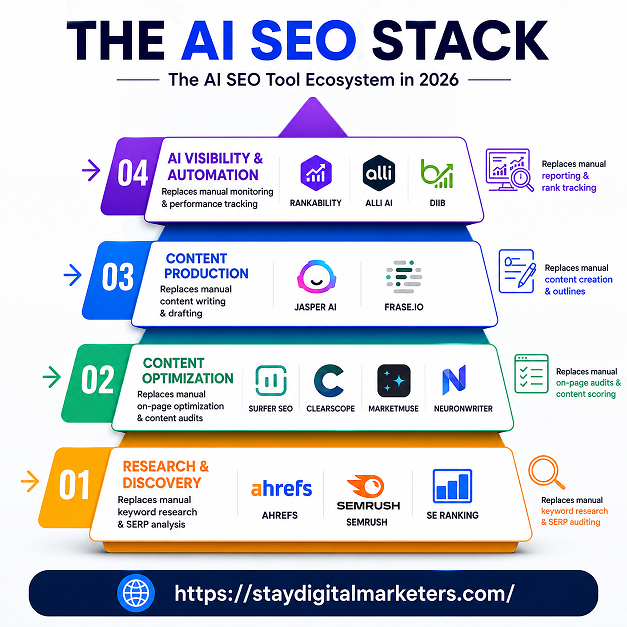
A standard stack for a mid-sized content team in 2026 typically combines three layers: a keyword and research tool such as Ahrefs or Semrush, a content optimization tool such as Surfer SEO or Clearscope, and an AI visibility tracker such as Rankability or SE Ranking. Technical automation tools like Alli AI are added when site scale makes manual deployment impractical.
The key principle is that tools should eliminate tasks, not add them. If a tool generates a report that requires three hours of manual follow-up, it has not reduced the workload; it has reorganized it.
Diib and Frase.io are the most accessible options for beginners. Diib provides automated daily recommendations without requiring SEO expertise, while Frase.io simplifies content research and brief creation. Both have lower price points and minimal setup requirements compared to enterprise platforms like Semrush or MarketMuse.
Not fully, but they eliminate a significant portion of the manual work. AI tools excel at pattern recognition, data processing, bulk implementation, and monitoring at scale. They do not replace strategic judgment, client communication, link outreach relationships, or the interpretation of anomalous data. Practitioners who adopt AI tools become more productive rather than redundant.
SE Ranking and Rankability are the most capable options for tracking AI Overview appearances. SE Ranking monitors whether specific pages appear in AI-generated summaries for target keywords. Rankability extends this to other AI surfaces including ChatGPT and Perplexity, providing a more complete picture of AI visibility.
Entry-level options like Diib start at under $10 per month, while mid-market tools like Frase.io, NeuronWriter, and SE Ranking range from $15 to $130 per month. Enterprise-tier platforms including Semrush, Ahrefs, MarketMuse, and Clearscope start between $129 and $299 per month. Most teams combine tools across price tiers rather than relying on a single platform.
Yes, for teams publishing more than 20 articles per month or managing more than 500 pages. No single tool covers all workflows equally well. The most effective stacks pair a research tool with a content optimization tool and add AI visibility tracking as a third component. Over-stacking beyond three or four tools typically produces diminishing returns and workflow complexity.
GEO stands for Generative Engine Optimization, referring to the practice of optimizing content to appear in AI-generated search results rather than traditional blue-link rankings. As Google AI Overviews, ChatGPT search, and Perplexity resolve more informational queries without sending traffic to source pages, visibility inside those generated results becomes a distinct objective. Tools like Rankability and SE Ranking are specifically built to track and support GEO.
Alli AI is the strongest option for e-commerce at scale because it automates bulk on-page changes across product pages without developer dependency. Semrush and Ahrefs remain important for research and monitoring. Surfer SEO handles category and landing page content optimization. Combining these three covers the main SEO needs of a large e-commerce operation.
For brands building authority alongside AI SEO tool implementation, off-page signals continue to play a critical role in how both traditional algorithms and AI systems evaluate credibility. Stay Digital Marketers supports brands with editorial link placements through guest posting, niche edits, brand mentions, press release distribution, SaaS backlinks, Wikipedia page creation, and Google Knowledge Panel management. Practitioners who are investing in AI content tools often use complementary off-page services to reinforce the domain authority that makes AI-optimized content more likely to rank and be cited.

Filza Taj is an MPhil in Human Resources-turned SEO Specialist, Content Strategist, and Digital Marketing Consultant with over 5 years of experience helping businesses in 30+ countries grow online. As the Founder of Stay Digital Marketers (staydigitalmarketers.com), she delivers results-driven solutions in link building, guest posting, PR distribution, niche edits, multilingual backlinks, and content marketing. She publishes daily SEO insights and actionable strategies to help brands strengthen their online presence, attract the right audience, and convert clicks into loyal customers.
Filza@staydigitalmarketers.com
Stay Digital Marketers
Need SEO, Link Building or Digital Marketing Services?
Request a Free Audit →