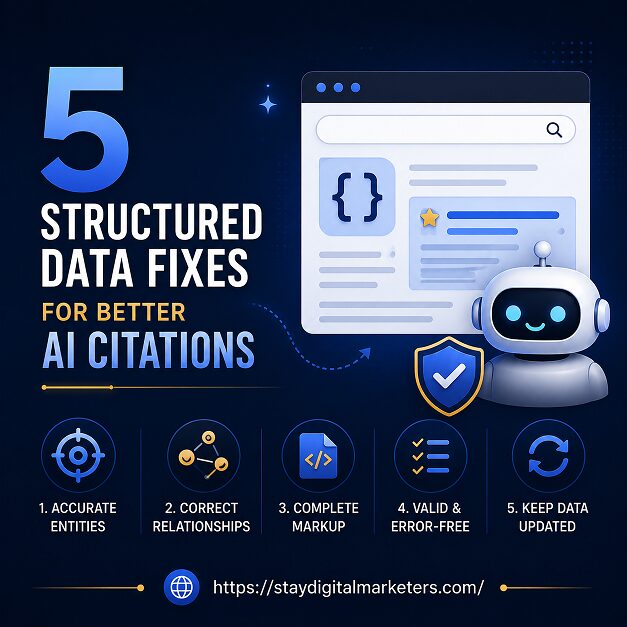

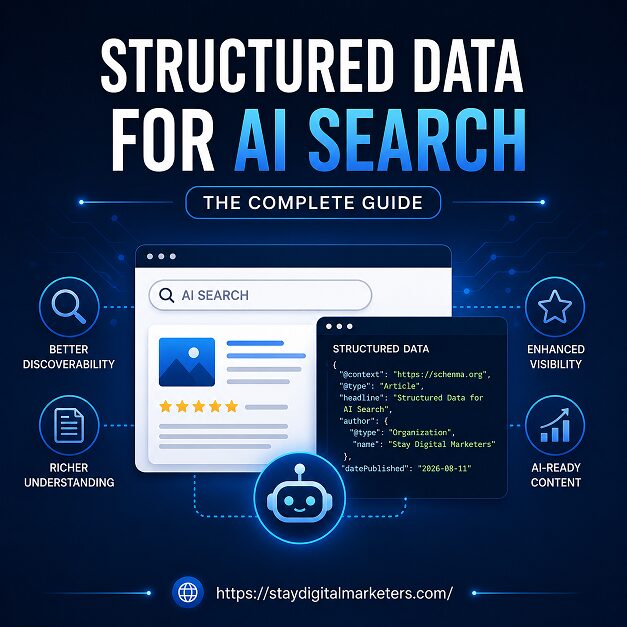
Structured data is a standardized format, most commonly JSON-LD, that declares explicit facts about a page’s content in code AI systems and search engines can parse without guessing. A recipe page written in prose forces an AI model to infer the ingredient list and cook time from paragraphs. The same page marked up with Recipe schema states the ingredients, quantities, and cook time as labeled data the model reads directly.
Search engines originally used this vocabulary, maintained collaboratively at Schema.org since 2011 by Google, Microsoft, Yahoo, and Yandex, mainly for rich snippets like star ratings and event dates. AI search systems use it more deeply: to build internal knowledge graphs, verify claims against structured declarations, and extract precise data points for generated answers.
“`htmlKey Takeaways
No, not directly, and this is worth stating plainly because it gets blurred often. Structured data affects whether your content is eligible for rich results and how confidently AI systems can extract and cite it. It does not move your organic position.
Google’s John Mueller has confirmed on multiple occasions, most recently reiterating a position dating back to at least 2018, that there is no generic ranking boost from structured data usage. Mueller has described structured data as directions to a party rather than the invitation itself: it makes your content eligible for certain features once you are already ranking on other merits, it does not get you the ranking in the first place. Google Search Central’s own AI Overviews guidance echoes this for AI search specifically, stating that no schema type guarantees AI Overview citation and that structured data is a supporting signal rather than a ranking factor.
Most guides rank schema types by claimed citation impact, often from a single vendor’s internal testing. A more reliable starting point became available in June 2026, when Google and Schema.org jointly published the first official, crawl-scale dataset showing how many domains actually use each schema type, based on Google’s own web index.
The dataset covers 958 Types and 4,587 Predicates across millions of domains, grouped into adoption tiers. The picture it shows is more concentrated than most schema guides suggest: just 12 Types, 1.3 percent of the entire vocabulary, have reached 10 million or more domains. Half the specification’s Types sit below 1,000 domains, effectively marginal by actual deployment despite being technically valid.
| Domain adoption tier (May 2026 data) | Schema types found there |
| 10 million+ domains | Organization, Person, WebPage, WebSite, BreadcrumbList, ImageObject, ListItem, SearchAction |
| 1 million to 10 million domains | Article, BlogPosting, Product, LocalBusiness, FAQPage, Question, Review, AggregateRating |
| 100,000 to 1 million domains | HowTo, SpeakableSpecification, NewsArticle, MerchantReturnPolicy |
| 10,000 to 100,000 domains | Recipe, PodcastEpisode, MedicalCondition, GovernmentOrganization |
| Fewer than 1,000 domains | 485 of 958 total Types (50.6% of the vocabulary) |
Several widely shared guides still list FAQPage as the single highest-impact schema type for AI search, citing citation-rate figures from small internal tests. That framing missed a significant change. On May 7, 2026, Google added a deprecation notice to its FAQ structured data developer documentation. Search Console reporting for FAQ rich results retires in June 2026 and the API retires in August. The rich result that made FAQ schema attractive for years is gone.
This does not mean the schema is worthless. FAQPage sits in the 1 million to 10 million domain adoption tier per the June 2026 dataset, meaning millions of sites still carry it, and the underlying Question and Answer structure may still help AI systems parse Q&A content during response generation. What changed is the reason to implement it. Treat FAQPage now as a parsing aid for AI extraction, not as a route to a SERP rich result, since that specific payoff no longer exists.
SpeakableSpecification, which marks content suitable for voice and AI extraction, sits in the 100,000 to 1 million domain tier, a modest but meaningful adoption level given how often it gets described as underused. BreadcrumbList and Organization sit at the top tier and cost little to implement, since most CMS platforms and SEO plugins generate them automatically. Person schema, when it includes jobTitle, worksFor, and sameAs links to verifiable profiles, gives AI systems machine-readable evidence for the expertise signals they weigh on sensitive topics.
JSON-LD is the format to use for any new implementation. It lives in a dedicated script block separate from your visible HTML, which means template changes are far less likely to break it than Microdata or RDFa, where the markup is woven into the page tags themselves.
Practitioners running technical audits across client sites see the same two issues most often: schema pasted in once during a site build and never revisited as pages change, and price or availability values in the markup that quietly drift out of sync with what is actually shown on the page.
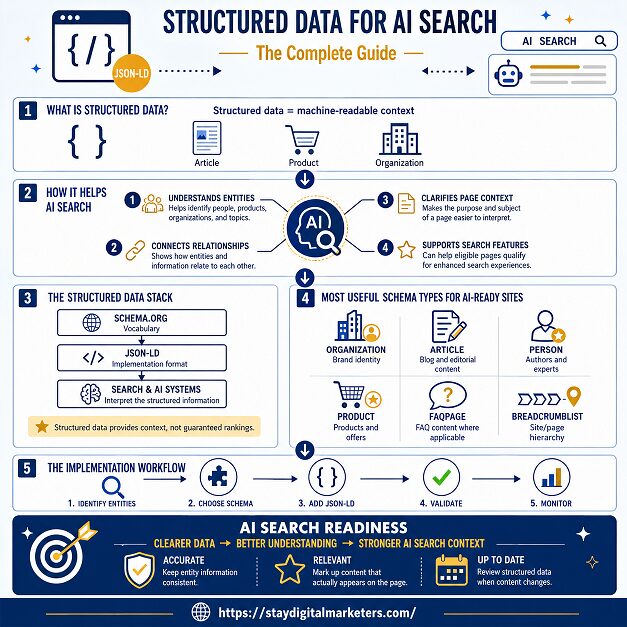
Most priority frameworks for schema rank types by claimed AI citation lift, a number that is rarely independently verifiable. A more defensible way to prioritize is by measured adoption tier, since that reflects what has actually proven durable at scale rather than what one vendor’s test happened to show. Call this the Schema Confidence Stack, built directly from the June 2026 Google and Schema.org adoption data.
Foundation layer: Organization, Person, WebPage, and BreadcrumbList. These sit in the 10 million-plus tier and cost little to implement, since CMS platforms generate much of this automatically. Implement these on every site regardless of size or industry.
Content layer: Article or BlogPosting, Product, and LocalBusiness where relevant. These sit in the 1 million to 10 million tier, reflect genuine content and commercial patterns, and directly support entity clarity for both organic search and AI extraction.
Signal layer: FAQPage, HowTo, and SpeakableSpecification. These help AI systems parse specific content formats but no longer guarantee a SERP rich result, and adoption sits a full tier below the content layer. Implement these where the content genuinely fits the format, not as a blanket tactic across every page.
For any site above a handful of pages, yes, starting with the foundation layer, since the cost is low and most of it is automatic through modern CMS platforms. The content and signal layers deserve more selective investment: a service business with detailed FAQ content benefits from FAQPage as a parsing aid, while a five-page brochure site gains little from HowTo or Speakable markup it has no matching content for.
No. Google’s John Mueller has repeatedly confirmed there is no generic ranking boost from structured data, and this has been Google’s stated position since at least 2018. Schema markup affects eligibility for rich results and helps machines parse content, not organic ranking position directly.
The FAQ rich result itself is being retired. Google added a deprecation notice to FAQ structured data documentation in May 2026, with Search Console reporting retiring in June and the API in August. The underlying schema may still help AI systems parse Q&A content, but it no longer earns the SERP rich result it once did.
All three encode the same Schema.org vocabulary in different ways. JSON-LD sits in a separate script block, Microdata and RDFa embed directly in HTML tags. Google recommends JSON-LD because it is easier to maintain and less likely to break during template changes, and it is the format most AI systems parse most reliably.
Start with Organization and Person on your homepage and author pages, since these have reached the highest measured adoption tier and establish basic entity recognition. Add BreadcrumbList site-wide, then Article or Product schema on your core content, before layering in FAQPage or HowTo where genuinely relevant.
Marking up content that is not actually visible on the page risks a manual action under Google’s structured data spam policies, and Google can strip your rich results as a penalty. Your organic ranking position itself is generally not affected, but the enhanced search appearance you built the schema for disappears.
Validate syntax with Google’s Rich Results Test and the Schema.org validator first. Beyond that, run manual queries in ChatGPT, Perplexity, and Google AI Overviews for terms your pages should rank for, and track whether your content gets cited and how accurately.
Structured data is one layer of a wider AI visibility approach, not a substitute for the content quality and entity clarity that earn citations in the first place. It works best paired with clean crawler access, consistent entity information across the web, and content written to answer questions directly and early. Agencies working on backlink and content visibility strategy, including Stay Digital Marketers, generally treat schema the same way: implement the foundation layer everywhere, add the content and signal layers where the page genuinely calls for them, and keep the markup honest against what is actually on the page, since that consistency is what AI systems and Google both reward over time.

Filza Taj is an MPhil in Human Resources-turned SEO Specialist, Content Strategist, and Digital Marketing Consultant with over 5 years of experience helping businesses in 30+ countries grow online. As the Founder of Stay Digital Marketers (staydigitalmarketers.com), she delivers results-driven solutions in link building, guest posting, PR distribution, niche edits, multilingual backlinks, and content marketing. She publishes daily SEO insights and actionable strategies to help brands strengthen their online presence, attract the right audience, and convert clicks into loyal customers.
Filza@staydigitalmarketers.com
Stay Digital Marketers
Need SEO, Link Building or Digital Marketing Services?
Request a Free Audit →